Publicity Department of the Communist Party of China’s "Ten Years in China" series of press conferences were held, and the auditing of key livelihood funds and projects continued to increase.

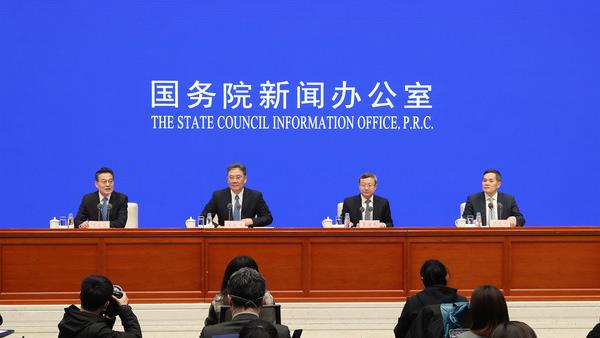
CCTV News:People’s livelihood is no small matter. At a series of press conferences on "Ten Years in China" held in Publicity Department of the Communist Party of China today (May 17th), the relevant person in charge of the Audit Office introduced the positive achievements made by the Audit Office in strengthening the audit of people’s livelihood funds and projects in recent years, and promoting the protection and improvement of people’s livelihood.


Since the 18th National Congress of the Communist Party of China, audit institutions have continuously increased their audit efforts on key livelihood funds and projects such as medical care, pension, employment, housing, agriculture, rural areas and farmers. Insist on sinking the audit force to the lowest level, promote the implementation of the policies of the CPC Central Committee to benefit the people and the people, and seriously investigate and deal with corruption and unhealthy practices that occur around the masses, and promote better solutions to the problems of the people’s urgent difficulties and hopes, so as to firmly grasp the bottom line of people’s livelihood and enhance the people’s sense of gain, happiness and security.

Wang Lujin, Deputy Auditor-General of the Audit Commission:Taking helping to win the fight against poverty as a major political task, we will continue to increase the audit of poverty alleviation. In recent years, we have randomly selected 1.02 trillion yuan of various poverty alleviation funds, promoted the standardization of poverty alleviation fund management year by year, and continuously improved the use performance. The proportion of audit-found problems in the random inspection funds decreased from 36.3% in 2013 to 1.5% in 2020, which contributed to the overall victory in the fight against poverty.

In the past ten years, around the improvement of the multi-level social security system, audit institutions have continuously carried out audits of pension and medical insurance funds, employment subsidy funds, lottery public welfare funds, and affordable housing projects, and effectively implemented major policies and measures such as safeguarding the safety of social security funds and promoting employment priority.

Wang Lujin, Deputy Auditor-General of the Audit Commission:In the audit, we focus on the safety of funds, and focus on revealing and cracking down on illegal acts of fraudulent insurance, hedging or misappropriation of various social security funds. We pay attention to the efficiency of funds and reveal the problems of ineffective and inefficient use of funds, such as precipitation, idleness, unpaid payables and over-guarantee. We also pay attention to the sustainability of policies, reveal the blocking points, difficulties and breakpoints in institutional mechanisms and policy implementation, promote the filling of shortcomings in social security, and make the fruits of reform and development more fair and benefit all people.

New Year’s Eve Diary of a Public Security Bureau Chief

Unconsciously, it’s busy at the end of the year, and I’m on duty again on New Year’s Eve and the first day of this year!

On the morning of New Year’s Eve, I felt the festive atmosphere as soon as I left home. The pedestrians and vehicles on the street were sparse. I felt that the best time to go in a year was the 30th and the first day. Everyone went home for the New Year. It was really enjoyable to drive in the street, but the emptiness on the street made people feel a little uncomfortable. This can’t help but remind me of how important it is to celebrate the New Year, go home and reunite in China’s traditional cultural concept. Walking on the empty street, I was thinking about people. I’m thinking, home is a harbor where everyone can always dock at any time, and it’s only during the New Year that people feel the most profound! At this moment, my mood makes me feel unbearable and impatient with my comrades who still need to stick to their posts. Our responsibilities and missions are tied. Who makes us police?

I think it must be busy today! A lot of things need to be implemented with your own eyes in order to rest assured. Today’s sub-bureau is the same. Only the police on duty are very quiet. It’s a rare time in a year. Standing in the yard of the sub-bureau, the couplets you meet are very eye-catching. Seeing that the contents of the couplets fit well with the work of the sub-bureau, it’s hard for your political colleagues to think about it! Turning my head, I saw the police sports training hall that has stood up and the main body has been completed. In my heart, I began to associate the training hall with the appearance of being completely completed. It can be seen that my expectation is even more urgent than that of some young policemen.

At 13: 00, I set out from the sub-bureau to the police stations with two colleagues. I repeatedly asked the police stations before the festival. I wonder how they prepared the New Year’s Eve dinner for the staff on duty. It is gratifying to come to a unit and put my heart at ease. I feel that the leaders of our grass-roots units are so attentive and resolute in their implementation. The New Year’s Eve dinner prepared for the police on duty is very rich. I am really relieved to see the smiles on the faces of the police auxiliary police on duty.

Finally, we came to Xiaoqiao Street Police Station, because we have the expectation of every police and auxiliary police here tonight. The main leaders of the municipal party committee and government will come to visit you on New Year’s Eve. I think excitement and warmth are the only feelings of every police and auxiliary police in this police station on New Year’s Eve, right? Although there is such an important event in the evening, the leaders of the police station and the auxiliary police officers are busy and orderly, posting couplets and hanging lanterns, and receiving the people who come to the office to inquire about business. The most important thing is to prepare for the New Year’s Eve dinner. Everyone works together and often helps the master to wash, pick, fry and steam the housework. No one can be idle if he doesn’t often do the tablecloth and set the table! I asked qianyong, the director, when to eat the New Year’s Eve dinner, and qianyong said that we should pad it first, and arrange patrol first when it is just dark, and then eat it when the streets are basically empty! I am very pleased with the thoughtful work arrangement of the leaders of grass-roots units!

In the past 30 years, Xiaoqiao Street Police Station has been working in a crowded, simple and inconvenient place. Just moved to this spacious and bright new address, the brand-new and warm office environment will always make people feel excited. Looking at the overflowing expressions of colleagues is the joy of the festival, and I think it is also the satisfaction of the high-quality office living environment!

Before I arrived at Xiaoqiao Street Police Station, I had a New Year’s Eve dinner with the police officers on duty in the branch office. At this time, the New Year’s Eve dinner at the police station began. qianyong, the director of the police station, invited us to have it together. I said to everyone, "The food at the police station makes people drool, but the heart is unable to do so! The stomach is not allowed. " Every police station invited us to eat their New Year’s Eve dinner, which was almost a hundred banquets. We also clinked glasses with everyone to wish a happy New Year! The scene is happy, and the festive atmosphere is everywhere!

Unconsciously, it’s almost time for the leaders to arrive. Maybe he hasn’t experienced such a scene much. qianyong looks uneasy. Seeing his nervousness, his comrades are joking and teasing. I comfort him that the leaders are actually very close to the people. Don’t be nervous. Maybe it’s the relief of colleagues. Looking at qianyong, it’s slowly calmed down a lot!

At 23: 00, Wang Xiao, member of the Standing Committee of the Provincial Party Committee and Secretary of the Municipal Party Committee, Zhang Xiaorong, deputy secretary of the Municipal Party Committee and mayor, Guan Xinmin, member of the Standing Committee and Secretary General of the Municipal Party Committee, Pan Zhigang, deputy mayor and director of the Municipal Public Security Bureau, and Zhao Ningjun, secretary of the Chengbei District Party Committee, came to our police station, where they just moved into the new address, and extended greetings and holiday wishes to the policemen. The kind and considerate words were so refreshing that everything was so natural and normal that all our colleagues were nervous. During the period, the secretary and the mayor asked about the process of duty preparation and household registration. The secretary also carefully reminded us that the household registration window needs to put stools where people sit and do things, and to serve the masses in detail.

When they came to the second floor of the police station, the secretary and mayor fully affirmed the spacious and bright office environment, demanding that their own conditions be improved, and the work efficiency and the ability to serve the masses of the police station should be greatly improved. In the living area on the third floor, the secretary and the mayor saw that the branch party Committee had carefully organized and implemented it according to the requirements of the public security organs at higher levels, and basically reached the work requirements of "one person, one bed" for urban police stations and "one person, one room" for township police stations, and gave them praise and affirmation. The mayor smiled and said, "Ma Yu, it’s very good! I’m relieved, too. The money given by the market is’ the oil has gone and the lights are on’. Good! Ok! Good! " . When he came to the jubilant Sashido, the secretary expressed the affirmation of the municipal party committee and municipal government to the public security work in the city in 2018 to the police auxiliary police who were still eating the New Year’s Eve dinner, and also extended the New Year’s greetings to all the police auxiliary police and their families in the city, and even brought a 100,000-yuan New Year gift package to the police station. Everything in Sashido was so harmonious and relaxed.

That night, many leaders of the trip were ready to leave. qianyong invited the secretary, the mayor and the police auxiliary police on duty to take photos. The secretary and the mayor readily agreed to take a photo with the grassroots police auxiliary police in front of the bright red general secretary’s "four sentences and sixteen characters" plaque at 23: 22 on February 4, 2019!

The leaders left, but everyone’s excited mood still didn’t calm down, talking and laughing, and being happy. In a flash, it was the New Year’s Eve. The Year of the Dog in 1898 has left, and the Year of the Pig in Jihai has arrived. The concern of the superior organization and the cordial care of the leaders not only indicate that the new year will definitely have good results, but also bring endless work motivation to the public security in the north of Xining. Just as qianyong told the secretary and mayor: We must strictly perform our duties, resolutely be the staunch believers and loyal practitioners of Socialism with Chinese characteristics, the supreme leader in the new era, and we must live up to the care and concern of the higher party committees!

New year and new atmosphere, we will certainly achieve greater results!

Author: Ma Yu, deputy head of Chengbei District, Xining City, Party Secretary and Director of Public Security Bureau.

List of winners of the third "Fei Xiaotong Field Investigation Award"

?

first prize

??? 1. Visible regime, capital affinity and peasant exclusion in rural revitalization —— Anthropological reflection based on fenglin town’s field.

??? (Author: Tan, author: Yunnan University)?

??? 2. Follow-up investigation of Longgang Town, the first farmer city in China —— from "big problem of small town" to "big problem of small city" ?

??? (Author: Xu Zhenyu; Li Renqing; He Ningshan; Du Wenxiao; Sun Zhen, author: Nanjing Audit University; China Academy of Social Sciences; Central University of Finance and Economics)?

??? 3. "Hummingbird" hovering between urban and rural areas —— A survey report on the group of urban courier brothers?

??? (Author: Lian Si; Huang Xiaodong; Feng Dan; Zhou Yuxiang; Wang Yixuan; Huang Fan; Cao Wei; Mars, author: university of international business and economics; National Federation of Trade Unions Information Center; Beijing Institute of Economic and Social Development; China Youth Research Center; Tsinghua University Institute of Social Sciences; School of Society and Population, Renmin University of China)?

??? 4. Investigation and development suggestions of home smart pension in Yangtze River Delta region?

??? (Author: Ma Jiqian; Yan Jin; Wang Lingping, Author: Qu Qiubai School of Government Administration, Changzhou University)?

??? 5. From Embedding to Coupling: Power Structure Reform of Rural Governance from the Perspective of Precision Poverty Alleviation —— An Empirical Study from X Village, S City, Yunnan Province?

??? (Author: Wang Dianxi; Chen Fujun, author: China University of Political Science and Law)?

?

the second prize

????1. Authorized negotiation: the governance logic and contemporary value of traditional rural contradictions and disputes —— Taking Yujiaqiao village in western Hubei as an example.?

??? (Author: Li Huayin, author: China Rural Research Institute of Central China Normal University)?

??? 2. "If you don’t work overtime, you won’t survive": the labor ecology of Internet knowledge workers —— A qualitative study on Internet UI designers?

??? (Author: Hou Hui; He Xuesong, author: Department of Sociology, School of Politics and Society, Hangzhou Normal University; East China University of Science and Technology School of Social and Public Administration)?

??? 3. The flow of life gifts: from the decision of organ donation to the acceptance of organ transplantation.?

??? (Author: Bloomberg; Jiang Jipin; Zeng mengjun; Wang Xinqiang; Wang Ping; Pan Qingshan, author: Law School of Yangtze University; Tongji hospital Organ Transplantation Institute affiliated to Tongji Medical College, Huazhong University of Science and Technology)?

??? 4. Culture is the soul: the protection and development of ancient cities and villages from the perspective of historical documents such as fish scale atlas-centered on Jinhua area?

????(Author: Yu Chenglin; Shi Jingjing; Zhou Simin; Hazel Chen; Qian Yingjie; Liu tianxiao; Shi xinke; Wu Shuang, author: College of Humanities, Zhejiang Normal University)?

??? 5. Labor under "Digital Management": Research on Labor Management of Platform Economy —— Taking the management of "Hungry" takeaway riders in Zhongguancun, Beijing as an example.?

??? (Author: Chen Long, author: Department of Sociology, Peking University)?

??? 6. Who is defending the vegetable basket in Beishangguang? -Husband and wife productivity of vegetable farmers in the eastern suburbs of China.?

??? (Author: Huang Zhihui; Luo Hui; Tao Hui, author: School of Ethnology and Sociology, Minzu University of China; School of Management, Minzu University of China)?

??? 7. Profit-seeking petition under the territorial responsibility system: generation mechanism and governance logic?

??? (Author: Zheng Yongjun, author: China Rural Research Institute of Central China Normal University, Advanced Institute of Political Science)?

??? 8. The Spear of Capital and the Shield of Labor —— A Study on the Localization Model of Emotional Labor of Political Work in China?

??? (Author: Liang Meng; Li Kunxi; Feng Xue, author: Beijing Jianzhu University)?

??? 9. Ferry Bells —— Based on the survey of informal waste recyclers in Shanghai?

??? (Author: Ding Zhiwen, author: School of Social Studies, Shanghai University)?

??? 10. Exploration on the Path of Capable People Returning to their Hometown, Villagers’ Shareholding and beautiful countryside Construction —— Based on the Investigation of Lincun Village in Central Hubei Province.?

??? (Author: Zeng Jianfeng, author: School of Social Studies, Huazhong University of Science and Technology)?

?

third prize

??? 1. Challenges and solutions: a grass-roots survey of rural debt?

??? (Author: Gao Ming; Song Hongyuan, author: Rural Economic Research Center, Ministry of Agriculture and Rural Affairs)?

??? 2. "Separated Community": An ethnographic study on the social media use of online car drivers.?

??? (Author: Li Sha, author: School of Marxism, Xi ‘an Jiaotong University)?

??? 3. Field survey of 480 villages in 13 provinces in China’s rural human settlements construction?

??? (Author: Zhang Li; He Lian, author: Tongji University)?

??? 4. Sanhe besieged city: the living conditions of the informal employment groups of the new generation of migrant workers-based on a field survey in the surrounding areas of Sanhe talent market in Shenzhen?

??? (Author: Yao Jinxin; Zhan Luming; Yang Songtao, author: School of History and Society, Anhui Normal University)?

??? 5. Social quality, structural elements and village governance —— A case narrative from D village?

??? (Author: Zhan Guohui, author: School of Public Administration, Nanjing University of Finance and Economics)?

??? 6. Spatio-temporal sociological analysis of new urbanization —— Taking the phenomenon of "renting a foreign land" as an example.?

??? (Author: Wu Hailin; Lu Bingzhe, author: School of Philosophy and Social Sciences, Jilin University; Peking University Department of Sociology)?

??? 7. Reflection on "Grassroots Fatigue": Operation, Dilemma and Countermeasures of Precision Poverty Alleviation System?

??? (Author: Zhang Shunjie; Zhang Hengyu, author: School of Social Studies, Nanjing University)?

??? 8. Bride price and buying a house: the micro-mechanism of the change of marriage payment?

??? (Author: Yu Penghan, author: Department of Sociology, Peking University)?

??? 9. The Light of Shouguang —— A casing report from Shouguang City, Shandong Province?

??? (Author: Qu Changfu; Guan Bin; Ji Leilei, author: Economic Daily China Economic Net)?

??? 10. Resource Mobilization and Coercive Development —— Based on the field investigation of land circulation in Ningxia?

??? (Author: Luo Qiangqiang; Zhao Jia, author: School of Political Science and Law, Ningxia University; Ningxia Radio and TV University)?

??? 11. Functions and Significance of Intangible Cultural Heritage in Rural Revitalization —— Based on the Anthropological Investigation of Tielou Tibetan Township in Wenxian County, Gansu Province?

??? (Author: Rebecca; Yan yuhua; Zhu Jie, author: Northwest University for Nationalities; Gansu province education science research institute education science planning institute)?

??? 12. Under the background of rural industrial revitalization, capable people run villages and farmers are marginalized.?

??? (Author: Shu Ligui, author: School of Public Administration, Huazhong University of Science and Technology)?

??? 13. The development and evolution of the structural imbalance of rural public goods supply-a comparative example of three villages in central China?

??? (Author: Li Yaolei, author: School of Management, University of Shanghai for Science and Technology)?

??? 14. Absence of support and anti-poverty: Perspective of providing for the elderly poor rural households with children without support —— Based on a case study in J County, G Province?

??? (Author: Li Yongjin; Li Shanshan, author: School of Philosophy and Social Sciences, Lanzhou University)?

??? 15. Field investigation report on the construction of handicraft new village in the post-legacy era-taking Yangjiabu village in Weifang as a case.?

??? (Author: Rong Shuyun, author: School of Humanities and Arts, Shandong University of Arts and Crafts)?

??? 16. How to realize the modernization of rural governance in the new era —— Exploration and enlightenment of "village communication" in Longyou, Zhejiang Province?

??? (Author: Kang Xiaoqiang, author: Teaching and Research Department of Scientific Socialism of the Central Party School)?

??? 17. Investment and financing difficulties and countermeasures in the central and western regions?

??? (Author: Yao Yun, author: Institute of Finance, China Academy of Social Sciences)?

??? 18. Promoting the Diversified Innovation of Public Cultural Service Supply Mode with the Guidance of "New Needs" —— Field Survey of Grassroots Public Cultural Services? ?

??? (Author: An Xinyi, author: Beijing Wisdom Orange Culture and Art Co., Ltd.)?

??? 19. Trust and consumption of medical products from the perspective of embeddedness —— Taking HPV vaccine consumption as an example?

??? (Author: Jia Xiaofei, author: Cambridge University)?

??? 20. The origin and return of the old house —— On the changes and development of the ancient village culture from the old house.?

??? (Author: Yang Zimo; Instructor: Jangdo, author: Beijing No.80 Middle School)?

?????????????????????? ?

??? 21. How to preserve and increase the value of trillions of poverty alleviation assets —— A useful exploration of property right reform of poverty alleviation assets in Yishui County, Shandong Province?

??? (Author: Wang Fengting; Liang Tengjian; Zhuang Jiayu; Horse bell; He Lei; Wang Yingzi; Huo Yujia; Sun Chuandong; Zhao Yuan, author: National Agricultural and Rural Development Research Institute of China Agricultural University; Rural Economic Research Center of Ministry of Agriculture and Rural Affairs; Institute of Information, China Academy of Agricultural Sciences; China Yan ‘an Cadre College)?

?

honorable mention

??? 1. Professional embedding relationship: the path to improve the development quality of social organizations in the administrative decoupling reform?

??? (Author: Xue Meiqin; Ma Chaofeng, author: Department of Public Administration, Nanjing University of Science and Technology; Department of Sociology, Nanjing Forestry University)?

??? 2. New changes in the employment of the new generation of migrant workers and countermeasures-based on the analysis of the field survey of "100 enterprises"?

??? (Author: Bao Chunlei, author: china association for labour studies)?

??? 3. Exploration and practice of improving the interest linkage mechanism of agricultural enterprises —— Based on the investigation and analysis of the interest linkage model of tomato industry in Hangjinhouqi, Inner Mongolia.?

??? (Author: Wu Tianlong; Wang Ou; Xi Yinsheng; He Anhua; Jiang Nan, author: Rural Economic Research Center, Ministry of Agriculture and Rural Affairs)?

??? 4. Dawn in the Dilemma: A Study on the Impact of Internet Crowdfunding for Serious Illness on the Risk of Poverty Caused by Illness in Rural Areas —— A Field Study from Jiangsu Province?

??? (Author: Zhang Cheng; Yang Xiaozhong; Li Xinghua; Xing Li; Chen Yuyao, author: School of Economics, Nanjing University of Finance and Economics; China Academy of Social Sciences Institute of Industrial Economics; Service Department of Jiangsu Development and Reform Commission; Nanjing University of Finance and Economics)?

??? 5. Under the sharing economy, the "collective" consciousness is hard to find. Who will protect the labor rights and interests? —— Take the drip driver group as an example.?

??? (Author: Chen Fang, author: School of Social Studies, Shanghai University)?

??? 6. Project entry into the village and micro-governance: How can village group governance be effective? -Multi-case investigation based on the landing of agriculture-related projects?

??? (Author: Xiang Yong, author: Socialism with Chinese characteristics Development Research Institute of Southeast University)?

??? 7. Study on the parenting strategies and social identity of Chinese and African families in Guangzhou.?

??? (Author: xingxing, author: Nanjing Agricultural University)?

??? 8. Filling the "structural hole": the governance mechanism of the precision poverty alleviation team in villages —— A case study of L town in western Hubei?

??? (Author: Li Zhuang; Cao Congmin, Author: School of Social Studies, Huazhong Normal University)?

??? 9. Rural social change and land sustainability from the perspective of energetics —— Based on the field investigation of Hekeng village, an ancient world-heritage village.?

??? (Author: Yuan Xiaomei; Zhu Jinxin; Guan Yuting; Li Ling; Liu siman, author: School of Architecture, South China University of Technology)?

??? 10. Feeling Trapped —— Cultural Interpretation of Domestic Violence Crimes of Rural Women in a Province of North China (2002-2014)?

??? (Author: Gao Meihui; Tong Shuhua, author: Department of Sociology, Guangdong Ocean University; Inner Mongolia Autonomous Region Police Officer School)?

??? 11. People’s Mediation System in Social Transformation —— Based on the fieldwork of Dingzhou People’s Mediation.?

??? (Author: Sun Shuyan, author: School of Social and Population Studies, Renmin University of China)?

??? 12. The new governance dilemma faced by the grass-roots government under the background of the Internet age —— Based on the investigation of Shangcai County, Zhumadian City?

??? (Author: Zhao Xiangyun, author: School of Social Studies, Nanjing University)?

??? 13. Research on the Changes and Governance of Resettlement Community from the Perspective of Spatial Reconstruction —— Taking HS Community in N City as an Example?

??? (Author: Du Peipei, author: School of Social and Political Science, Anhui University)?

??? 14. Bargaining and Interoperability: A New Attempt of Informal Operation of Grass-roots Power —— Based on a case study of a service-oriented project in the rural area of D Town, Beijing?

??? (Author: Sun Weiwei; Dong Kaiyue, author: School of Social and Psychological Sciences, Central University of Finance and Economics)?

??? 15. Yearning for Youfangying Village 2020?

??? (Author: Wang Huajun, author: Inner Mongolia Autonomous Region Literature and History Research Institute)?

??? 16. Investigation on the practice of industrial development in poor rural areas and research on the development mechanism —— Based on the field investigation in Yanyingshan and Chongen villages in xiuwen county, Guizhou Province.?

??? (Author: Xiong Debin; Li Jiahuan; Wang Xuechun; South China; Yu Jiaqi; Shi Cong; Peng Shilan; Ouyang Hongshu, author: School of Economics, Guizhou University)?

??? 17. "Problem households" in poverty alleviation at the grass-roots level: generating logic and coping mechanism?

??? (Author: Zhang Zhao, author: School of Politics and International Relations, Tongji University)?

??? 18. Investigation Report on Poverty Alleviation in Poverty-stricken Counties in Old Revolutionary Areas —— Taking Shangyou County in Jiangxi Province as an Example?

??? (Author: Zou Yuchun; Du Huiping; Bilin; Jia Cong, author: Joint Research Group of Institute of Sociology, Chinese Academy of Social Sciences and Service Bureau)?

In the first eight months of this year, China’s foreign trade import and export increased by 3.6%

According to customs statistics, in the first eight months of this year, the total import and export value of China’s goods trade was 20.13 trillion yuan, an increase of 3.6% over the same period last year. Among them, exports reached 10.95 trillion yuan, up 6.1%; Imports were 9.18 trillion yuan, an increase of 0.8%; The trade surplus was 1.77 trillion yuan, an increase of 46%.

In August, China’s total import and export value was 2.72 trillion yuan, an increase of 0.1%. Among them, the export was 1.48 trillion yuan, an increase of 2.6%; Imports were 1.24 trillion yuan, down 2.6%; The trade surplus was 239.6 billion yuan, up 41.8%.

In dollar terms, in the first eight months, China’s total import and export value was 2.95 trillion US dollars, down 2%. Among them, exports were 1.6 trillion US dollars, up by 0.4%; Imports were 1.35 trillion US dollars, down 4.6%; The trade surplus was $259.27 billion, an increase of 37.1%.

In August, China’s total import and export value was $394.76 billion, down by 3.2%. Among them, exports were US$ 214.8 billion, down 1%; Imports reached US$ 179.96 billion, down 5.6%; The trade surplus was $34.84 billion, an increase of 32.5%.

In the first eight months, China’s foreign trade import and export mainly showed the following characteristics:

1. General trade has increased and its proportion has increased.In the first eight months, China’s general trade import and export was 12.03 trillion yuan, up 5.4%, accounting for 59.8% of China’s total foreign trade, up 1 percentage point over the same period last year. Among them, exports were 6.44 trillion yuan, an increase of 9.4%; Imports were 5.59 trillion yuan, an increase of 1%; The trade surplus was 849.49 billion yuan, an increase of 1.4 times. In the same period, the import and export of processing trade was 5.02 trillion yuan, down 3.3%, accounting for 24.9%, down 1.8 percentage points. Among them, exports were 3.18 trillion yuan, down 1.6%; Imports were 1.84 trillion yuan, down 5.9%; The trade surplus was 1.34 trillion yuan, up 4.9%.

In addition, China’s import and export by bonded logistics amounted to 2.31 trillion yuan, an increase of 9.9%, accounting for 11.5% of China’s total foreign trade. Among them, the export was 767.97 billion yuan, up by 14%; Imports reached 1.55 trillion yuan, an increase of 8%.

Second, the growth of imports and exports to major markets such as the European Union, ASEAN and Japan, and the growth rate of imports and exports to countries along the "Belt and Road" is higher than the whole.In the first eight months, the EU was China’s largest trading partner, with a total trade value of 3.15 trillion yuan, up 9.7%, accounting for 15.6% of China’s total foreign trade. Among them, exports to the EU reached 1.9 trillion yuan, up by 11.8%; Imports from the EU reached 1.25 trillion yuan, up by 6.7%; The trade surplus with Europe was 659.79 billion yuan, an increase of 22.9%. ASEAN is China’s second largest trading partner, with a total trade value of 2.74 trillion yuan, up by 11.7%, accounting for 13.6% of China’s total foreign trade. Among them, exports to ASEAN reached 1.53 trillion yuan, up by 15.7%; Imports from ASEAN reached 1.21 trillion yuan, an increase of 6.9%; The trade surplus with ASEAN was 329.5 billion yuan, an increase of 65.4%.

The United States is China’s third largest trading partner, and the total trade value between China and the United States is 2.42 trillion yuan, down 9%, accounting for 12% of China’s total foreign trade value. Among them, exports to the United States were 1.88 trillion yuan, down 3.7%; Imports from the United States were 545.01 billion yuan, down by 23.5%; The trade surplus with the United States was 1.33 trillion yuan, an increase of 7.7%. Japan is China’s fourth largest trading partner, with a total trade value of 1.39 trillion yuan, up 0.7%, accounting for 6.9% of China’s total foreign trade. Among them, exports to Japan reached 635.81 billion yuan, up by 4.7%; Imports from Japan were 752.23 billion yuan, down 2.4%; The trade deficit with Japan was 116.42 billion yuan, narrowing by 28.8%. In the same period, China’s total import and export to countries along the "Belt and Road" was 5.83 trillion yuan, up 9.9%, 6.3 percentage points higher than the overall national growth rate, accounting for 29% of China’s total foreign trade, and the proportion increased by 1.7 percentage points.

Third, the import and export of private enterprises grew rapidly, and their proportion increased.In the first eight months, the import and export of private enterprises was 8.49 trillion yuan, up 11.2%, accounting for 42.2% of China’s total foreign trade, up 2.9 percentage points over the same period last year. Among them, exports were 5.61 trillion yuan, up 13.7%, accounting for 51.2% of the total export value; Imports reached 2.88 trillion yuan, up 6.6%, accounting for 31.3% of the total import value. In the same period, the import and export of foreign-invested enterprises was 8.09 trillion yuan, down 1.8%, accounting for 40.2% of China’s total foreign trade. Among them, exports were 4.27 trillion yuan, an increase of 0.2%; Imports reached 3.82 trillion yuan, down 3.9%.

In addition, the import and export of state-owned enterprises was 3.48 trillion yuan, down 0.1%, accounting for 17.3% of China’s total foreign trade. Among them, exports were 1.06 trillion yuan, down 5.4%; Imports reached 2.42 trillion yuan, up 2.5%.

4. Exports of mechanical and electrical products and labor-intensive products maintained growth.In the first eight months, China’s mechanical and electrical products exported 6.34 trillion yuan, up 5.6%, accounting for 57.9% of the total export value. Among them, the export of electrical and electronic products was 2.83 trillion yuan, an increase of 7%; Mechanical equipment was 1.87 trillion yuan, an increase of 3.3%. In the same period, clothing exports reached 669.24 billion yuan, an increase of 1.2%; Textiles reached 541.01 billion yuan, up by 6.8%; Furniture was 239.96 billion yuan, an increase of 8.1%; Footwear was 215.51 billion yuan, up 6.4%; Plastic products reached 211.31 billion yuan, up by 18.2%; Toys were 129.3 billion yuan, up 33.7%; Luggage was 120.6 billion yuan, an increase of 5.6%; The total export of the above seven categories of labor-intensive products was 2.13 trillion yuan, up by 7.3%, accounting for 19.4% of the total export value. In addition, steel exports were 44.97 million tons, a decrease of 4.4%; There were 790,000 cars, an increase of 4%.

5. Imports of crude oil, coal, natural gas and other commodities increased, imports of iron ore and soybeans decreased, and the average import price of bulk commodities rose and fell.In the first eight months, China imported 685 million tons of iron ore, down by 3.5%, and the average import price was 644.3 yuan per ton, up by 43.3%. Crude oil was 328 million tons, up 9.6%, and the average import price was 3,285.7 yuan per ton, down 0.1%. 220 million tons of coal, up 8.1%, and the average import price was 537.6 yuan per ton, down 6.2%; Natural gas was 63.04 million tons, up by 10.3%, and the average import price was 2988.4 yuan per ton, up by 15.7%. Soybean was 56.32 million tons, down 9.2%, and the average import price was 2731.9 yuan per ton, down 1.7%; Primary plastic was 23.99 million tons, up 11.1%, and the average import price was 10,000 yuan per ton, down 11%. Refined oil was 20.49 million tons, down 6.3%, and the average import price was 3,790.4 yuan per ton, down 0.6%; 7.64 million tons of steel, down by 12.8%, and the average import price was 8,172.8 yuan per ton, up by 0.6%; The unwrought copper and copper products were 3.09 million tons, down by 10.8%, and the average import price was 45,400 yuan per ton, down by 3.5%.

In addition, the import of mechanical and electrical products was 3.96 trillion yuan, down 3.1%. Among them, there were 271.94 billion integrated circuits, a decrease of 3.8% and a value of 1.31 trillion yuan, a decrease of 0.8%; There were 700,000 automobiles, a decrease of 10.8% and a value of 218.06 billion yuan, a decrease of 4.6%.

High-quality development needs to correctly handle ten relationships.

  The report of the 19th National Congress of the Communist Party of China pointed out that China’s economy has shifted from a high-speed growth stage to a high-quality development stage. High-quality development requires that China’s economy should change from extensive high-speed growth mainly relying on increasing the consumption of material resources to high-quality development relying on technological progress and improving the quality of workers. The overall goal of high-quality development is to create an upgraded version of China’s economic development in the new era. To meet the requirements of high-quality development, we must deal with the following ten aspects:

  Correctly handle the relationship between quantity growth and high-quality development

  Quantitative growth only refers to the expansion of economic aggregate, which is mostly measured by total output. The commonly used evaluation indicators are gross national product and per capita gross national product. The pattern and connotation of high-quality development are richer, which is based on the total amount but not only pays attention to the economic total amount, but also includes multi-dimensional measurement of the efficiency, structure, stability and sustainability of the economy, which is the evolution and development under the coordination of quantity and quality. In the stage of economic growth, we only emphasize economic benefits, but ignore the sustained and healthy development of the economy. High-quality development emphasizes the combination of economic benefits, social benefits and ecological benefits, which reflects an inclusive growth in harmony between people and economy and society. Therefore, in the process of realizing high-quality development, it is necessary to correctly handle the relationship between quantity growth and high-quality development. High-quality development must improve the level of urbanization and industrialization, seek new growth of regional economy, promote quantity growth with quality improvement, and find and practice ways to promote quantity with quality in the transition to high-quality development.

  Correctly handle the relationship between the transformation of old kinetic energy and the cultivation of new kinetic energy

  In the high-speed growth stage, we demand a single economic aggregate and growth rate, ignoring the quality of economic development, while the high-quality development stage requires more than the high-speed growth stage. It requires us to rely on talents, technology, knowledge, information and other advanced elements, from extensive economic growth mode to intensive economic growth mode, and to dispel the influence of the declining traditional growth dividend in China through innovation drive, cultivate new kinetic energy for high-quality development, and do a good job in the conversion of old and new kinetic energy, so as to break through the bottleneck constraints of resources, energy, environment and other factors and realize the conversion of old and new kinetic energy for development as soon as possible. The new kinetic energy of high-quality development is mainly in innovation and development, and behind innovation and development are scientific and educational talents. Science and education talents are an important driving force for high-quality development; From the perspective of open space, innovation drive and the gathering of scientific and educational talents depend on the level of factor reward and the quality of innovation environment. Therefore, it is the key to promote high-quality development to correctly handle the relationship between the transformation of old kinetic energy and the cultivation of new kinetic energy, and how to nurture and promote new advantages through innovation-driven, talent gathering and environmental optimization.

  Correctly handle the relationship between the transformation of traditional technology and the utilization of new technology

  To catch up with high-quality development, it is difficult to achieve transcendence within the generations of traditional technology. Similarly, high-quality development is difficult to achieve within the existing technical framework, and it is necessary to transform traditional technologies and make effective use of new technologies. It can be said that the opportunity to achieve high-quality development lies in introducing new variables and taking advantage of the technological substitution formed by the new technological revolution and the industrial revolution. In recent years, the provinces that have maintained rapid growth in China have made breakthroughs in big data, informationization and digital economy because they have adapted to the development of a new round of scientific and technological revolution. The good performance of China’s own development in recent years is also brought about by product innovation of new technologies such as the Internet and big data. At present, a new round of scientific and technological revolution and industrial revolution are emerging, and the fourth industrial revolution based on the Internet and big data is forming a new growth point. To achieve high-quality development, we need to correctly handle the relationship between traditional technological transformation and new technology utilization, and cultivate the power of new technological revolution on the basis of scale advantage.

  Correctly handle the relationship between the upgrading of traditional industries and the cultivation of emerging industries

  Since the reform and opening-up, China has conquered the city in all industrial fields in the stage of rapid growth, forming a complete range of industrial categories. Due to the surge of investment, there is a crowding effect in these areas, resulting in overcapacity. To achieve high-quality development in the new era, we must open up space in the high-end links and core technology fields of the industrial chain, which requires correctly handling the relationship between the upgrading of traditional industries and the cultivation of emerging industries. It is necessary to make use of the latest achievements in the scale of new technologies, accelerate the cultivation and development of high-end industries, accelerate the replacement of old and new leading industries, and accelerate the formation of a modern industrial system. It is also necessary to make use of the huge traditional industrial base to carry out technological transformation of traditional industries and promote them to move towards the high end of the industrial chain. At the same time, to find the connection point between traditional industries and new industries, we should base ourselves on the existing industrial base, continue the industrial chain, improve product quality and efficiency, and derive new products and new industries by implanting new technologies, new ideas and new ideas, so as to finally realize the integrated development and coordinated development between traditional industries and modern industries.

  Correctly handle the relationship between industrialization and urbanization

  The main body of economic development is structural transformation, which is manifested in two aspects, one is industrialization and the other is urbanization. Among them, industrialization is the main body and urbanization is the result of industrialization. In high-quality development, we need to correctly handle the relationship between industrialization and urbanization: First, we should take the logic of industrialization as the path of high-quality development, promote the development of the real economy with the thinking of industrialization, organically combine the transformation of traditional industries with the development of emerging industries, take the development and modernization of manufacturing as the core, and return to the real economy as the thinking, build a modern industrial system, and realize financial and technological innovation to serve the real economy in high-quality development. The second is to promote the coordination of industrialization and urbanization in high-quality development. There is a spiral mechanism between industrialization and urbanization to promote each other, and promote the coordinated development of urban and rural areas in the process of mutual influence. In the process of high-quality development, we should further promote the new urbanization with people as the core, enhance the comprehensive functions of central cities, cultivate and develop small and medium-sized cities, develop small towns by classification, speed up the urbanization of agricultural transfer population, and embark on a road of coordinated development of industrialization and urbanization in high-quality development that conforms to the reality of China’s new era.

  Correctly handle the relationship between manufacturing industry and service industry

  Manufacturing industry is not only the main body of the national economy, but also the foundation of high-quality development. The development of manufacturing industry can not be separated from the support of service industry. Because the progress of new technologies represented by the Internet has accelerated the integration of manufacturing and service industries, the high integration of service industries and manufacturing industries is a new trend of industrial development in the future. In China’s high-quality development, it is necessary to realize the transformation of manufacturing industry, while the transformation of manufacturing industry in China needs the development of producer services, and service industry and manufacturing industry promote each other in high-quality development. The integration of manufacturing and service industries is a process in which the industrial chain has changed from the low-end to the high-end in the past, and it is also a process in which the added value of the industry has been continuously improved. Therefore, in high-quality development, it is necessary to correctly handle the relationship between manufacturing and service industries: First, vigorously implement the project-driven strategy and provide momentum and support for high-quality development through large enterprises, industries and projects. The second is to promote the development of producer services. In developed countries, producer services generally account for more than 25% of the total service industry, while in China, the proportion is about 15% at present. The largest space for achieving high-quality development of service industry is producer services, and its core is knowledge-intensive services. We should develop R&D services and marketing services around knowledge-based services and establish a professional service system for high-quality development. The third is to promote the integration of China’s manufacturing industry and the Internet. With the development of the new industrial revolution and the continuous progress of information technology, the intelligentization of manufacturing industry has become a new trend. To achieve the coordinated development of manufacturing and service industries, we must strive to promote the integration of manufacturing and the Internet through "Internet plus "promotes the transformation of manufacturing industry through the continuous development of producer services.

  Correctly handle the relationship between regional balanced development and unbalanced development

  Regional balanced development and unbalanced development is a structural optimization problem. It is also a relationship problem that needs to be handled correctly in high-quality development. Planning regional development layout under the background of high-quality development is faced with a dilemma. On the one hand, the primacy of central cities is not high, the urban system is not perfect, and it is necessary to continue to accelerate the urbanization process. On the other hand, regional development is unbalanced and the regional gap is widening. To promote high-quality development, we must correctly handle the relationship between regional balanced development and unbalanced development: first, strengthen the development of key areas, and maintain or enhance the overall competitiveness and advantages of regions under the background of globalization and marketization; The second is to implement the new concept of coordinated development, narrow the regional gap and avoid the obvious imbalance that may occur in regional development; Third, regional economic transformation, industrial upgrading, new industry development, urbanization, docking with national regional policies and coping with regional competition are reflected in regional coordinated development.

  Correctly handle the relationship between supply and demand

  There are both supply factors and demand factors in high-quality development. As China’s economy enters a new era, the factors that affect economic development in high-quality development have shifted from demand factors to supply factors, so it is necessary to correctly handle the relationship between supply and demand in high-quality development. In order to realize the high-quality development of the combination of supply and demand in economic operation, it is necessary to correctly handle the relationship between supply and demand and combine supply regulation with demand regulation. First, to combine supply-side reform with demand-side expansion, we need to combine supply-side policies with demand-side policies, work together at both ends of the supply side and the demand side, and achieve high-quality development by promoting structural reforms. Second, we should coordinate the long-term and short-term relationship of economic development, pay more attention to the long-term development, adjust the supply structure, change the situation that the industrial structure is incompatible with the development of economic scale, and guide agriculture and industry to develop in a high-quality direction. The third is to explore the management that is suitable for the new economy and new format on the supply side, improve the supply structure and establish a level playing field. Adjust the rational allocation of resources among different industries through market mechanism. Improve the supply of factors, improve the independent innovation ability of enterprises, and promote the transformation of scientific and technological achievements into real productive forces. Improve institutional supply. Accelerate institutional innovation, improve total factor productivity by enhancing the role of technological progress and human capital, thus guiding high-quality development.

  Correctly handle the relationship between government and market.

  Making the market play a decisive role in resource allocation and giving full play to the role of the government in high-quality development, and correctly handling the relationship between the government and the market is a major principle and an urgent need to promote high-quality development. The market plays a role in allocating social resources through market mechanisms such as price, competition, supply and demand, and the government allocates social resources through economic, legal and administrative adjustment means. The relationship between the government and the market determines the operation quality of the socialist market economy. In the context of high-quality development, correctly handling the relationship between the government and the market means not only making the market promising but also making the government promising. First, we must continue to deepen reform, let the market play a better role, improve our understanding and control of market rules, improve the efficiency and effectiveness of resource allocation, promote the concentration of resources to high-quality enterprises and products, and promote the free flow and aggregation of innovative elements, so that innovation can become a powerful kinetic energy for high-quality development. The second is to give play to the role of the government, implement targeted industrial policies, and promote industrial upgrading and power transformation. At the same time, the government should play its role in maintaining macroeconomic stability, strengthening and optimizing public services, ensuring fair competition, making up for market failures, strengthening market supervision and maintaining market order.

  Correctly handle the relationship between short-term and long-term

  Promoting high-quality development is both goal-oriented and problem-oriented. It involves both the present and the long term. It is necessary to correctly handle the relationship between short-term and long-term. In the long run, high-quality development should improve the total factor productivity through quality change, efficiency change and power change, and strive to accelerate the modern industrial system of coordinated development of real economy, scientific and technological innovation, modern finance and human resources, realize socialist modernization and build a modern power. In the short term, the promotion of high-quality development is faced with the imbalance between supply and demand of the real economy, the imbalance between the real economy and the virtual economy, serious environmental pollution, the degradation of the ecosystem, the people’s demand for a good ecological environment can not be met, and the gap between urban and rural development and regional income distribution is still large. In the process of transition to high-quality development, it will inevitably bring new risks. Therefore, in the process of promoting high-quality development, we must correctly handle the relationship between short-term and long-term, maintain the coordinated and smooth development of major regional economic relations, solve outstanding problems in a targeted manner, put the current prevention and resolution of financial risks and social stability risks in the first place, hold the bottom line that systematic financial risks will not occur, and lay three tough battles to create a good economic and social order and environment for high-quality development.

  (Author: Ren Baoping Unit: Northwest University China Western Economic Development Research Center)

Commercial real estate event in June: more than 10 shopping centers such as Fuzhou and Haikou Impression City opened, and Changsha Meixi Never Sleeping City built a large-scale national tide night mar

[Policy]

Standing Committee: Ensure reasonable economic growth in the second quarter and stabilize the economic market.

On June 8, Li Keqiang, Premier of the State Council of the People’s Republic of China presided over the the State Council executive meeting, stressing that the downward pressure on the economy is still outstanding. To effectively coordinate epidemic prevention and control and economic and social development, all localities should earnestly shoulder the responsibility of ensuring the well-being of one party’s livelihood, promote the refinement and implementation of economic stabilization policies with a sense of urgency, further release the policy effect, ensure reasonable economic growth in the second quarter, and stabilize the economic market.

Since June, all parts of the country have also introduced policies to stabilize the economy and support industries. For example, Shanghai Cultural Tourism Bureau and Bank of China (601988) Shanghai Branch jointly organized "Financial Benefits for Enterprises, Revitalization of Cultural Tourism". The cultural tourism industry in Shanghai resumed and revitalized the docking between banks and enterprises, and five banks jointly granted credit of 50 billion yuan to support the recovery and revitalization of the cultural tourism industry; Guangzhou issued a package of policies and measures to stabilize the economy, including six major policies such as stabilizing investment and promoting consumption, with a total of 152 practical measures; Chengdu issued "Several Policies and Measures to Enhance Development Resilience and Stabilize Economic Growth"; Wuhan issued the "Notice on Printing and Distributing Several Measures for Accelerating Consumption Recovery and Boosting in Wuhan" and so on.

The State Council issued the overall plan for deepening the all-round cooperation between Guangdong, Hong Kong and Macao in Nansha, Guangzhou.

On June 14th, the State Council announced the "Guangzhou Nansha Overall Plan for Deepening the All-round Cooperation between Guangdong, Hong Kong and Macao Facing the World", clearly supporting Nansha to become a major strategic platform based on the Bay Area, cooperating with Hong Kong and Macao and facing the world; Optimize the business environment, and accelerate the creation of a rule-linking mechanism to dock the highlands.

Beijing has issued policies to support the transformation and upgrading of commercial entities, with a maximum amount of 5 million yuan for a single project.

On June 20 th, the Beijing Municipal Bureau of Commerce formulated and issued the "Guidelines for the Application of Quality Improvement Projects in Traditional Shopping Mall and Commercial Circle (Characteristic Commercial Street)", which clearly supports the transformation and upgrading of commercial entities, and gives a one-time reward to the project. The proportion of financial support does not exceed 4.35% of the approved actual investment; The amount of support for a single project does not exceed 5 million yuan.

Support the digital construction of commercial entities in the business circle (characteristic commercial street), and give a one-time award to the project. The proportion of financial support shall not exceed 50% of the actual investment approved; The amount of support for a single project does not exceed 2 million yuan.

Shanghai issued the key issues of optimizing the business environment in 2022. Enterprises opening new stores can be exempted from on-site inspection.

The Key Issues of Optimizing the Business Environment in Shanghai in 2022 was officially issued. By the end of 2022, the city will complete 10 key issues of optimizing the business environment, such as convenient enterprise registration and caring business services. For example, the implementation of chain food business license facilitation and the opening of new stores by enterprises can be exempted from on-site inspection.

Guangzhou Huadu: An international duty-free tourism consumption center will be basically built in 2025.

The Action Plan for Cultivating and Building an International Consumer Center City in Huadu District proposes to give full play to the overlapping advantages of the core area of air-rail integration and the duty-free tuyere to build a duty-free business circle of Guangzhou North Railway Station. By 2025, four international core business districts, namely CBD in the main city, duty-free commercial complex in Guangzhou North Station, Rongchuang Wenlv City and Shiling Fashion Consumption, will be initially built, and an international duty-free tourism consumption center will be basically built.

Tianjin issued a policy to promote night economy: it is planned to promote it from eight aspects, including enriching business forms.

The Tianjin Municipal Bureau of Commerce issued the Notice on the Key Work of Cultivating and Building an International Consumer Center City in Tianjin in 2022 to Promote the Innovation and Development of Night Economy, which made it clear that the night economy in Tianjin will be promoted from eight aspects, and the business circle effect, diversified formats, immersive experience, business travel and online celebrity night market will be connected in series to enrich the business forms of night economy.

Wuhan has built 112 convenient living circles for a quarter of an hour, and 40 newly-built and renovated community business centers.

On June 6th, Wuhan issued the "Implementation Plan for the Construction of a National Pilot City for a Quarter-hour Convenience Living Circle in Wuhan", proposing that by 2025, 112 convenience living circles will be built and 40 new community commercial centers will be built in 37 pilot communities in 12 districts of the city, with a per capita commercial area of 0.8 square meters.

[data]

The national economy showed a recovery momentum in May and is expected to achieve reasonable growth in the second quarter.

On June 15th, according to the data of the National Bureau of Statistics, the total retail sales of social consumer goods in May was 3,354.7 billion yuan, down 6.7% year-on-year. According to consumption types, the retail sales of goods in May was 3,053.5 billion yuan, down 5.0% year-on-year; The catering revenue was 301.2 billion yuan, down by 21.1%.

On the same day, the State Council Press Office said at a press conference that the national economy showed a recovery momentum in May, the economic operation was expected to further improve in June, and the economy was expected to achieve reasonable growth in the second quarter.

Beijing’s core business district rent increased by 2.1% year-on-year in the second quarter, and the vacancy rate of retail market in Guangzhou and Shenzhen in the second half of the year may be under pressure.

According to the dtz report, in the second quarter, the vacancy rate of Beijing’s overall retail market decreased by 3.6 percentage points year-on-year to 13.9% without new supply; Although the re-outbreak of the epidemic has caused the overall market turnover to decline, the impact on the rental level of the whole city and the five core business districts is relatively limited, with a decrease of 0.6% month-on-month and an increase of 2.1% year-on-year to 332.7 yuan and 386.0 yuan per square meter per month.

In the first half of 2022, the vacancy rate of Guangzhou retail market rose to 5.7%, and the average rent level of the best floor of shopping centers in the city rose slightly to 776.1 yuan per square meter per month; The overall vacancy rate of Shenzhen quality shopping center also remained at 5.7%, and the average rent of the best floor rose slightly to 860.21 yuan per square meter. Considering that the impact of the epidemic on the market is lagging behind and the demand has not fully recovered after the epidemic, it is expected that both the market rent and vacancy rate in Guangzhou and Shenzhen will be under pressure in the second half of the year.

[Project]

In June, more than 10 shopping centers nationwide opened, and two Vientiane cities in Fuzhou and Haikou were unveiled.

According to incomplete statistics, in June, more than 10 shopping centers nationwide opened, covering Beijing, Hangzhou, Chongqing, Fuzhou, Fuyang and other cities, including two Vientiane Cities in Fuzhou and Haikou, wanda plaza in Jinhua Yongkang, Baolongcheng in Jiaojiang, Taizhou, Aegean Shopping Park in Shuang Fu, Chongqing, Hangzhou Binjiang Store of Intime Department Store and other projects.

The first large-scale national tide night market "Meixi Never Sleeps City" settled in Changsha, intending to build a national night market benchmark.

On June 6th, the official micro-release of Meixi City that Never Sleeps will build a national night market benchmark in Meixi Lake International New City and the central plot of Changsha, the super central axis of Meixi Lake, and become the "Datang City that Never Sleeps" in Changsha.

The project covers a total area of about 80 mu and is located in the core area of Meixi Lake, which is located on the top of Zhongtang Station, the intersection of Metro Line 6 and Metro Line 2. Four theme areas will be set up and 150 booths will be planned for catering.

?

Meixi city that never sleeps project renderings.

Lavant Lixing Center may become the first luxury shopping center in Guiyang, and more than 90 international brands have been recruited to settle in.

Lavant Lixing Center in Guiyang will officially open in 2022, and at present, more than 90 international brands have been recruited, including Louis Vuitton, Gucci, Burberry, Balenciaga, Cartier, Bulgari Bvlgari and other luxury brands.

Some analysts said that if all the above brands are opened as scheduled, Lixing Center is expected to become the first luxury shopping center in Guiyang.

Planning adjustment of "K11" complex in Shenzhen Shekou Taiziwan involves New World Art and Culture Square and parent-child shopping mall.

On June 25th, Shenzhen issued a number of planning adjustment notices, among which the construction area of Taiziwan New World Art and Culture Square Project was adjusted from 9,000 square meters to 9,110 square meters; The commercial building area of Taiziwan New World Parent-child Shopping Mall Project has been adjusted from 87,807 square meters above ground to 87,564.95 square meters above ground and 242.05 square meters underground.

The above two projects belong to the "K11" complex project in Taiziwan, Shekou, Shenzhen. The latter will be built by New World Development with an investment of over 10 billion yuan, and the whole project will be completed in stages from 2024. In business, K11 Culture and Art Shopping Center and DiscoveryPark Shopping Mall with the theme of family parenting education were introduced.

Renderings of New World Taiziwan Project

The 458-meter Chongqing Top 100 Shopping Center will open at the end of the year.

On June 18th, Chongqing 100 Building (Chongqing Luhai International Center), the tallest building in Chongqing, was capped with a total building height of 458 meters. In this building, the landmark shopping center, super Grade A office building, super five-star luxury hotel and sightseeing floor are comprehensively built.

Chongqing 100 MALL will open at the end of the year, and 70% of the investment has been completed, and the first store in southwest Galeries Lafayette and the first store in TSUTAYA BOOKSTORE, Japan’s largest chain bookstore, have been introduced.

Chongqing 100 renderings

The TOD project of China Resources Shunde is officially named "Shunde China Resources Landmark Plaza", and 130,000 square meters of Vientiane Meeting will be built.

On June 22nd, it was reported that the TOD project of China Resources Shunde was named "Shunde China Resources Landmark Plaza", and about 130,000 commercial buildings will be built by itself.

On March 2, China Resources Land won the TOD commercial and residential area of Jurong North Station on Foshan Line 3 for 3.86 billion yuan. At that time, China Resources Land revealed that it would build a 370-mu TOD station city, a 500,000-square-meter city surrounded by water, a 130,000-square-meter Vientiane business, a 35,000-square-meter cultural and sports center and a 60,000-square-meter waterfront open park.

Rendering of Shunde Huarun Landmark Plaza Project

Guangzhou Baiyun Intercity TOD project planning approval will build a two-storey business and so on.

On June 28th, the planning of Guangzhou Baiyun Intercity TOD Project was approved. The project will build 11 31-45-storey residential buildings, 5 31-33-storey office and commercial buildings, and another 2-storey commercial building.

Shanghai North Bund signed 30 key projects: the total investment exceeded 10 billion yuan, covering many fields such as commerce and trade.

On June 8th, at the meeting of signing key projects of Shanghai North Bund and optimizing business environment, Hongkou District Government signed contracts with 30 enterprises respectively to promote a number of high-quality projects to settle in Hongkou.

This time, 30 key projects were signed, with a total investment of over 10 billion yuan (4 projects above 100 million yuan), including a number of high-quality foreign capital, central enterprises and headquarters-based enterprises, covering finance, commerce, science and technology and other fields.

Chinese Real Estate plans to spend HK$ 4.196 billion to rebuild and revitalize London’s commercial flagship 120 Fleet Street.

On June 8, Chinese Real Estate announced that it would spend HK$ 4.196 billion to rebuild and revitalize its flagship project, 120 Fleet Street;, located in the core business district of London, England. And the property will be renamed Evergo Tower to commemorate the glorious history of the group’s merger with Aimeigao Group in the past. The project includes two main buildings: the commercial building RiverCourt and the two-star historical building Daily Express Building.

The demolition project of the above two main buildings is expected to start in the third quarter of this year, and it is planned to build an open pedestrian street on the underground floor to separate the originally connected River Court and the Daily Express Building, create new business opportunities for shops along Fleet Street and revitalize the whole Park Jung Su Street block.

Century Golden Flower rented Xi ‘an Daming Palace Shopping Center for 1.67 billion yuan for 20 years.

On June 17th, Century Golden Flower announced that it had entered into a lease agreement with Shaanxi Daming Palace Investment and Development to lease the commercial property of Xi ‘an Daming Palace Shopping Center. The agreed building area for rent calculation is 167,300 ㎡, and the lease period is 20 years, with a total rent of 1.67 billion yuan (including tax).

Shanghai Bailian Xijiao Shopping Center will be closed on June 15th and will be upgraded and returned next year.

From 21: 30 on June 15th, Shanghai Bailian Xijiao Shopping Center officially closed its business, and will be renovated and renovated in the form of overall closing. It is expected to be upgraded next year. After the transformation, the western suburbs of Bailian will increase the proportion of experiential merchants such as cultural and creative arts, life experience and scene socialization to meet the needs of business people in Hongqiao International Central Business District and Hongqiao Airport Economic Park, and create an organic and healthy "slow life circle".

As the first open community shopping center in China, Shanghai Bailian Xijiao opened in 2001. The project is located in xin jing, Changning District, Shanghai, with a total volume of 110,000 cubic meters and a commercial volume of nearly 70,000 cubic meters.

The old factory turned into a commercial complex, and the planning of Shijiazhuang stone coal machine industrial heritage protection zone was exposed.

On June 14th, the Natural Resources and Planning Bureau of Shijiazhuang City issued the Notice on the Publicity of the Design Scheme of the Phase I Project of Shimeiji Urban Renewal Project before Approval, which mainly involved the detailed planning of the industrial heritage protection area, and made it clear that the total land area of the Phase I project of Shimeiji Urban Renewal Project was 66,956.53 square meters. In the future, the stone coal machine industrial heritage protection zone will become an urban complex integrating shopping, catering, sports, cultural activities, youth experience activities, theme hotels and other formats and functions.

As the first batch of old city reconstruction projects that thoroughly implement the "subtraction within the second ring road", its more important significance lies in providing reference for the reconstruction of old factory areas such as Mian Yi Mian Er, Huayao, Shijiazhuang and Coking Plant with larger volume in the later period.

Project planning of the first phase of urban renewal project of stone coal machine

The starting price of the three-beat streaming auction of Dabieshan City Square in Lu ‘an is 640 million yuan.

On June 9th, the Ali asset auction platform showed that the real estate and accessories of commercial and office projects under construction in Dabie Mountain City Plaza (Jiadi MALL) in Jiading District of Lu ‘an had been auctioned, with a starting price of 640 million yuan. On March 2, the first auction of Dabieshan City Plaza in Lu ‘an was auctioned, and the starting price exceeded 800 million yuan. On April 6, the second auction of the project was aborted, and the starting price dropped to 640 million yuan.

The project has a total investment of 1.36 billion yuan and a total construction area of 300,000 ㎡. Planning Sanli Pedestrian Street, Shopping Center, Hotel Group and SOHO Office, it is planned to build a leading commercial complex of cultural tourism in Lu ‘an. The pre-sale permit for the project began in 2016, and the project was shut down for reorganization due to financial problems; After the reorganization of the project in 2019, it was impossible to resume work due to equity disputes and other issues; In August, 2021, the official announced that Lu ‘an Jiadi City Plaza was determined to be bankrupt and liquidated.

The evaluation price of the third auction of Qingdao Belle Plaza is about 333 million yuan.

At 10 o’clock on the morning of June 12, the third auction of Qingdao Belle Plaza ended in a auction again because no one bid.

In 2018, Qingdao Belle Plaza announced its closure. In 2019, the Beijing No.3 Intermediate People’s Court issued an auction announcement of some subject matter in the west area of Belle Plaza, with a selling period of 60 days; The last two were sold from April 13 to June 12, with a price of about 333 million yuan, both of which were auctioned off.

Vanke’s 2.3 billion shares in Baishizhou Old Reconstruction Project Phase III and Phase IV are the largest urban renewal projects in Shenzhen.

On June 7th, Lvjing China announced that Vanke had invested 2.3 billion yuan in the Shenzhen Baishizhou old renovation project under the company. After the subscription is completed, Vanke will hold 8% equity of Sida Industry, the controller of Baishizhou Old Reconstruction Project Company, and the equity of Lvjing China will be diluted from 100% to 92%. Vanke only participated in the third and fourth phases of the project, and distributed 20% and 80% of the profits with Lvjing China respectively.

Baishizhou Old Renovation is located in the rich area of Shenzhen Nanshan Overseas Chinese Town. It is the largest, most concerned and most representative urban renewal project in Shenzhen, with a total area of 460,000 square meters and a total capacity of 3.58 million square meters.

Kaisa’s 30 billion Dongjiaotou project has been transferred to Zhongxin City.

On June 30th, Shenzhen South Shandong Jiaotou Project was officially transferred to CITIC Chengkai, which is the largest equity item in Kaisa’s asset disposal list. The company that took over the above-mentioned projects is Shenzhen Chengkaixin Bank Investment Co., Ltd., a wholly-owned subsidiary of Western Trust, and its legal person is Liu Xing, the chairman of CITIC Chengkai Shenzhen Company.

Dongjiaotou plot covers an area of 171,800 square meters, and the original planned construction area is not less than 310,000 square meters. The latest rights and interests of this lot are nearly 30 billion yuan.

Wen LV

Beijing Universal Resort resumed operation in stages on June 24th, and the theme park was opened on June 25th.

At the beginning of June, affected by the epidemic, Beijing Universal Resort continued to be closed, and the pre-sale of tickets for Beijing Universal Studios theme park, which was originally planned to start on June 11, was postponed.

On June 23rd, Beijing Universal Resort officially announced that it will resume operation in stages from the 24th. Among them, Beijing Universal Studios Theme Park officially opened on the 25th.

Shanghai Disneyland resumed operations on June 30, and shops and restaurants resumed operations on the basis of current restrictions.

On June 10th, Shanghai Disneyland Xingyuan Park, Disney World Store and Blue Sky Avenue resumed operation.

On June 16th, it was the sixth anniversary, and Shanghai Disneyland Le Town and Paradise Hotel resumed operation.

From 7: 00 on June 29, tickets for Shanghai Disneyland will be re-sold; From 13: 00 on the same day, the admission appointment of the annual card was restarted. On the 30th, Shanghai Disneyland officially resumed operation. At the beginning of the resumption of operation, most of the scenic spots, amusement projects, entertainment performances, shops and restaurants in Shanghai Disneyland will resume operation on the basis of current restriction.

Kaisa withdrew from the western trust of Shenzhen Dapeng 30 billion cultural tourism project

On June 21st, according to the enterprise investigation, Kaisa Group withdrew its foreign investment, and the investment enterprises were Shenzhen Jiafu East Tourism Development, Zhaofude Tourism Development and Jiademeihuan Tourism Development, all of which held 51% shares before withdrawal. 51% of the shares of the three companies were taken over by Shenzhen City Kaixin Bank, a subsidiary of Western Trust.

These three companies are responsible for developing the joint venture development project of Kaisa Dapeng Xiasha, which includes Kaisa’s Jinshawan International Park in Dapeng, Shenzhen and Marriott Hotel. Among them, the sub-project Kaisa Jinshawan International Park is expected to have a total investment of 30 billion yuan, and plans to build five major venues, such as the Ice and Snow Pavilion and the Water Park. After completion, it is expected that the annual tourist capacity will reach 5 million.

Planning renderings of Kaisa Jinsha Bay International Paradise?

Zigong Fangte Dinosaur Kingdom opened on June 18th, and Fangte’s brand-new animation sci-fi theme park "Wild Continent" landed in Taizhou.

On June 18th, Sichuan Zigong Fangte Dinosaur Kingdom was opened. As the largest dinosaur theme park in China, the project has 10 large-scale indoor high-tech theme projects and nearly 30 outdoor amusement projects. The total investment of the project is 3 billion yuan, covering an area of 400,000 square meters. It is estimated that the park will attract more than 3 million tourists every year after its opening.

On June 20th, Huaqiang Fant launched a brand-new animation and sci-fi theme park brand-"Fant Wild Mainland" in Taizhou, Zhejiang. The project covers an area of more than 400,000 square meters with a total investment of 3 billion yuan; At present, the project has been fully completed, entered the joint testing stage, and is about to open for guests; It is estimated that after the official operation, it will attract more than 3 million tourists every year.

The second phase planning of Shenzhen legoland Resort was publicized, and the Shanghai Lego supporting commercial street project was signed.

On June 13th, Dapeng Administration of Shenzhen Planning and Natural Resources Bureau publicized the general plan of Shenzhen legoland Resort Project Phase II (Lego South Plaza). The second phase of the project is located in the new large area of Nan ‘ao Street in Dapeng New District, with a land area of 533,400 square meters and a construction scale of 267,000 square meters, including 186,900 square meters of amusement facilities, 14,000 square meters of commerce and 66,100 square meters of other supporting facilities.

On June 30th, the contract for the transfer of plot 01-C-01, Unit FJ010303, Fengjing Town, Jinshan District, Shanghai was successfully signed, and it was won by Binfenli Construction, with a land price of 214.25 million yuan. The above-mentioned project is located in the center of the core area of legoland, with a land area of 81,525.3 square meters. It is planned to build a commercial facility integrating entertainment, catering, leisure and culture. It is estimated that construction will start in the fourth quarter of 2022 and be open to the public in the fourth quarter of 2024.

The strategic cooperation between Haichang Ocean Park and OCT Happy Valley focuses on "Altman" IP.

On June 21st, Haichang Ocean Park announced that it had signed a strategic cooperation agreement with Happy Valley Culture, a subsidiary of OCT Group, and the two sides would cooperate in retail business. According to the agreement, Happy Valley will open its eight Happy Valley projects to Haichang Ocean Park at the same time and introduce the Ultraman Super Energy Station project in Haichang Ocean Park; Haichang Ocean Park is responsible for providing standardized ultraman super energy station products and commodities. Obviously, the focus of this cooperation lies in the IP of "Altman".

On the 27th, Haichang Ocean Park announced that Shanghai Haichang Culture, a wholly-owned subsidiary of the Group, had recently signed a license agreement with Shanghai Xinchuanghua, concerning the use of the "Altman" series of works in the national paid scenic spots to carry out the project of the Altman Energy Station.

Land

The first batch of 36 plots of land in Shanghai collected 83.47 billion yuan for investment and Shekou (001979) collected 16.945 billion yuan for 4 plots.

On June 8, 2022, the first batch of centralized land supply in Shanghai closed, and a total of 36 plots were successfully sold, with a total turnover of 83.47 billion yuan. Among them, China Merchants Shekou seized 4 plots, ranking first in the number of land acquired, spending 16.945 billion yuan.

Shanghai Yangpu Riverside 2.526 billion yuan to sell commercial land requires the introduction of the first store, flagship store and so on.

On June 24th, Mengxiang Qiangyin Culture Communication, together with Shanghai Yangpu Riverside Investment and Development and Lianke Shenhuo Network Technology, won the bid for plots M1-04, M2-01 and M3-01 of Unit N090603 in Dinghai Community, Yangpu District (block 85 of Daqiao Street).

The transfer area of the plot is 42,447.9 square meters, which requires the active introduction of the first store and flagship store, and the overall layout of the business should be made in combination with the business travel service needs of the public areas along the riverside.

The starting price of a commercial land in the starting area of Guangzhou Tianhe Financial City is 1.316 billion yuan.

On June 22nd, the plot AT091002 in the starting area of Guangzhou Tianhe Financial City was put up for sale. The total area of the plot is 5,336.94m2, and the initial listing price is 1.316 billion yuan. The purpose is that commercial land B1 is compatible with commercial land B2; The transfer period is 50 years for comprehensive or other land use, and 40 years for commercial, tourism and entertainment land use.

According to the transfer conditions, the industrial format of the developed project needs to be financial industry and scientific research and development; Total investment of the project 4 billion yuan.

Vanke’s 4.693 billion yuan bid for the "best plot" of the second centralized soil auction in Dongguan requires the construction of 30,000 cubic meters of commercial property.

On June 24, in the second batch of centralized land supply in Dongguan, Vanke won the Guangfa South plot in Nancheng Street for 469,330,300 yuan.

This parcel is in the planning category of "one heart, two axes and three areas" in the central city, with a construction area of 226,968.61 square meters, and the land use is R2 second-class residential land +C2 commercial and financial land +C3 cultural land; It is required to build a commercial property with a floor area of not less than 30,000 square meters free of charge, and the cultural house and the remaining commercial house after free construction are 100% self-sustaining.

Capital

Wanda Commercial’s US dollar debt due in July 2023 rose to 78.5 cents, the biggest increase in two months.

On June 7, Wanda Commercial’s US dollar bond "DALWAN6.87507/23/23" with a coupon of 6.875% due in July 2023 was the biggest increase since March 31, with an increase of 1.4 cents to 78.5 cents per US dollar.

Sun Hung Kai Properties set another record! Signed a HK$ 20.7 billion loan linked to sustainable development performance.

On June 15th, Sun Hung Kai Properties signed a five-year sustainable development performance-linked loan agreement with 16 major international and local banks. This syndicated loan was oversubscribed by more than four times, and the final total loan amount reached HK$ 20.7 billion, which is the largest sustainable development performance-linked loan in Hong Kong’s real estate industry.

Last November, Sun Hung Kai signed a HK$ 8.65 billion sustainable development performance-linked loan, setting a record for the Hong Kong market at that time.

New World Development plans to issue PNC3 USD green and sustainable capital security with an initial guide price of 6.50%.

On June 8th, New World Development plans to issue Reg S, a USD-denominated guaranteed perpetual capital security with an initial guide price of 6.50%.

China Resources Group reached a comprehensive strategic cooperation with Industrial Bank (601166), which provided an overall credit of not less than 70 billion yuan.

On June 10th, Industrial Bank and China Resources Co., Ltd. signed a comprehensive strategic cooperation agreement, intending to provide China Resources Group with an overall credit of not less than 70 billion yuan to jointly promote in-depth cooperation in industrial finance.

Hangzhou Xiaoshan Wanxianghui 2.082 billion yuan ABS successfully issued is the first phase of China Resources Land Wanxianghui 8 billion yuan ABS.

China Resources Land, as a liquidity support institution, maintenance promise and preemptive right holder, successfully issued the "CITIC Jinshi-China Resources Land Vientiane Phase I Asset Support Special Plan" in Shenzhen Stock Exchange. The storage scale of the project is 8 billion yuan, the first phase is 2.082 billion yuan, and the target property is Wanxianghui, Xiaoshan, Hangzhou.

Hesheng Commercial 3.7 billion yuan ABS received feedback from Shenzhen Stock Exchange.

On June 29th, Shenzhen Stock Exchange disclosed that the project status of Bohai Huijin-Hesheng Commercial Property Asset Support Special Plan was updated to "Feedback". The bond category of this issue is ABS, and the proposed issue amount is 3.7 billion yuan.

Su Gaoxin Yongwang Mengle City 1.3 billion yuan ABS received feedback from Shanghai Stock Exchange.

On June 15th, the Shanghai Stock Exchange disclosed that the project status of Huajin Securities-CITIC Securities (600030)- Su Gaoxin AEON Mengle City Asset Support Special Plan was updated to "Feedback". The bond is ABS, and the planned issuance amount is 1.3 billion yuan.

1.1 billion yuan ABS of Chengdu Heshenghui Plaza received feedback from Shanghai Stock Exchange.

On June 24th, the Shanghai Stock Exchange disclosed that the status of Chengdu Heshenghui Plaza asset support special plan project has been updated. The project is issued by ABS, with a planned issuance amount of 1.1 billion yuan.

[enterprise]

Annual Report of Leading Exhibition: Hong Kong’s property income rose against the epidemic, and the rent of Shanghai Vanke Qibao Plaza rose the fastest.

According to the annual performance report of the Leading Exhibition House Trust as of the end of March 2022, the company’s income and net property income increased by 8% and 6.5% year-on-year respectively to HK$ 11.602 billion and HK$ 8.776 billion.

Among them, the rental income of retail properties in Hong Kong was HK$ 6.223 billion. Although the COVID-19 epidemic in The 5th Wave brought challenges to Hong Kong businesses in early 2022, the retail rental rate in Hong Kong increased from 96.8% to 97.7%. The rental income of retail properties in China Mainland was 1.061 billion yuan, and five wholly-owned properties in the Mainland still recorded an 8.8% renewal rent adjustment rate, among which the renewal rent adjustment rate of Shanghai Qibao Vanke Plaza was as high as 27.5%.

The growth of retail sales of leading merchants and the ratio of rent to sales are taken from the annual report of leading merchants.

From January to May, Xincheng Holdings’ total business income was 3.9 billion yuan, and its rental income in May was 722 million yuan.

On June 9, Xincheng Holdings (601155) released its business briefing in May, showing that the company’s total business income from January to May was 3.9 billion yuan; In May, the rental income was 722 million yuan (including rent, management fees, parking lots, diversified businesses and other sporadic management fees).

Yuexiu Real Estate Fund is expected to reduce the total rent for some tenants by 80 million yuan, accounting for 4.5% of the annual income in 2021.

On June 10th, Yuexiu Real Estate Trust announced that it would provide temporary rent relief to several tenants of office buildings, retail malls and wholesale malls held by the company. It is estimated that the total rent relief will be 80 million yuan, accounting for about 4.5% of the company’s total revenue in 2021.

Baolong Commercial terminated its acquisition of Building 7 of Shanghai Bao Yang Baolong Plaza.

On June 6th, Baolong Commercial announced that it was difficult for the Group to obtain the consent of the lessee for taking back the vacant possession of the property for its own use after the completion of the transaction, and in view of the current market environment and recent fluctuations in the capital market, it was decided to voluntarily terminate the transaction under the agreement.

On May 11th, Baolong Commercial announced that it planned to acquire an office building in Shanghai from Baolong Holdings at a cost of 868 million yuan.

Xuhui Commercial announced the full opening of light asset cooperation, and Xuhui Group adjusted some regional organizational structures from July 1.

On June 20th, Xuhui Commercial announced that it would start the light asset cooperation in an all-round way, including entrusted management, operating income sharing, joint venture and co-creation, focusing on Shanghai, Beijing, Chengdu, Changsha and other core cities, and Shanghai will be the key city for Xuhui Commercial to break through the light asset business.

Xuhui will adjust the organizational structure of some regions from July 1, and the Henan business department will be adjusted to Zhengzhou City Company and merged into Huazhong Regional Group; Guangxi Division was reorganized into Nanning City Company and merged into Southeast Regional Group; Fuzhou City Company and Xiamen City Company are integrated into Fuxia City Company.

China Shipping Real Estate launched a new round of organizational restructuring, and the first list of the four major regions was released.

On June 30th, it was reported that China Overseas Real Estate was quietly launching a new round of organizational restructuring:

Regional companyOn the other hand, the North China region merged with the North China region to establish a new North China regional company; Qingdao City Company and Yantai City Company, which originally belonged to the northern region, were included in the East China region, and the platform in the northern region was directly cancelled; Zhengzhou Company, Wuhan Company, Taiyuan Company under the jurisdiction of North China Region and Changsha Company under the jurisdiction of South China Region merged into the western region of China Shipping and established a new regional company in the central and western regions.

City companyOn the other hand, Changchun City Company merged with Harbin City Company to form Changchun District Company; Guangzhou City Company merged with Foshan City Company to form Guangzhou District Company.

Personnel aspectIt has also been adjusted accordingly. The newly released list of the top four districts is: Cheng Xin is in charge of North China, Liu Huiming is in charge of East China, Liu Changsheng is in charge of Central and Western China, and Liu Xianyong is in charge of South China; Li Yingjun, the former head of the western region, was transferred to East China and reused; Xue Fei, the former head of investment in the northern region, was transferred to the new central and western region to continue to manage investment.

Vanke Shareholders’ Meeting: Yu Liang delivered the industry confidence goal and fulfilled the promise of stabilizing this year’s performance.

On June 28th, at Vanke’s 2021 shareholders’ meeting, Chairman Yu Liang gave three key words: the short-term market has bottomed out, the market recovery is a slow and gentle process, and enterprises concentrate on doing their own thing. No matter how difficult the future road is, there will be opportunities if we go on, and the real estate industry will still make due contributions to the country.

President and CEO Zhu Jiusheng made it clear that he would use more active sales and more specific responses to fulfill his promise to stop falling and stabilize his performance this year.

Hongyang responded to the evacuation from Shanghai: the headquarters has been in Nanjing, but some employees are working in Shanghai.

On June 10th, in response to the news that "Hongyang Real Estate, which started in Nanjing, is officially preparing to move back to the base camp, and will end the dual headquarters strategy of Shanghai and Nanjing", Hongyang Real Estate said that its headquarters has been in Nanjing, but there are still employees working in Shanghai.

Mo Bin, president of Country Garden, denied that before the end of the year, the company had no plans for large-scale regional merger.

Since April, the real estate circle has been spreading that Country Garden will undergo a large-scale regional merger.

At Country Garden’s monthly management meeting in June, in response to the above news, Mo Bin, president of the company, denied that Country Garden had no plans for large-scale regional merger before the end of this year.

China Evergrande said that it would strongly oppose the liquidation petition, and it is expected that the petition will not affect the reorganization plan or timetable.

On June 20th, Evergrande Group, Evergrande Property and Evergrande Automobile announced that all three companies had received the resumption guidelines issued by the Hong Kong Stock Exchange on the 15th. Evergrande Group also indicated that it is actively promoting the restructuring work. As announced by the company on January 26th, it is expected that the initial restructuring plan will be announced before the end of July.

On June 24th, a company located in Samoa Island in the Pacific Ocean (601099) filed a liquidation petition with China Evergrande Group in the Hong Kong High Court. The petitioner is represented by Lian Haomin, a strategic investor of Evergrande’s RV Bao. This petition involves the financial obligations of Evergrande amounting to HK$ 862.5 million; The hearing is scheduled for August 31.

On June 28th, China Evergrande announced on the Hong Kong Stock Exchange that it would strongly oppose the petition. It is expected that the petition will not affect the company’s restructuring plan or timetable, and it is planned to announce the preliminary plan for overseas debt restructuring before the end of July.

[personnel changes]

Wanda Real Estate: Zhang Lin took over Qi Jie as the chairman and Huang Guobin as the new director and general manager.

On June 12, according to the enterprise investigation, the main members of Wanda Real Estate Group Co., Ltd. changed, Zhang Lin was adjusted from director and general manager to chairman, and Qi Jie resigned as chairman; Huang Guobin was added as director and general manager.

Hongyang Real Estate: CEO Yuan Chun resigned as Chairman of the Board of Directors and Zeng Huansha took over.

On June 30th, Hongyang Real Estate announced that Yuan Chun had resigned as executive director and chief executive officer because he would allocate more time to personal affairs. At the same time, Zeng Huansha, Executive Director and Chairman of the Board of Directors, has been appointed as the Chief Executive Officer.

Leading exhibition: Tan Chengyin is the chief enterprise development president, and Zhu Haiqun is the managing director of China Mainland.

On June 1st, the manager of the REIT announced the appointment of three senior managers: Tan Chengyin as the chief enterprise development president, Zhu Haiqun as the managing director in China Mainland and Lin Dingbang as the chief investment director (strategic investment).

Wen Jiebang, vice president of Longhu Group, was in charge of Longhu’s innovative business before leaving the company.

On June 14th, Wen Jiebang, vice president of Longhu Group, left his post. He was mainly responsible for Longhu’s innovative business.

Wen Jiebang is a Ph.D. student from Zhejiang University. After graduation, he joined the "official student" system in Longhu, and served as vice president of Longhu Group and general manager of Longhu Shanghai Company.

Shimao Group: Appointed Executive Director and Vice President Lu Yi as CEO.

Shimao Group announced the appointment of Lv Yi, executive director and vice president of the company, as the CEO, which will take effect on June 23rd. At this point, Lu Yi will be the executive director and CEO of Shimao Group.

Kerry Construction: Lan Xiulian, Executive Director and Chief Financial Officer, resigned and Qu Qinglin temporarily took over.

On June 30th, Kerry Construction announced that Lan Xiulian, executive director and chief financial officer, resigned, which will take effect on August 31st. Before the new chief financial officer takes office, the deputy chief executive and executive director, Mr. Qu Qinglin, will temporarily take over.

Lin Longan, Chairman of the Board of Directors of Yuzhou Group, resigned as his wife and Guo Yinglan took over.

On June 24th, Yuzhou Group announced that Lin Longan had resigned as Chairman and CEO of the Board of Directors due to the adjustment of work arrangement. At the same time, Lin Longan’s wife Guo Yinglan was appointed as the chairman and CEO of the company.

He Jingtai Fu has joined a group of famous enterprise managers: Tang Yang, general manager of North China, and Yang Lin, general manager of Shenzhen. …

He Jingtai Fu recently joined a group of famous enterprise managers: On June 14th, He Min, who served as the vice president of Longhu Group Marketing Center, became the new general manager of He Jingtai Fu Group Marketing.

On June 13th, Tang Yang, who served as general manager of Longhu Sunan Company and co-general manager of Hesheng Chuangzhan Commercial Construction Company, became the new regional general manager of Hejingtai Fuhua North China; Yang Lin, who has served as vice president of Country Garden Shenzhen and Hongyang Guangdong Company, is the new regional manager of Hejing Taifu Shenzhen.

At the end of May, Yang Baogang, vice president of Longhu Group Engineering, joined Hejing Taifu as the general manager of the Group Engineering Center.

At the end of March, Gao Wei, an official student from Longhu, joined Hejing Taifu as the general manager of Southwest China.

Liu Wensheng, Deputy General Manager of Poly Development, resigned

On June 17th, Poly Development announced that Liu Wensheng applied to resign as the deputy general manager of the company due to work adjustment.

Zhou Qing, former CEO of Shangkun Group, joined Zhongnan Group’s brand-new entrepreneurial platform.

On June 22, it was reported that Zhou Qing, the former CEO of Shangkun Group, had joined the new entrepreneurial platform of Zhongnan Group at the end of May this year.

The platform is controlled by Zhongnan Group, with Zhou Qing as the legal person and chairman, which is more like opening a new entrepreneurial road for real estate executives.

Kaisa Group: Wu Jianxin resigned as CFO and Luo Tingting succeeded him.

On June 20th, Kaisa Group announced that Wu Jianxin had resigned as chief financial officer to devote more time to personal affairs. Luo Tingting has been appointed as the chief financial officer.

Haichang Ocean Park appointed Jin Minhao as the president of the Asia-Pacific region, and the latter successively served as the president of Wanda Theme Entertainment.

Haichang Ocean Park announced the appointment of Jin Minhao as the president of the Asia-Pacific region of the Group (except Chinese mainland), effective from June 15th. He will be fully responsible for the expansion, operation and management of the Group’s business in Asia and the landing of intellectual property business.

Jin Minhao has rich management experience in the cultural tourism industry, and has served as the chief executive of Hong Kong Disneyland and the president of Wanda Theme Entertainment Co., Ltd..

Image source: Unless otherwise specified, all of them are from Win Business Network or the official of the enterprise/project.

Content sources: Yingshang.com, Real Estate People’s Talk, Beijing Municipal Bureau of Commerce, Viewpoint.com, Leju Finance, Chengdu Publishing, Interface, Tao Ge Miscellaneous Talk, The Paper, Xinhuanet (603888), Lu ‘an News Network, Time Finance, Wenlv, China Daily, Chengdu Publishing, Real Estate Management, Fujian Daily, Yangguang.com, Time Weekly, Tao Ge Miscellaneous Talk, Fashion Business Daily.

(Editor: Zhou Wenkai)

He once believed that he was "incapable of making money", and how did he achieve the counterattack?

  They are dolls born and raised in the village, and their parents’ persistent and tenacious blood runs through their veins. They are a new generation of vigorous young people, and their characters are imbued with the background of youth struggle.

  On the road of getting rid of poverty, they dare to fight hard, and together with their parents, they will jointly protect this hot land where they were born. It is because of their persistence and hard work that our countryside is more energetic and hopeful.

  Voice of China launched the specially planned Young People in Our Village — — On the Gua Tian of Hope.

  This is him in the eyes of the villagers:

  Uncle Huang Xulin: "Huang Yousheng in my eyes, he was honest since he was a child, and his family was poor. In order to change his life at home, he went to plant melons in greenhouses, and now life is getting better."

  Brother Huang Shunsheng: "I work hard and eat hard, and I am quite filial to my parents."

  Zhong Pinggen, the branch secretary of Lanpan Village, said: "He is not tall, thin and small. By planting watermelons in recent years, he made some money, and now he is more confident than before. "

  Huang Yousheng: My name is Huang Yousheng, and I am 38 years old. Now I have a 45-mu watermelon field in Fenyi County. It’s hard to grow watermelons, and fertilization can’t be done until the sun goes down. I go fishing by the river and take a nap under the tree when I am free during the day. This is my rare rest time.

  Huang Yousheng shook the soil on his shoes, put the watermelon branches together and put them in the laundry basket, and rolled up the plastic film of the melon shed. The work that started at five o’clock in the morning came to an end at noon.

  There is a small river not far from the watermelon field. Huang Yousheng likes to put his fishing rod in the ground obliquely and take a nap in the shade of the shore. When he wakes up, he can see the fish take the bait. This is his only leisure time in a day.

  In the evening, Huang Yousheng got into the melon shed again. This time, he will be busy until midnight.

  In his spare time, Huang Yousheng likes fishing by the river.

  When I was young, I became the pillar of my family.

  He once said that he was "incapable of making money"

  Lanpan Village, Gaolan Township, Fenyi County, Jiangxi Province, is located in a remote place, and few outsiders visit it all the year round. It was once a poverty-stricken village at the provincial level during the 13th Five-Year Plan period.

  Here, Huang Yousheng, who lives by farming, has a family, and his life is not comfortable. His parents had difficulty walking because of illness, and his brother went out to work and was injured, which made Huang Yousheng become the main labor force at home when he was young.

  Huang Yousheng: I don’t have enough to eat every day, I don’t plant the land well, and I have no money to buy fertilizer. Going out to work is also unskilled, earning two or three thousand yuan a month. I can’t do it even if I want to, so it’s getting worse.

  Huang Yousheng tried many ways to make money. He went to Zhejiang paint factory to do odd jobs and went back to the village to raise chickens, grow watermelons and grow rice. Every time he tried to prove himself, he ended in failure. At that time, Huang Yousheng often said that he was "incapable of making money".

  Huang Yousheng: I want to do something, groping while doing it, but I can’t. First, I don’t have much money; Second, I have no skills. The idea is good, and it is good to dare to do it, but it is bad if you don’t make it.

  Huang Yousheng’s home is in Lanpan Village, Gaolan Township, Fenyi County, Jiangxi Province, which was once a poverty-stricken village at the provincial level during the 13th Five-Year Plan period.

  Pieces of work are intermittent, and all the year round, Huang Yousheng earns only enough money to feed and clothe his family.

  In 2014, Huang Yousheng’s family was included in the first batch of poverty-stricken households in the village. Zhong Pinggen, the branch secretary of Lanpan Village, observed that although Huang Yousheng sometimes lacks tenacity in doing things, he is not lazy. What he needs is someone to enlighten and lead the way.

  Zhong Pinggen: Actually, he can’t grasp the ideological and financial aspects, and he can’t find a good direction. However, he is still honest in speaking and has this kind of honesty in doing things. This is the main thing I see.

  Recommended by the village party secretary to grow watermelons in partnership

  This time he felt "better than working"

  In Fenyi County, watermelon planting is the main poverty alleviation industry, and the county’s watermelon planting area exceeds 62,000 mu. Zhong Pinggen found out that the big growers in the village were looking for someone to grow watermelons in partnership, which was a good opportunity to learn. He recommended Huang Yousheng to help at the first time.

  Zhong Pinggen: The soil here is loess. Watermelon planted in this loess is sweeter than ordinary. Huang Yousheng has two years’ experience in growing watermelons, and it is even more difficult for him to accept it if he is recommended from a newer field.

  Getting the trust from outside the family and being recommended to do things is a shock to Huang Yousheng’s heart.

  Huang Yousheng: I think it’s ok to grow watermelons in partnership, which is better than working. If it is better than working, then I definitely want to stay, earn more money and make my life better.

  In the first year, Huang Yousheng took 20% of the shares in a 120-mu watermelon field and made a net profit of several thousand dollars. This joy didn’t last long. In the third year, Huang Yousheng thoroughly understood that if he wanted to benefit, he had to have scale.

  Zhong Pinggen, the village party secretary, soon heard about Huang Yousheng’s concerns.

  Huang Yousheng: The secretary told me very seriously, did you make any money? I said, I just have no money. The secretary said, don’t give up, the funds can be discussed.

  Zhong Pinggen: At that time, several people in our village committee found him. I said that we could find a way to help solve some of the problems through the policy of poverty alleviation microfinance.

  Get rid of poverty smoothly in 2018!

  The annual sales of watermelons he planted are nearly 120,000 yuan.

  In 2017, poverty alleviation cadres used the financial poverty alleviation policy to win a loan for Huang Yousheng, and at the same time helped him find a piece of land for circulation and expand the planting scale.

  Huang Yousheng breathed a sigh of relief. He got a driver’s license, spent several thousand yuan to buy a second-hand van and stayed in the watermelon field 24 hours a day.

  Huang Yousheng: I want to pick melons at night and load cars during the day. Pick the melons one by one at night, put them there, and then ask the coolie to help me move them out. I’ll sleep in the car at night, and I’ll guard that place. You should watch the watermelon grow.

  During the watermelon planting season, Huang Yousheng often sleeps in this van.

  It is not enough to work hard, and the planting technology should be continuously improved. Learn from agricultural science and technology extension workers how to increase watermelon production and exchange experiences with other growers. As long as it is related to watermelon, Huang Yousheng can be interested.

  Huang Yousheng: The key is to explore the technology. You have to learn while doing it. If there is no "top", the more you learn, the better. Make yourself stronger, so that the products will be competitive in the market.

  In 2018, Huang Yousheng’s life ushered in an inflection point.

  He planted more than 30 acres of watermelons, and the output of two seasons a year made his sales reach nearly 120,000 yuan. Huang Yousheng, who tasted the fruits for the first time, got rid of poverty smoothly that year.

  Now, my brother Huang Shunsheng (left), driven by Huang Yousheng (right), has also started to grow watermelons.

  From foolhardy to expert in growing melons

  Next, he has a "small goal"

  The lush seedlings in the watermelon shed are dotted with yellow watermelon flowers. Huang Yousheng skillfully tidies up the second-season melon seedlings that have just been planted. If all goes well, watermelons will be harvested in late October.

  Huang Yousheng is checking the growth of watermelon seedlings and introducing the experience and skills of growing melons to reporters.

  In the cold and summer, Huang Yousheng’s watermelon planting industry is finally on the right track.

  Through continuous learning and exploration, he has changed from a previous foolhardy to an expert in growing melons, and has also mastered a little knowledge of management and sales. Now, Huang Yousheng is more willing to take the initiative to talk to Zhong Pinggen about the plan of planting melons and his own experience.

  Zhong Pinggen: He is getting more and more diligent, and he has also driven the surrounding villagers to earn some money. Our villagers go to work in his melon land, which costs about 70-80 yuan a day, and they need 7-8 people every day, and sometimes more than 10 people, which will nearly reach 80,000 yuan to pay for labor.

  Huang Yousheng hired local villagers to take care of the watermelon field together.

  Today, Huang Yousheng is inseparable from the help of the villagers. Similarly, Huang Yousheng is not only willing to share his rich experience and planting techniques with other poor households and drive everyone to grow melons together. He also hopes that the more people, the better.

  Huang Yousheng: I just want to find a few more poor households, bring them together, and let’s make a joint venture and plant 300 acres of watermelons to make some money. That’s what I think in the next few years.

  At the end of last year, with the help of village cadres, Huang Yousheng applied for a loan of 50 thousand yuan through the financial microfinance poverty alleviation policy. All of this money, Huang Yousheng, was invested in the expanded production and operation of watermelon.

  Now, his watermelon planting area has reached 45 mu. In the days that accompanied watermelon day and night, Huang Yousheng realized some truth.

  Huang Yousheng: My impatience will wear off. I am not as impatient as before. Just like planting a watermelon, it will grow slowly, so you have to wait patiently for it. It can’t be rushed by you. It’s useless to rush.

  Huang Yousheng introduced that there are five melon sheds in an acre of watermelon field, and when the year is good, the yield per acre is about six or seven hundred kilograms.

  Like a seed buried deep in the ground, Huang Yousheng survived the difficult winter. He is full of longing for the future.

  Huang Yousheng: I didn’t have a direction at first, but now I have a direction, and my mood is much better. I will work hard towards this goal and have a good start. Now I have two children, the older one is Zhiwen, and the younger one is Zhichao. I hope they will study hard and come back with some knowledge. If they want to grow watermelons, they may grow them better than me.

  For the future, Huang Yousheng is full of longing.

  To myself after 20 years.

  Huang yousheng

  Huang Yousheng, I was you 20 years ago.

  Now that I am a grandfather, Zhiwen and Zhichao should be very filial.

  Although you are in your sixties, I know you will be busy.

  Has my wish to set myself 300 mu of unicorn melon come true this year?

  I hope everything is all right in my house!

Statistical Report on Loan Investment of Financial Institutions in the First Quarter of 2022

According to the website of the central bank, according to the statistics of the People’s Bank of China, at the end of the first quarter of 2022, the balance of RMB loans of financial institutions was 201.01 trillion yuan, up 11.4% year-on-year; In the first quarter, RMB loans increased by 8.34 trillion yuan, an increase of 663.6 billion yuan.

First, the loans of enterprises and institutions grew steadily, and the interest rate of new corporate loans was at a low level.

At the end of the first quarter of 2022, the loan balance of local and foreign currency enterprises and institutions was 129.83 trillion yuan, up 11.8% year-on-year, and the growth rate was 0.8 percentage points higher than the end of last year; In the first quarter, it increased by 7.25 trillion yuan, an increase of 1.69 trillion yuan.

In terms of terms, the balance of short-term loans and bill financing was 47.37 trillion yuan, up 11.5% year-on-year, and the growth rate was 5.3 percentage points higher than that at the end of last year. In the first quarter, it increased by 3.2 trillion yuan, an increase of 2.28 trillion yuan. The balance of medium and long-term loans was 79.14 trillion yuan, up 12.2% year-on-year, and the growth rate was 1.8 percentage points lower than the end of last year. It increased by 3.96 trillion yuan in the first quarter, a year-on-year decrease of 514.4 billion yuan.

In terms of purposes, the balance of fixed assets loans was 54.95 trillion yuan, a year-on-year increase of 9.5%, and the growth rate was 0.6 percentage points lower than that at the end of last year; The balance of operating loans was 52.73 trillion yuan, a year-on-year increase of 9.6%, and the growth rate was 0.2 percentage points lower than the end of last year.

In March, the interest rate of new corporate loans was 4.37%, which was 8 and 19 basis points lower than that at the beginning of the year and the same period of last year respectively.

Second, the growth rate of medium and long-term loans in industry is relatively high, and the growth rate of medium and long-term loans in infrastructure industry is stable.

At the end of the first quarter of 2022, the balance of medium-and long-term loans in local and foreign currency industries was 14.39 trillion yuan, up 20.7% year-on-year, and the growth rate was 9.7 percentage points higher than that of various loans and 1.9 percentage points lower than that at the end of last year. In the first quarter, it increased by 940.9 billion yuan, an increase of 24.9 billion yuan. Among them, the balance of medium and long-term loans for heavy industry was 12.32 trillion yuan, up 19.7% year-on-year, and the growth rate was 1.8 percentage points lower than that at the end of last year; The balance of medium and long-term loans for light industry was 2.07 trillion yuan, up 27.1% year-on-year, and the growth rate was 2 percentage points lower than that at the end of last year.

At the end of the first quarter of 2022, the balance of medium and long-term loans in local and foreign currency service industries was 52.22 trillion yuan, up 9.2% year-on-year, and the growth rate was 1.8 percentage points lower than that at the end of last year. It increased by 2.3 trillion yuan in the first quarter, a year-on-year decrease of 470.3 billion yuan. The balance of medium and long-term loans in the real estate industry decreased by 1.5% year-on-year, and the decline was 1 percentage point higher than the end of last year.

At the end of the first quarter of 2022, the balance of medium and long-term loans in local and foreign currency infrastructure was 30.26 trillion yuan, up 13.2% year-on-year, and the growth rate was 2.2 percentage points higher than that of various loans; It increased by 1.39 trillion yuan in the first quarter, a year-on-year decrease of 251.3 billion yuan.

3. Loans in inclusive finance maintained a relatively rapid growth rate, the proportion of credit loans increased, and the interest rate of new loans continued to decrease.

At the end of the first quarter of 2022, the balance of RMB loans in inclusive finance was 28.48 trillion yuan, a year-on-year increase of 21.4%, 1.8 percentage points lower than the end of the previous year; In the first quarter, it increased by 1.98 trillion yuan, an increase of 17.8 billion yuan.

At the end of the first quarter of 2022, the balance of Pratt & Whitney small and micro loans was 20.77 trillion yuan, a year-on-year increase of 24.6%, and the growth rate was 2.7 percentage points lower than that at the end of last year, of which credit loans accounted for 18.9%, 0.8 percentage points higher than that at the end of last year; It increased by 1.55 trillion yuan in the first quarter, a year-on-year decrease of 24.1 billion yuan. The balance of loans for farmers’ production and operation was 7.25 trillion yuan, a year-on-year increase of 14.1%; The balance of business guarantee loans was 251.3 billion yuan, up 11% year-on-year; The balance of student loans was 143.4 billion yuan, a year-on-year increase of 12.3%. In March, the interest rate of new loans for Pratt & Whitney small and micro enterprises was 4.93%, 17 basis points lower than that at the beginning of the year.

At the end of the first quarter of 2022, the balance of loans for people out of poverty nationwide was 953.7 billion yuan, up 16.5% year-on-year, and increased by 39.7 billion yuan in the first quarter.

Fourth, green loans maintained rapid growth.

At the end of the first quarter of 2022, the balance of green loans in local and foreign currencies was 18.07 trillion yuan, up 38.6% year-on-year, 5.6 percentage points higher than the end of last year, and 27.6 percentage points higher than the growth rate of various loans, with an increase of 2.05 trillion yuan in the first quarter. Among them, loans to projects with direct and indirect carbon emission reduction benefits were 7.79 and 4.22 trillion yuan respectively, accounting for 66.5% of the total green loans.

In terms of purposes, the loan balances of green upgrading industry of infrastructure, clean energy industry and energy conservation and environmental protection industry were 8.27, 4.74 and 2.32 trillion yuan respectively, up by 31.3%, 39.3% and 58% respectively. In terms of industries, the balance of green loans in electricity, heat, gas and water production and supply industries was 4.82 trillion yuan, up 29.2% year-on-year, and increased by 342.7 billion yuan in the first quarter; The balance of green loans in transportation, warehousing and postal services was 4.36 trillion yuan, up 13.2% year-on-year, and increased by 233.4 billion yuan in the first quarter.

V. The growth rate of agriculture-related loans remained stable.

At the end of the first quarter of 2022, the balance of agricultural loans in local and foreign currencies was 45.63 trillion yuan, up 12.2% year-on-year, and the growth rate was 1.3 percentage points higher than that at the end of last year. In the first quarter, it increased by 2.61 trillion yuan, an increase of 560.3 billion yuan.

At the end of the first quarter of 2022, the balance of rural loans (at or below the county level) was 38.13 trillion yuan, a year-on-year increase of 12.8%, and the growth rate was 0.7 percentage points higher than that at the end of last year; In the first quarter, it increased by 2.14 trillion yuan, an increase of 323.2 billion yuan. The balance of farmers’ loans was 14.05 trillion yuan, up 12.9% year-on-year, and the growth rate was 1.1 percentage points lower than the end of last year. It increased by 624.8 billion yuan in the first quarter, a year-on-year decrease of 30.9 billion yuan. The balance of agricultural loans was 4.84 trillion yuan, up 8.4% year-on-year, and the growth rate was 1.3 percentage points higher than that at the end of last year. In the first quarter, it increased by 280.3 billion yuan, an increase of 76.8 billion yuan.

Six, real estate development loans increased month-on-month, personal housing loan interest rates fell.

At the end of the first quarter of 2022, the balance of RMB real estate loans was 53.22 trillion yuan, a year-on-year increase of 6%, which was 1.9 percentage points lower than the growth rate at the end of last year; In the first quarter, it increased by 779 billion yuan, accounting for 9.3% of the increase of various loans in the same period, accounting for 9.8 percentage points lower than the level of the previous year.

At the end of the first quarter of 2022, the balance of real estate development loans was 12.56 trillion yuan, down 0.4 percentage points year-on-year, and the growth rate was 1.3 percentage points lower than that at the end of last year; The first quarter increased by 290 billion yuan, an increase of 441.4 billion yuan over the fourth quarter of last year. The balance of individual housing loans was 38.84 trillion yuan, up 8.9% year-on-year, and the growth rate was 2.3 percentage points lower than the end of last year. In March, the interest rate of new personal housing loans was 5.42%, 17 basis points lower than that at the beginning of the year.

Seven, the growth rate of household loans slowed down, and the interest rate of consumer loans dropped sharply.

At the end of the first quarter of 2022, the balance of household loans in local and foreign currencies was 72.37 trillion yuan, up 10.1% year-on-year, and the growth rate was 2.4 percentage points lower than that at the end of last year. In the first quarter, it increased by 1.26 trillion yuan, a year-on-year decrease of 1.3 trillion yuan.

At the end of the first quarter of 2022, the balance of operating loans of local and foreign currency households was 17.1 trillion yuan, up 16% year-on-year, 3.1 percentage points lower than the end of last year; In the first quarter, it increased by 888.7 billion yuan, a year-on-year decrease of 241.4 billion yuan. The balance of other consumer loans (excluding personal housing loans) was 16.42 trillion yuan, up 7.1% year-on-year, and the growth rate was 2.4 percentage points lower than that at the end of last year. It decreased by 150.2 billion yuan in the first quarter, a year-on-year decrease of 358.5 billion yuan. In March, the interest rate of new household other consumption loans was 7.68%, which was 67 and 41 basis points lower than that at the beginning of the year and the same period of last year respectively.

Peng Yongtao: The service industry is running steadily and improving, and the role of modern service industry is highlighted.

  Since the beginning of this year, all localities and departments have resolutely implemented the decision-making arrangements of the CPC Central Committee and the State Council, made efforts to expand domestic demand and optimize the economic structure, and the service industry economy has achieved steady and rapid growth, and its contribution to economic growth has continued to increase, service demand has been accelerated, emerging service industries have grown rapidly, and market expectations have generally improved.

?

  First, the service industry continues to improve, and the pulling effect is constantly increasing.

?

  The service industry economy has accelerated its recovery. Preliminary accounting, in the first three quarters, the added value of service industry530651100 million yuan, a year-on-year increase4.7%. The proportion of added value of service industry in GDP is55.9%, up from the same period of last year.0.3Percentage points, the contribution rate to national economic growth is53.9%, stimulate GDP growth.2.6Percentage points. Among them, in the third quarter, the added value of service industry181005100 million yuan, a year-on-year increase4.8%, faster than the second quarter.0.6Percentage points.9In September, the service industry production index increased year-on-year.5.1%, than8Speed up the month0.5Percentage points.

?

  The production and operation of enterprises continued to improve.one8In September, the operating income of service enterprises above designated size increased year on year.7.7%, thanonesevenMonthly increase0.3Percentage points, of which leasing and business services industries maintained rapid growth;35There are three industry categories.33Each industry is profitable, and the industry is profitable.94.3%, thanonesevenMonthly increase2.9Percentage points.

?

  Trade in services has grown rapidly.one8Total import and export of services in June48865.6100 million yuan, a year-on-year increase14.3%The import and export of travel services increased year-on-year.45.0%, the largest field of service trade.one8In September, the execution amount of service outsourcing undertaken by Chinese enterprises increased year on year.14.4%Among them, information technology research and development services, design services and maintenance services grew rapidly, and the implementation amount increased respectively year-on-year22.2%22.1%15.8%.

?

  Second, the modern service industry is growing well, and the pace of transformation and upgrading is accelerating.

?

  The modern service industry is booming. In the first three quarters, the added value of information transmission software and information technology services, leasing and business services, and financial services increased respectively year-on-year.11.3%10.1%5.2%, to promote the growth of added value of service industry.2.4Percentage points, to provide strong support for accelerating the formation of new quality productivity. In the third quarter, the added value of information transmission software and information technology services, leasing and business services, and financial services increased respectively year-on-year.10.0%10.8%6.2%, to promote the growth of added value of service industry.2.4Percentage points.9In September, the production indexes of information transmission software and information technology services, leasing and business services, and financial industry increased respectively year-on-year.11.4%9.7%6.5%.

?

  Endogenous kinetic energy has developed and grown. In terms of investment, in the first three quarters, the investment in fixed assets of high-tech service industry increased year-on-year.11.4%, accounting for the proportion of fixed assets investment in all service industries4.8%. Among them, fixed assets investment in e-commerce services, scientific and technological achievements transformation services, research and development and design services increased respectively year-on-year.14.8%14.8%13.7%. In terms of consumption, retail sales of services increased year-on-year in the first three quarters.6.7%, higher than the growth rate of retail sales in the same period.3.7Percentage points; The per capita service consumption expenditure of national residents increased year-on-year7.6%, accounting for the proportion of per capita consumption expenditure of residents is47.0%, higher than the first half of the year.1.4Percentage points. From the perspective of industry,one8In January, the operating income of high-tech service enterprises and strategic emerging service enterprises above designated size increased respectively year-on-year.9.5%7.8%The growth rate is higher than that of all listed service enterprises.1.80.1Percentage points; The operating income of enterprises above designated size in science and technology service industry, science popularization and application service industry increased respectively year-on-year.8.3%11.6%.

?

  Integration, development and acceleration. Digital technology innovates consumption scenarios, and its integration with the real economy continues to deepen, promoting market sales growth. In the first three quarters, the online retail sales of physical goods increased year on year.7.9%, accounting for the proportion of total retail sales of consumer goods25.7%. Industrial Internet promotes the level of industrial intelligence and digitalization.one8In January, the operating income of enterprises with integrated circuit design and Internet production service platforms above designated size increased respectively year-on-year.30.0%18.3%. Cultural tourism is deeply integrated, and large-scale performances are deeply linked with scenic resources around the country to stimulate new potential of tourism consumption. In the first three quarters, the e-commerce transaction volume of tourism and entertainment services increased year-on-year.15.3%.one8In January, the operating income of travel agencies above designated size and related services and leisure and sightseeing enterprises increased respectively year-on-year.28.5%9.6%.

?

  Third, positive factors are increasing, and market expectations continue to improve.

?

  Recently, with a series of policy "combination boxing" efforts, confidence in the capital market and real estate market has been enhanced.9月份,沪深股市股票成交量和股票成交额分别由8月份同比下降15.3%31.0%转为同比增长32.7%4.9%9月份,房地产业生产指数同比下降2.2%,降幅连续5个月收窄。

?

  9月份,服务业业务活动预期指数为54.6%,其中零售、铁路运输、航空运输、邮政、电信广播电视及卫星传输服务、货币金融服务等行业业务活动预期指数位于55%以上较高景气区间,企业对近期行业发展较为乐观。

?

  总体来看,前三季度服务业经济运行稳中向好,随着各项已有政策和一揽子增量政策效应不断显现,经济发展的活力和动力将进一步释放,市场信心有望继续增强,服务业经济平稳运行的基础将不断夯实。下阶段,要狠抓政策落地见效,积极培育服务业新动能,加快构建优质高效的服务业新体系,推动服务业发展的质量和效率继续提升。

?

  (作者系国家统计局服务业调查中心主任)

?

  (原文链接:http://www.ce.cn/xwzx/gnsz/gdxw/202410/18/t20241018_39173114.shtml

??

Jilin Changchun police exposed the sweet online dating scam and destroyed an electric fraud gang for 7 days.

  Recently, after careful investigation, the West Square Police Station of Kuancheng Branch of Changchun Public Security Bureau of Jilin Province successfully destroyed a telecommunication network fraud criminal gang in just seven days, arrested seven suspects and solved more than 80 series of cases, involving more than 400,000 yuan.

  It is reported that on October 22nd, the police of the West Square police station combed and screened through the public security online platform to get clues. A woman surnamed Sun in Huai ‘an City, Jiangsu Province reported to the local public security organ that she had made a friend who claimed to be engaged in engineering in Wuxi through a well-known dating platform. After a week of chatting, the relationship between them became more and more intimate. Chen Mou also took the initiative to confess to Sun, claiming that he had bought a diamond ring as a gift and was going to meet Sun in Huai ‘an. However, Chen Mou claimed that he usually likes to drink red wine, but the plane was not allowed to carry it, so he sent a shopping link to Sun, asking him to "prepare" a few bottles of red wine to drink together. When he thought of the "big style" and the diamond ring gift that Chen Mou revealed in his usual chat, Sun was carried away by the sudden "love" and opened the shopping link without thinking, which cost 24,000 yuan. What she never expected was that after the arrival of five cases of red wine, Chen Mou had blacked out its WeChat and couldn’t contact it any more.

  After preliminary investigation, Huai ‘an police determined that this was a typical case of telecommunication network fraud in the name of dating, so they entered the relevant information into the national anti-fraud platform after filing the case.

  After screening, the police of West Square Police Station found that the delivery place of red wine in this case was Erdao District, Changchun City. Zhang Wei, the director, immediately assigned Yang Guang, the deputy director, to lead the police chiefs Zhao Dongsheng and Yang Dapeng to set up a task force to fully investigate this key clue.

  Through inquiry, the task force locked the delivery express station of red wine in a very hidden old residential area in Erdao District. In order to get more clues, the police secretly guarded around the express station for three consecutive days, and sure enough, they found a pair of suspicious men and women who drove a black car to the express station on time every afternoon and sent boxes of red wine to all parts of the country. The task force then brought the two into the key screening line of sight. After further investigation and intelligence research, the task force mastered the information of two suspects and several gang members, and successfully locked the suspects in two hiding dens, one of which was the "office place" dedicated to telecom fraud and the other was the "warehouse" dedicated to living and storing red wine.

  After investigation, the task force determined the organization structure, division of labor, modus operandi and activity rules of the gang, and made a careful arrest plan, only when the time is ripe.

  On October 29, in order to wipe out the gang, the task force and the police were divided into two ways, and went to the two suspect hiding dens in Kuancheng District and Erdao District to wait for the net.

  Yang Guang, deputy director of a route, led a team and secretly rushed to a residential area in Kuancheng District. Due to the early investigation, it was found that there was a monitoring probe outside the den and the people in the house were extremely vigilant, it was difficult for strangers to call the door open. In order to avoid scaring the snake, the police put on two sets of uniforms for the staff of the heating company and called the door open in the name of checking the heating pipeline. The police seized the opportunity and rushed into the room. They successfully arrested five suspects, three men and two women, who were chatting with the victim in front of the computer, and seized five computer mainframes used in the crime on the spot.

  Zhao Dongsheng, another route police chief, led a team and found Cao and Qiu under a residential building in Erdao District. They made a decisive attack and successfully arrested two suspects, and found 30 boxes of red wine in their residence that had not yet been delivered.

  So far, all seven suspects of the telecommunication network fraud criminal gang have been arrested. It was found through trial that since June this year, Cao and Qiu have gathered Qiao Mogang, Liu, Bao, Gao Mouxun, Li Mouxiao and others to form a criminal gang, purchased tools for committing crimes, defined the division of tasks, and Cao and Qiu trained gang members in "speech skills", mainly using a number of well-known dating platforms, pretending to be rich or successful men, and targeting single and divorced middle-aged women.

  After trying every means to win the trust of the murdered woman, the suspect lied that he had bought a gift and was going to meet the other party by plane, but the plane was not allowed to carry liquid. So he proposed that the woman could help him buy red wine and send a shopping link displayed as "French Ramon Satellites Dry Red Wine", which was made by the gang in advance. They labeled the low-priced red wine bought in 20 yuan and disguised it as high-grade French red wine ranging from 498 yuan to 998 yuan per bottle. As long as the victim clicks on the link and successfully pays, the money will immediately enter Qiu’s personal account, and immediately after the success, the victim will be blacked out, and the principal couple and gang members will collect the money in the bag.

  At present, the task force has preliminarily verified that the gang used the same means to defraud more than 80 women victims, involving 12 provinces and 38 cities across the country, involving more than 400,000 yuan. Now Cao and gang members Qiao Mogang, Liu, Bao, Gao Mouxun and Li Mouxiao have been criminally detained according to law, and another principal, Qiu, has been released on bail pending trial due to pregnancy.

  The case is being further processed. (Reporter Liu Zhongquan)