Measures of Sichuan Province for the Administration of Road Freight Transportation


Decree of Sichuan Provincial People’s Government


No.212


  The "Measures" for the administration of road freight transportation in Sichuan Province have been adopted at the 114th executive meeting of the Sichuan Provincial People’s Government on April 3, 2007, and are hereby promulgated and shall come into force as of May 25, 2007.


Governor: Jiang Jufeng


April 24th, 2007


  Chapter I General Provisions Article 1 These Measures are formulated in accordance with the Regulations of the People’s Republic of China on Road Transport and the Regulations of Sichuan Province on Road Transport Management, in combination with the actual situation of Sichuan Province, for the purpose of regulating road freight transport, road freight transport stations, freight transport agents and cargo transport stowage business activities, maintaining the market order of road freight transport and protecting the legitimate rights and interests of the parties involved in road freight transport.


  Article 2 All units and individuals (hereinafter referred to as operators) engaged in road freight transport (hereinafter referred to as freight transport), road freight transport stations (hereinafter referred to as freight stations), freight forwarders (hereinafter referred to as freight forwarders) and cargo transport stowage (hereinafter referred to as freight stowage) within the administrative area of Sichuan Province shall abide by these measures.


  Operators engaged in international freight forwarding shall follow the relevant provisions of the state.


  Article 3 The traffic administrative departments at or above the county level shall be in charge of the management of freight, freight stations, freight forwarders and freight stowage operations within their respective administrative areas, and the road transport management institutions at or above the county level shall be responsible for the specific implementation of the management.


  Article 4 Road transport management institutions shall guide the development of road freight transport in accordance with the road transport development plan, and encourage operators to improve service quality and expand service areas to meet the needs of economic construction and people’s lives.


  Article 5 Encourage the intensive, large-scale and specialized operation of freight transportation, promote the development of special vehicles such as containers, closed vans, multi-axle heavy-duty and tank vehicles and energy-saving and environmental-friendly vehicles, and advocate bulk material units to determine the carrier operators through bidding.


  Chapter II Business License


  Article 6 An applicant for freight business shall apply to the road transport management institution for a freight business license according to law.


  Engaged in general freight and one, two or three large-scale goods transportation and freight station management, apply to the local county-level road transport management institution; Engaged in four large-scale goods transport, special transport and dangerous goods transport business, to the local city (state) road transport management agencies to apply.


  Article 7 The road transport management institution that accepts the application for the operation of four-level large-scale goods transport shall organize experts to verify and comprehensively evaluate the vehicles, managers and technicians.


  Article 8 A container transport operator shall meet the requirements stipulated by the state and our province, the driver shall have the qualification to drive a car or train, the towing capacity of the towing vehicle shall be more than 20 tons and a real-time dynamic driving recorder shall be installed, and the semi-trailer shall have a lock-turning device.


  Ninth engaged in the transport of dangerous goods, should have the conditions stipulated by the state, and in accordance with the relevant provisions of the state and our province to assess the safety production situation of dangerous goods transport enterprises.


  Dangerous goods transport enterprises should implement corporate operation.


  Tenth engaged in freight forwarding and freight stowage business, should meet the following conditions and handle the business license in accordance with the law before operating:


  (1) Having a fixed office space and necessary communication and computer equipment;


  (2) Having professionals and managers suitable for their business;


  (3) Having sound business operation rules and management systems.


  Eleventh engaged in freight forwarding and freight stowage business, it shall, within 15 days from the date of opening, file with the local county-level road transport management institution, and submit the following filing materials:


  (1) An application form for filing freight forwarders and freight stowage;


  (2) The original and photocopy of the organization code certificate, industrial and commercial business license and tax registration certificate;


  (3) A copy of the ID card of the legal representative;


  (4) Certificate of house property right or house lease agreement;


  (five) the text of business operation rules and management system.


  Twelfth freight operators to set up a branch engaged in freight business, shall apply to the county road transport management institution where the branch is established and submit the following materials:


  (1) The original and photocopy of the applicant’s organization code certificate, business license and road transport business license;


  (two) the legal proof of the land and houses used by the branch;


  (3) the text of the safety management system of the branch;


  (4) A copy of the post-holding document and ID card of the person in charge of the branch.


  The road transport management institution shall verify the above materials within 15 days from the date of receipt, and issue a copy of the road transport business license of the branch company if it meets the requirements. After obtaining a copy of the business license of the branch company, the operator shall go through the relevant formalities at the original road transport management institution.


  Chapter III Operation and Management


  Thirteenth freight operators should use vehicles that meet the requirements of the state and our province on energy consumption and environmental protection to engage in freight operations, improve the degree of transportation organization, reduce empty cars and save energy.


  For vehicles that do not conform to the provisions of the preceding paragraph, freight operators shall carry out transformation or scrap and update in accordance with the relevant provisions of the state and our province.


  Fourteenth freight operators shall, in accordance with the relevant provisions of the state and our province, maintain and test freight vehicles to ensure that the technical conditions of freight vehicles are good.


  Freight vehicle maintenance is divided into daily maintenance, primary maintenance and secondary maintenance. Daily maintenance is carried out by the driver before driving, during driving and after receiving the car; First-level maintenance and second-level maintenance are carried out by motor vehicle maintenance enterprises. The mileage of the first-level maintenance interval shall not exceed 2500 kilometers; If the mileage is inconvenient to count, the interval of 1 month shall prevail. The mileage of secondary maintenance interval shall not exceed 15,000 kilometers; If the mileage is inconvenient to count, the interval of 3 months shall prevail.


  After the two-level maintenance of freight vehicles, freight operators shall record the two-level maintenance of vehicles in the technical files of vehicles in a timely manner, and properly keep the certificate of completion of the two-level maintenance.


  Fifteenth freight forwarders and consignors shall conclude a contract of carriage in accordance with the provisions of the Contract Law. Freight forwarders shall sign transport contracts with the shipper and the carrier respectively to clarify their respective rights and obligations.


  Sixteenth freight operators shall not carry goods prohibited by laws and administrative regulations.


  For the goods that can be transported only after going through the relevant formalities according to laws and administrative regulations, the shipper of the goods shall go through the relevant formalities according to the provisions of the state, and the freight operator shall check and carry the relevant formalities with the vehicle.


  Seventeenth freight operators to transport large objects, should develop a road transport organization plan, four large object carriers should submit the road transport organization plan demonstrated by experts to the relevant departments for the record. Involving transfinite transportation, it shall go through the relevant formalities such as the "Vehicle Pass for Transfinite Transportation" at the road administration institution with a copy of the road transport business license and the vehicle road transport certificate.


  Article 18 Operators of dangerous goods transport shall establish a dispatching management system for dangerous goods transport, arrange qualified vehicles and personnel to transport dangerous goods according to the dispatching management system, and issue road dangerous goods waybills according to regulations.


  Without the organization and dispatch of dangerous goods transport operators, dangerous goods transport vehicles shall not carry dangerous goods without authorization.


  Article 19 When transporting dangerous goods, the vehicle shall carry a Road Transport Dangerous Goods Safety Card that meets the requirements of the rules for transporting dangerous goods by car and is consistent with the goods transported. Vehicles shall hang special signs for transporting dangerous goods in accordance with state regulations and transport them in strict accordance with the rules for transporting dangerous goods.


  In case of accidents such as burning, explosion, pollution, poisoning, theft, loss, dispersion and leakage during the transportation of dangerous goods, drivers and escorts shall immediately report to the local public security department and their transportation enterprises.


  Article 20 If a freight operator uses a vehicle registered in another province (municipality directly under the Central Government or autonomous region) and engages in freight business activities in our province for more than one month, he shall apply to the local county-level road transport management institution for filing formalities with the road transport certificate of the vehicle, receive the Registration Card for the Operation of Vehicles from Other Provinces in Sichuan, and pay fees according to the regulations of our province for management.


  The "Record Card for the Operation of Vehicles from Other Provinces in Sichuan" shall be carried with the vehicle and used together with the road transport certificate of the vehicle.


  Twenty-first operators should employ employees who meet the prescribed conditions, formulate annual training plans for employees, and regularly provide employees with safety and professional ethics education, business knowledge, operating procedures and emergency response training.


  Operators of dangerous goods transport shall improve the recruitment, training, assessment, reward and punishment, elimination and other systems for drivers, escorts and handling management personnel of dangerous goods transport, and implement unified management for drivers.


  The implementation of freight vehicle drivers, dangerous goods transport practitioners professional management and qualification management system. Drivers of freight vehicles and employees engaged in the transport of dangerous goods shall obtain corresponding qualifications in accordance with the relevant provisions of the state and our province before they can engage in business.


  Road transport management institutions shall, in accordance with the relevant provisions of the state and our province, implement professional management and qualification management system for freight vehicle drivers.


  Twenty-second freight operators should strengthen safety management, equipped with full-time safety management personnel to adapt to the scale of operation.


  Dangerous goods transport enterprises (units) shall be equipped according to the standard of 1 full-time safety management personnel for every 20 vehicles, and the minimum number of full-time safety management personnel shall not be less than 3.


  Twenty-third road transport management institutions shall supervise and inspect the operating conditions and behaviors of operators. Operators shall accept the supervision and inspection of road transport management institutions.


  Article 24 The road transport management institution shall establish a quality and credit evaluation system for freight operators, regularly evaluate their operating conditions, operating behaviors, safety management and service quality, and announce the results to the public. The evaluation results will serve as the basis for expanding the business scope of freight operators and rating freight enterprises.


  Twenty-fifth dangerous goods transport operators shall purchase carrier liability insurance according to law.


  Twenty-sixth road transport management institutions shall accept complaints about the quality of road freight transport and mediate quality disputes in accordance with the provisions of the contract of carriage of goods and relevant regulations.


  Chapter IV Legal Liability


  Twenty-seventh in violation of the provisions of these measures, one of the following acts, the road transport management institution at or above the county level shall order the operator to make corrections within a time limit, and may be fined from 200 yuan to 1000 yuan:


  (1) Carrying goods that should be handled according to law but have not gone through the formalities of quasi-shipment;


  (2) The transport operator of dangerous goods fails to issue the waybill of road dangerous goods as required;


  (three) without the organization and dispatch of dangerous goods transport operators, dangerous goods transport vehicles carry dangerous goods without authorization;


  (four) the vehicle carrying dangerous goods does not carry the "Road Transport Dangerous Goods Safety Card" which is consistent with the dangerous goods transported.


  Twenty-eighth in violation of the provisions of these measures, one of the following acts, the road transport management institution at or above the county level shall order the operators to make corrections within a time limit, and if they refuse to make corrections, they may be fined from 200 yuan to 1000 yuan:


  (a) the operator fails to train the employees according to the regulations;


  (two) engaged in freight forwarding and freight stowage business, not to the road transport management agencies for the record.


  Twenty-ninth in violation of the provisions of these measures, dangerous goods transport operators have one of the following major security risks, the road transport management institution at or above the county level shall order it to make corrections within a time limit and impose a fine of 20 thousand yuan or more and 50 thousand yuan or less; Failing to make corrections as required, the road transport business license shall be revoked by the original licensing authority:


  (1) Failing to establish a dispatching management system for the transportation of dangerous goods as required;


  (2) arranging unqualified vehicles to transport dangerous goods;


  (3) arranging unqualified drivers, escorts and handling management personnel to engage in the transportation of dangerous goods;


  (four) failing to provide safety management personnel in accordance with the provisions;


  (five) there are other major security risks.


  Thirtieth in violation of the provisions of these measures, the establishment of a branch company fails to apply for a copy of the road transport business license, and the road transport management institution at or above the county level shall order it to make corrections within a time limit and may impose a fine of not less than 3,000 yuan but not more than 10,000 yuan.


  Thirty-first operators in violation of the provisions of these measures, other laws, regulations and rules have been punished, from its provisions.


  Road transport management institutions in the supervision and inspection found unlicensed behavior or freight forwarders and freight stowage operators do not have the corresponding conditions are still engaged in related business, handed over to the administrative department for Industry and commerce for punishment.


  Chapter V Supplementary Provisions


  Article 32 The freight yard mentioned in these Measures refers to the comprehensive freight yard, container transfer station, logistics center, parking lot and other business places that provide paid services for the society with the functions of warehousing, storage, stowage, information service, loading and unloading, tally and so on.


  The term freight forwarder as mentioned in these Measures refers to the business activities that operators are entrusted by others to provide transportation procedures, freight forwarding, freight forwarding and freight forwarding services.


  The term "cargo stowage" as mentioned in these Measures refers to the business activities of providing vehicle and cargo information, assembling goods on behalf of the vehicle and assembling vehicles on behalf of the vehicle. The term "special transportation" as mentioned in these Measures refers to the transportation of goods by special vehicles such as containers, refrigeration and fresh-keeping equipment and tank containers.


  Article 33 The identification and grading of large objects as mentioned in these Measures shall be carried out in accordance with the standards stipulated in the Measures for the Administration of Road Large Objects Transportation of the Ministry of Communications. Article 34 These Measures shall come into force as of May 25, 2007. On January 8, 1991, Sichuan Provincial People’s Government issued Order No.18, and on December 29, 1997, Sichuan Provincial People’s Government issued Order No.103, the Interim Measures for the Administration of Highway Freight Transportation in Sichuan Province was abolished at the same time. 


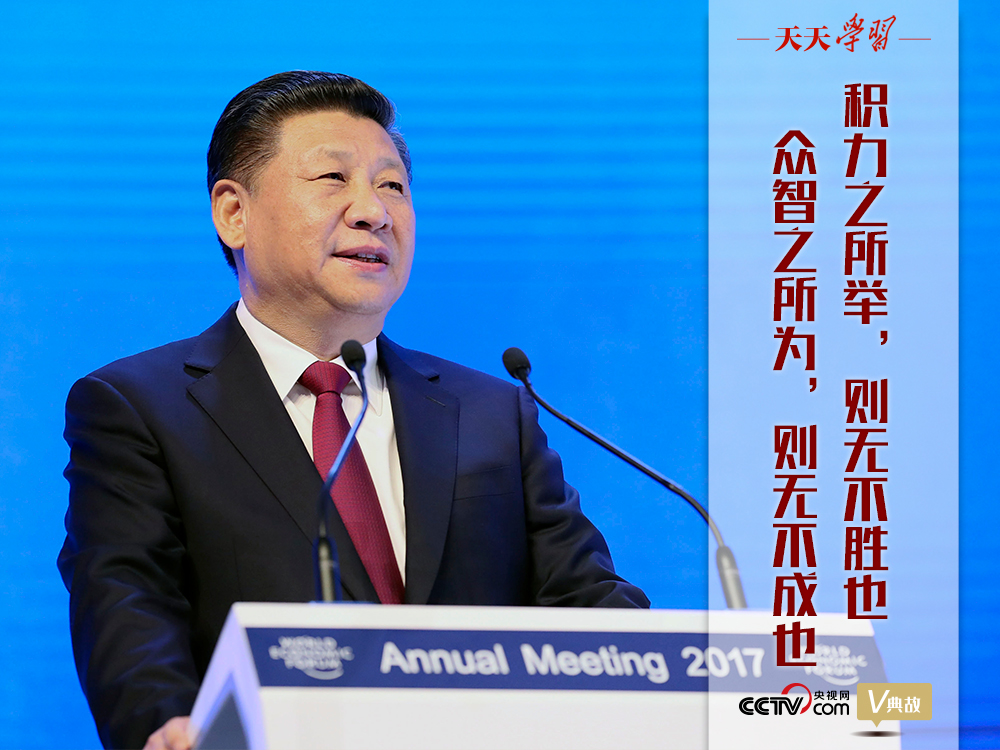
Listen! The supreme leader issued the strongest voice of reform and opening up in the new era.

"A country as big as ours should be ambitious."

The 19th National Congress of the Communist Party of China put forward a higher goal for China’s development, formed a strategic arrangement from building a well-off society in an all-round way to basically realizing modernization and then building a socialist modernized power in an all-round way, and issued the strongest voice for realizing the Chinese dream of great rejuvenation of the Chinese nation.

The supreme leader said a popular truth — — "Great dreams are not to be waited for or shouted, but to be spelled out and done."

The nine "must persist" are the comprehensive and meticulous arrangements of the supreme leader for the reform and opening up journey in the new era.

First, we must uphold the party’s leadership over all work and constantly strengthen and improve the party’s leadership.

Second, we must persist in taking the people as the center and constantly realize people’s yearning for a better life.

Third, we must adhere to the guiding position of Marxism and constantly promote theoretical innovation based on practice.

Fourth, we must stick to the road of Socialism with Chinese characteristics and constantly adhere to and develop Socialism with Chinese characteristics.

Fifth, we must persist in perfecting and developing Socialism with Chinese characteristics’s system, and constantly give play to and enhance China’s institutional advantages.

Sixth, we must adhere to development as the top priority and constantly enhance China’s comprehensive national strength.

Seventh, we must persist in opening wider to the outside world and constantly promote the building of a community of human destiny.

Eighth, we must adhere to the strict administration of the party in an all-round way and constantly improve its creativity, cohesion and combat effectiveness.

Ninth, we must adhere to the world outlook and methodology of dialectical materialism and historical materialism and correctly handle the relationship between reform, development and stability.

From "Although Zhou was an old country, its destiny was reformed" and "If the world was governed differently, it would be illegal for the country to be ancient" to "Great Harmony in the World" and "Harmony in All Nations", and then to "Heaven is strong, the gentleman strives for self-improvement, and the terrain is rich, and the gentleman carries things with virtue", the Chinese nation continues to move towards the future with the attitude of reform and opening up, which has a far-reaching historical origin and a profound cultural foundation.

Rooted in the deep soil of Chinese civilization, the supreme leader told the present from the past and encouraged the whole party and people of all nationalities. "Building a socialist modern power and realizing the great rejuvenation of the Chinese nation is a relay race. We must run one after another, and every generation must run a good result for the next generation."

Looking back on December 18th, 1978, I stood on December 18th, 2018.

We should keep in mind the spirit of the important speech of General Secretary Supreme Leader, unite more closely around the CPC Central Committee with Comrade Supreme Leader as the core, hold high the great banner of Socialism with Chinese characteristics and Do not forget your initiative mind, keep in mind the mission, carry out reform and opening up to the end, constantly realize the people’s yearning for a better life, and create new and greater miracles for the Chinese nation in the new era! Create new and greater miracles that make the world sit up and take notice! (Text/Central Radio and Television General Station CCTV)

Keep pace with the times, determine the reform objectives and tasks, and provide institutional guarantee for Chinese modernization

  General Secretary of the Supreme Leader pointed out: "To further deepen the reform in an all-round way, we must closely focus on the theme of promoting Chinese modernization." The Central Committee of the Communist Party of China’s Decision on Further Comprehensively Deepening Reform and Promoting Chinese Modernization (hereinafter referred to as "Decision"), which was deliberated and adopted by the Third Plenary Session of the 20th CPC Central Committee, drew a grand blueprint for further comprehensively deepening reform and opening up a broad prospect of Chinese modernization, defined the overall goal and main tasks of further comprehensively deepening reform, and led the reform and opening up to always advance in the right direction.

  The historic leap of two epoch-making "Third Plenary Sessions"

  The "Decision" clearly defined the importance and necessity of further deepening the reform in an all-round way, and emphasized the important historical position of the Third Plenary Session of the Eleventh Central Committee of the Party and the Second Plenary Session of the Eighteenth Central Committee of the Party: the Third Plenary Session of the Eleventh Central Committee of the Party was epoch-making and opened a new era of reform, opening up and socialist modernization. The Third Plenary Session of the 18th CPC Central Committee is also epoch-making, which has opened a new journey of comprehensively deepening reform, systematically designing and promoting reform in the new era, and created a new situation of China’s reform and opening up. This is of great significance for us to deeply understand and grasp the importance and necessity of further comprehensive deepening reform.

  In the early days of reform and opening up, the development level of China’s productive forces was relatively low. The core task of reform is to liberate and develop productive forces, promote rapid economic development, improve people’s living standards and enhance the country’s economic strength as soon as possible. Comrade Deng Xiaoping pointed out: "Poverty is not socialism" and "We should catch up with the times, which is the goal of reform". In the 1980s, the reform of household contract responsibility system in rural areas, the reform of enterprise contract system in cities and a series of reforms of price mechanism were all important measures to increase commodity factors and market factors and enhance incentive mechanism and economic vitality under the framework of planned economy system. Since then, the Third Plenary Session of the Twelfth Central Committee of the Communist Party of China has made the "Decision of the Central Committee of the Communist Party of China on Economic System Reform", emphasizing that China has implemented a "planned commodity economy on the basis of public ownership"; The Third Plenary Session of the 14th CPC Central Committee made "the Central Committee of the Communist Party of China’s Decision on Several Issues Concerning the Establishment of a Socialist Market Economic System", emphasizing "making the market play a fundamental role in the allocation of resources under the macro-control of the state"; The Third Plenary Session of the 16th CPC Central Committee made "the Central Committee of the Communist Party of China’s Decision on Several Issues of Perfecting the Socialist Market Economic System", emphasizing "giving full play to the basic role of the market in resource allocation to a greater extent". Under the guidance of these programmatic reform documents, China’s reform revolves around establishing and improving the socialist market economic system.The reform of national macro-control mode, factor market, labor market, state-owned enterprises, fiscal and taxation system and social security system are all aimed at mobilizing the enthusiasm of individuals, enterprises and localities, liberating and developing productive forces and promoting sustained and rapid economic development.

  The Third Plenary Session of the 18th CPC Central Committee held in 2013 made "the Central Committee of the Communist Party of China’s Decision on Several Major Issues of Comprehensively Deepening Reform", aiming at implementing the strategic plan of the 18th CPC National Congress on comprehensively deepening reform. This plenary session made arrangements for comprehensively deepening the reform, and made it clear that the overall goal of comprehensively deepening the reform is to improve and develop the Socialism with Chinese characteristics system and promote the modernization of the national governance system and governance capacity. At the same time, the plenary session emphasized that "the reform of economic system is the focus of comprehensively deepening reform, and the core issue is to properly handle the relationship between the government and the market", and put forward an important new expression of "making the market play a decisive role in the allocation of resources and giving better play to the role of the government". Since then, China’s reform has embarked on a new journey of deepening the reform in an all-round way with the emphasis on deepening the economic system reform and promoting the reform through overall system design. It not only emphasizes the liberation and development of productive forces, but also emphasizes the improvement and development of the Socialism with Chinese characteristics system and the modernization of the national governance system and governance capacity.

  This epoch-making change has a profound realistic background and concept guidance. After more than 30 years of reform and opening up, some deep-seated institutional problems and barriers to solidification of interests have become increasingly apparent, and reform has entered a critical period and deep water areas. It has become the common requirement of the whole society to comprehensively deepen reform, solve problems and promote development. For example, getting rid of poverty, promoting common prosperity, promoting environmental protection and ecological construction are all major issues that need to be solved urgently. If these problems are not solved, it will not only affect the realization of the goal of building a well-off society in an all-round way, but also affect the people’s sense of happiness and security. Therefore, it is necessary to put it on the important agenda, push forward the reform with real guns and knives, highlight the system construction, and constantly promote the self-improvement and development of Socialism with Chinese characteristics’s system. At the same time, China is still in the primary stage of socialism, and development is still the key to solving all our problems. Therefore, we must further emancipate our minds, emancipate and develop social productive forces, emancipate and enhance social vitality, resolutely get rid of the shortcomings of various institutional mechanisms, and strive to open up broader prospects for the cause of Socialism with Chinese characteristics.

  Promoting three "better adaptations" can provide institutional guarantee for Chinese modernization.

  Further deepening the reform in an all-round way is not only a continuation of the practice of comprehensively deepening the reform since the Third Plenary Session of the 18th CPC Central Committee, but also a new chapter in the era of promoting Chinese modernization in the new journey. The overall goal of further comprehensive deepening reform proposed in the Decision is to continue to improve and develop the Socialism with Chinese characteristics system and promote the modernization of the national governance system and governance capacity, and in the "guiding ideology of further comprehensive deepening reform", it is proposed that "the relations of production and productivity, superstructure and economic base, national governance and social development should be better adapted to provide a strong impetus and institutional guarantee for Chinese modernization". Promoting three "better adaptations" is an important expression in the Decision. It is not only the progress of the reform goals of the past two landmark Third Plenary Sessions, but also a high summary of the situation and tasks facing the next reform based on building a socialist modernization power in an all-round way. In particular, "better adaptation of state governance and social development" is an important new formulation of this plenary session, which embodies the governance concept and requirements that match the new situation and new tasks in the new era of modernization.

  Continuing to emancipate and develop productive forces requires simultaneous efforts to make the relations of production and productive forces, superstructure and economic base better adapt. To liberate and develop productive forces, we should not only "break" but also "establish". We still have many shortcomings to fill in the system construction. The "Decision" proposes to improve the basic system of market economy, including property rights system, market access system, social credit system and supervision system. These are the basic guarantees for the effective operation of the socialist market economy, including many important new requirements. For example, it is proposed to protect the economic property rights of all kinds of ownership equally and for a long time according to law. The expression "long-term" highlights that protecting the economic property rights of all kinds of ownership is not an expedient measure and will not change, giving all kinds of investors and entrepreneurs long-term confidence and expectations. For another example, in the part of building a unified national market and improving the macroeconomic governance system, many contents of institutional mechanism construction are put forward. For another example, private enterprises are required to build a system, and support and guide private enterprises to improve their governance structure and management system, and strengthen enterprise compliance construction and integrity risk prevention and control.

  In view of the primary task of high-quality development, the Decision has deployed a number of reform tasks. At present, the incentive and restraint mechanism to promote high-quality development is still not perfect, and it faces many institutional and institutional obstacles and bottlenecks, which need to be solved by further comprehensively deepening reforms. For example, in the operation of the market, we have made great efforts to encourage entry into the market, but the institutional arrangements for exit from the market are still not perfect, which is not conducive to the market to play the role of survival of the fittest and improve the quality of development. The "Decision" proposes to improve the enterprise bankruptcy mechanism, explore the establishment of an individual bankruptcy system, promote the reform of enterprise cancellation, and improve the enterprise withdrawal system. Only by successfully eliminating the low-efficiency and low-competitiveness productive forces can we really promote the agglomeration of various advanced production factors to the development of new quality productive forces, greatly improve the total factor productivity, and provide new endogenous motivation and institutional guarantee for high-quality development.

  To solve outstanding problems, we should not only persevere and overcome difficulties, but also establish rules and regulations and form long-term institutional mechanisms. This is because the reform measures to deal with outstanding problems often involve stock adjustment, and the interest relationship is complicated, which will inevitably encounter difficulties and challenges. Standardizing the order of income distribution and promoting common prosperity involves not only the problem of making a big cake and dividing it well, but also the problem of initial distribution and redistribution. Different subjects are in different positions, and their views are inconsistent. In addition, changes in economic development speed, capital flow tendency, local government preferences and other situations will affect the income distribution pattern. In view of the outstanding problems, the "Decision" insists on solving them by promoting institutional arrangements. For example, it is proposed to improve the tax system that is conducive to high-quality development, social equity and market unity, and optimize the tax structure, which has clearly defined the direction and measures for deepening the reform of the fiscal and taxation system. For another example, it is proposed to standardize the laws and regulations of local investment promotion, and it is strictly forbidden to give preferential policies in violation of laws and regulations. This is an institutional constraint on local investment promotion by building a unified national market.

  Social progress brings diversified demands, which requires better adaptation between national governance and social development. Promoting "better adaptation between state governance and social development" is an important new formulation in the Decision, which embodies our Party’s profound understanding and grasp of new problems and challenges arising in the process of economic development and social progress. With the improvement of China’s economic development level and national education level, how to correctly handle the relationship between social vitality and social order is very important. Both practice and theory show that the period of modernization development is a period of simultaneous increase of social vitality and unstable factors. For example, the development of education has improved people’s literacy rate and education level, and increased the influence of the media on people. As people’s horizons are higher and farther, their expectations will continue to grow and expand, which is likely to exceed their ability to meet these expectations. Another example is that economic development will increase the geographical mobility of population, make the distribution of population and resources more balanced, and at the same time break the original social stability mechanism. With the increase of the population flowing from rural areas to cities, if the relevant supporting services can’t keep up, it will not be able to better meet the people’s expectations of integrating into cities. The "Decision" has made many major reforms and arrangements for these new problems, and proposed to improve the system and mechanism of urban-rural integration development, promote the equal exchange and two-way flow of urban and rural factors, narrow the differences between urban and rural areas, and promote the common prosperity and development of urban and rural areas; We will implement the system of providing basic public services by registered permanent residence accounts,Promote qualified agricultural transfer population social insurance, housing security, compulsory education for accompanying children, etc. to enjoy the same rights as the registered population in the place of migration, and accelerate the urbanization of agricultural transfer population; Wait a minute. To further comprehensively deepen reform, while giving consideration to fairness and efficiency, we should also give better consideration to vitality and order, and promote better adaptation between national governance and social development.

  To properly handle the relationship between state governance and social development, it is necessary to promote the whole society to be both vibrant and orderly in the process of profound and complicated social progress and change. Therefore, we should make great efforts in system construction to meet the people’s growing needs in democracy, rule of law, fairness, justice, security and environment, and form a normalized system and mechanism to coordinate social interests, guard against social risks, resolve social contradictions and maintain social stability. This puts forward new requirements for the ability and level of protecting citizens’ rights, maintaining social justice and maintaining social security. For example, the "Decision" proposes to establish a minor criminal record sealing system, which is a concrete reform measure of the criminal justice system, highlighting the important concept of the state to strengthen judicial protection of human rights, especially to protect the legitimate rights and interests of people at fault, and is of great significance for minimizing social opposites and turning negative factors into positive ones. There are many reforms and arrangements in the Decision that reflect the new pattern of economic development, the new concept of social progress, and the new requirements of the people, all in order to let the people experience the level of national governance that matches the modern country from one specific reform measure.

  In a word, there are many major theoretical innovations in the Decision. These innovations are based on an accurate grasp of the historical position of further deepening the reform in an all-round way, a deep understanding of the relationship between the China characteristics of Chinese modernization and the general laws of modernization, and a foresight of the new opportunities and challenges that may be faced in the modernization journey. They are another important document with symbolic and groundbreaking significance in the history of China’s reform and opening up. The comprehensive implementation of the major reform tasks proposed in the Decision will certainly provide a strong impetus and a solid institutional guarantee for promoting Chinese modernization.

  (The author is a professor at China Academy of Social Sciences)

Is it still difficult for primary and secondary school teachers to break through the "New Deal for Professional Titles" and evaluate their professional titles?

  "I am now a second-level teacher, and I can participate in the selection of the first level after five years of the second level." Wang Zan (pseudonym) is a Chinese teacher in a primary school in Beijing. She has not been working for a long time and is planning her career.

  The post grade of teachers mentioned by Wang Zan is what the society usually calls job title evaluation and employment.

  For a long time, the evaluation and appointment of professional titles has attracted the attention of primary and secondary school teachers. The level of professional titles is not only related to teachers’ personal income, but also the recognition of teachers’ own professional ability. However, because the previous policy stipulated the proportion of post structure of different teacher ranks, the competition of professional title evaluation of primary and secondary school teachers was very fierce.

  Recently, with the issuance of "Guiding Opinions on Further Improving the Management of Post Setting in Primary and Secondary Schools" by Ministry of Human Resources and Social Security and the Ministry of Education (hereinafter referred to as "Opinions"), many people expect that the "New Deal" will improve the situation that has plagued primary and secondary school teachers for many years.

  More primary and secondary school teachers will have the opportunity to evaluate senior titles.

  Sunya works in a teacher training school in a city in northern China. She is a teaching and research fellow of Chinese in primary schools. The introduction of the "New Deal for Professional Titles" made this old teaching and research researcher with 30 years of service extremely excited.

  "The biggest impact of this" Opinion "on primary and secondary school teachers is that more teachers will have the opportunity to evaluate senior titles." Chu Zhaohui, a researcher at the China Academy of Educational Sciences, said.

  The reporter from Zhongqingbao. com combed the previous policies: in 2015, the state reformed the title system of primary and secondary school teachers, changing the original independent title system of middle school and primary school teachers. After unification, the titles of primary and secondary school teachers include three-level teachers, two-level teachers, first-level teachers, senior teachers and full-level teachers, among which senior teachers and senior teachers correspond to senior titles, first-level teachers correspond to intermediate titles, and second-level teachers and third-level teachers correspond to junior teachers.

  Chu Zhaohui believes that the Opinions clearly put forward that the post grade setting of primary and secondary school teachers is divided into high, middle and primary, and the post structure ratio of high, middle and primary schools is no longer uniformly stipulated at the national level, but on the basis of clear and reasonable allocation requirements, the provincial human resources and social security departments are authorized to scientifically set up the post structure of primary and secondary schools in conjunction with the education administrative departments, and appropriately optimize and adjust the post structure ratio of primary and secondary schools.

  According to the "Opinions", after the implementation of this year’s "New Deal for Professional Titles", all provinces can calculate, allocate and manage teachers’ post ranks in counties. That is to say, the proportion of junior, intermediate and senior teachers and how to allocate them will be determined by each province according to the actual situation of the province. At the same time, the "New Deal for Professional Titles" gives a reference ratio for the number of senior professional titles: during the "14 th Five-Year Plan" period, the number of full and senior teachers will be controlled within five thousandths of the total number of primary and secondary school teachers in China.

  More young teachers are expected to break through the career "ceiling"

  "For primary and secondary school teachers, the limitation of the proportion of professional titles is like the ceiling of a career. The development of many young people is stuck there and can’t move for many years." Sun Ya said.

  The teachers interviewed by the reporter of China Youth Daily and China Youth Network all mentioned what Teacher Sun called the "ceiling".

  "Many young teachers in the school are second-level teachers. The first level has long been occupied by the old teachers, and the old teachers have done a good job, but it is difficult to go up, so many young teachers can’t identify the first level." The headmaster of a middle school in Beijing, who did not want to be named, said that young teachers who are newly recruited now have high academic qualifications. After joining the job, they will soon get junior titles, and it will be difficult to evaluate the upward titles. Many school leaders are worried about how to motivate young people’s enthusiasm.

  Restrictions are not only reflected in schools.

  Because of her excellent work, Sunya was rated as a municipal backbone teacher in her city as early as around 2000. A few years later, many backbone teachers similar to herself have been rated as "academic leaders", but Sunya has been in the "backbone" team for more than ten years, "because we require here ‘ Academic leader ’ A ‘ Hard leverage ’ It must be a senior professional title. " However, there are only two places with senior titles in the school, and Sunya did not win it.

  Because there are too few places, there are also many "strange phenomena" in the process of evaluating and appointing primary and secondary school teachers. In many first-and second-tier cities, it happens from time to time that teachers find ways to evaluate their professional titles.

  "Many teachers don’t really admire those ‘ Leader ’ Or ‘ Premium ’ 。” A teacher from a middle school in Beijing told the reporter of China Youth Daily and China Youth Network that some people are relatives of a leader and are "taken care of" when evaluating their professional titles; Others are good at making connections from top to bottom, and even some "academic leaders" are known for their wide connections.

  Another phenomenon has appeared in schools in some counties and towns.

  "We are a county-level school, and there are 143 teachers in the school, including 64 with intermediate titles. Because one of the conditions for entering the city exam is that you need to have five years of teaching experience, there are more vacancies in rural schools with intermediate titles, and some towns and villages still have inexhaustible phenomena, so many teachers are admitted to the county schools only after evaluating the intermediate titles." Han Zhouxing, Siyuan Experimental Middle School in Xingguo County, Jiangxi Province, said that there are already six teachers with senior titles in the school. In this way, teachers with intermediate titles can’t get on, and the number of places with intermediate titles is not vacant. There are more than 70 teachers with junior titles in the school who want to compete for intermediate titles. "So the competition between senior and intermediate titles is very fierce."

  Chu Zhaohui introduced that in order to solve these problems, some schools have adopted the method of "local food stamps". The so-called "local food stamp" means that teachers in this school will be treated with a higher professional title, but after leaving this school, this treatment will be gone, and it will still be treated according to the professional title level recognized by the local education authorities.

  The middle school principal, who did not want to be named, expected: "This ‘ New Deal ’ It can really be put in place, break this restriction, and let more young people grow rapidly. "

  "Being able to go up and down, being able to enter and exit" continues to motivate and put an end to "lying flat"

  In recent years, many places and schools have been as fair and transparent as possible in the evaluation and appointment of teachers’ professional titles. "There are still quite a lot of stages displayed by teachers." Han Zhouxing said, for example, governments at all levels evaluate the best first, activities and events organized by teaching and research offices and audio-visual classrooms, and the declaration of topics, and so on.

  A history teacher in a middle school in Beijing introduced that his school adopts the "points system", and teachers will get different points for winning prizes in various "awards" and "appraising excellent students", as well as points for class teachers and publishing papers. Finally, all participating teachers should be democratically evaluated.

  However, process justice alone is not enough.

  Some teachers are "flat" after their professional titles are promoted. "It is said that the physics teacher in my baby’s class is particularly good. Last year, she was also rated as the academic leader in the city. However, less than a month after the start of school, the teacher has been asked by his classmates several times in class. Many children suspect that the teacher did not prepare lessons at all. As a last resort, the students in the class can only go to the next class to answer questions from the teacher." A parent in Beijing told the reporter of China Youth Daily and China Youth Network.

  "Professional title evaluation is an important factor affecting teachers’ enthusiasm for work, and it will also put greater pressure on teachers." Chu Zhaohui said, "What are the criteria for the selection of teachers’ professional titles? Can the standards of different schools and different regions be consistent? Are the rights of teachers in different schools equal and fair after obtaining the same rank? These are deeper problems. "

  The "New Deal for Professional Titles" responded to these problems. For example, the Opinions mentioned that it is necessary to "follow the law of the growth and development of primary and secondary school teachers, innovate post management policies and measures, broaden career development channels, stimulate the enthusiasm, initiative and creativity of primary and secondary school teachers, and further strengthen the construction of primary and secondary school teachers". It also puts forward that we should adhere to classified policies and hierarchical management, set posts according to events, streamline efficiency, be scientific and standardized, and combine evaluation and engagement, pay equal attention to incentives and constraints, give full play to the main role of schools in employing people, improve the assessment system, strengthen post-employment management, reward the excellent and punish the poor, establish the orientation of attaching importance to teachers’ morality, ability, performance and contribution, and build a flexible employment mechanism in which personnel can go up and down, enter and leave.

  It is precisely because the post structure of teachers’ ranks involves not only the immediate interests of teachers, but also how to balance between urban and rural areas and between developed and backward areas. Chu Zhaohui said that it is urgent to establish a more scientific, fair and objective professional evaluation mechanism for primary and secondary school titles, so that teachers’ professional title evaluation and right use can be regulated. (Zhongqing Daily, Zhongqing.com reporter Fan Weichen)

India wants to build a space station in 2035, and "procrastination" may not be completed on time.

A few days ago, Somanath, chairman of Indian Space Research Organization (ISRO), revealed the latest progress and plans of India’s manned space program at a conference jointly sponsored by Indian Surveying and Mapping Society (ISG) and Remote Sensing Society (ISRS), among which the development plan of India’s manned space station in the future attracted the most attention.

With the advancement of India’s "Gaganyaan" manned spacecraft program, India’s manned space station program will also be put on the agenda. It is planned to launch and deploy the first verification module of the space station around 2028 and build the Indian space station in 2035 — — Bharatiya Antariksha Station。 So, what is the level of the Indian space station?

The space station model announced by India.

India’s manned space flight: struggling to move forward

Manned space flight is an important symbol to measure a country’s comprehensive strength today. For India, which wants to become a "great country with great sound and color", manned space flight is obviously a plus item. In 1984, through international cooperation with the Soviet Union, the Indian Space Research Organization sent India’s first astronaut Sharma into space. He took the Soyuz T-11 spacecraft to the Salute 7 space station and made a space flight for 7 days, 21 hours and 40 minutes.

Borrowing a ship to the sky is just a pathfinding move to develop the ability of autonomous manned space flight. The ultimate goal is to send Indians into space by their own rockets and spacecraft. But India has lacked the necessary space capability for a long time, and even mature and reliable rockets did not exist before the 21st century — — It is the 21st century that the PSLV rocket independently developed by India has reached a mature and reliable state. Although the carrying capacity of the PSLV rocket is enough to launch a spacecraft of the same level as the American Mercury, the Indian Space Research Organization has long been in contact with the Soyuz spacecraft, and it is obvious that it will not "go backwards" to develop a spacecraft with a lower technical level like Mercury. The launch mass of Soyuz spacecraft is 6.8 tons, while the capacity of GSLV MK II rocket in low-earth orbit is 6 tons. It is rumored that India had planned to launch a manned spacecraft with two crew members with GSLV MK II rocket, but the performance of GSLV MK II rocket also made India a little disappointed — — Achieving maturity is something after 2010.

Although the manned space program has not been formally approved by the state, in order to promote the manned space program, the Indian Space Research Organization began to accumulate the technology and experience of manned space engineering in advance. In January, 2007, the Indian Space Research Organization launched a test module named Space Capsule Return Test (SRE). SRE-1 is just a simple return module. After being launched by PSLV rocket, it flew in low earth orbit for about a week, and then re-entered and landed on the sea surface of the Bay of Bengal. The Indian Space Research Organization has broken through the reentry technology of manned spacecraft through the SRE-1 return module, and the thermal protection tiles of the thermal protection system can be reused.

The Indian Space Research Organization (ISRO) subsequently proposed to launch a manned spaceflight project, and planned to send Indians into space by 2015. However, this plan did not receive strong support from the Indian government, and the Indian government only approved a budget of 20 million US dollars for technical pre-research. ISRO can only continue to tackle technical problems first. In 2008, the Indian Space Research Organization decided to build an astronaut training center in Bangalore, and developed spacesuits inside and outside the cabin. It also prepared for the construction of a manned space mission control center and attempted to build a special manned space launch station at the Sri Harikota launch site. In 2012, India’s "Twelfth Five-Year Plan" was announced, and the manned space program has not yet been approved, which means that India’s manned space program was officially launched after 2017 at the earliest.

With the maturity of the GSLV MK II rocket and the successful development of the new generation GSLV MK III/LVM3 rocket, on December 18th, 2014, the Indian Space Research Organization carried out the suborbital test flight of LVM3 and launched the manned module for atmospheric re-entry experiment (CARE). The CARE manned module, weighing about 3.7 tons, is a full-scale test module of the manned spacecraft in the future. It was accelerated to a speed of 5.3 km/s and re-entered, and many key subsystems such as navigation, guidance and control and thermal protection were tested. Of course, such a large return capsule also means that the GSLV MK II rocket can only "look at the ship and sigh", and it is necessary to use the LVM3 rocket with greater capacity to launch a manned spacecraft. In addition, India has also carried out airdrop and water splash tests of manned return capsule, and the development of service capsule of spacecraft has also made progress. Indian Space Research Organization directly developed the service capsule of manned spacecraft on the basis of the fourth stage of PSLV rocket.

In 2017, the Indian Space Research Organization began to implement the manned space program, and successfully completed the launch pad escape test in 2018. On August 15, 2018, on the National Day of India, Indian Prime Minister Modi officially announced the manned space program called Gaganyaan. At that time, it was planned that the project budget would total 100 billion rupees (about 1.35 billion US dollars) in the next seven years. The Indian Space Research Organization also disclosed that the manned spacecraft is a typical two-cabin spacecraft with a total weight of about 7 tons. They plan to transport three members for a 5-7-day flight in 2021. The Indian Space Research Organization also sent astronauts to Russia for training, and established a ground station in Australia through international cooperation to support future manned flights.

However, with the development of the spacecraft, the plan has not changed quickly. The manned return module has become a large manned module with a weight of 5.3 tons, while the service module has a weight of 2.9 tons, and the total weight of the spacecraft has increased to 8.2 tons. The Gaganyaan spacecraft will be sent into a circular orbit with a height of 400 kilometers by a LVM3 rocket that has passed the manned certification. The Indian Space Research Organization obviously underestimated the engineering difficulty of manned spaceflight. Coupled with the impact of the epidemic, the first hot test of the manned version of the rocket Vikas was carried out in July 2021, the main parachute airdrop test was carried out in 2022, the parachute test was completed in August 2023, and the spacecraft escape test was carried out on October 21 of the same year. Like most space programs in India, the manned space program is also plagued by "procrastination". The first unmanned launch of Indian manned spacecraft has been postponed to 2024, and the first manned flight plan will be realized in 2025.

Manned space station: a vision full of variables

There is a saying in the aerospace field: shipbuilding is for building a station, and building a station is for application. Manned spacecraft is only the first step of manned spaceflight project. Manned spaceflight is to serve space applications after all, and space station is an essential infrastructure for large-scale space science and applications. Although India has not yet launched a manned spacecraft, it has already carried out the pre-research work of a manned space station.

In 2018, India’s manned spaceflight project was officially approved. In June 2019, Sivan, chairman of the Indian Space Research Organization, revealed that India is preparing to develop and launch a space station in the next stage. It is said that the Indian Space Research Organization will launch a 20-ton single-cabin space station with the class of "Salute VII" around 2030, support short-term space stay of 15-20 days, and carry out space microgravity scientific experiments. Manned space engineering technology covers a wide range, among which rendezvous and docking is an indispensable key technology, and the Indian version of Salute VII space station should also break through the mastery of space rendezvous and docking. In 2019, Indian media reported that the Indian Space Research Organization had started research on space docking technology as early as 2017, and two small satellites would be launched in the future to carry out space docking experiment (SPADEX).

In 2021, at the Global Space Exploration Conference (GLEX 2021), Swan, chairman of the Indian Space Research Organization, mentioned that India will develop a manned space station in the future to achieve long-term orbital residency. In his slide show, the core module of the space station is docked with two Gaganyaan spacecraft, and there are two suspected experimental modules. The core module also has a mechanical arm and an airlock module, and the performance index is greatly improved compared with the original "Salute" series of space stations. According to public information, the Gaganyaan spacecraft, which had planned to make its first flight at the end of 2021, was postponed to 2023, but in 2022, President Swan continued to say that this larger and more complex space station would be built around 2030.

In 2022, the Indian Space Research Organization showed a new space station model. This space station named the microgravity experimental manned orbital space station (HOME) consists of a service module, a residence module, a propulsion module and an inflatable module. It is exaggerated that there are not only three conventional modules, but also two inflatable modules on the HOME model, and four Gaganyaan spacecraft have been docked! However, considering that the Indian manned spacecraft has not yet been launched, the Indian Space Research Organization mainly focuses on the manned spacecraft, and the various manned space station configurations on display are of little reference value. In the future, with the implementation of India’s manned spaceflight project and the changes of India’s economic development and government support, the design scheme of the space station will be revised at any time. In an interview, Somanat, the newly appointed chairman of the Indian Space Research Organization in 2023, said that the Gaganyaan plan aims to achieve independent space flight capability. Once the manned space flight capability is broken, the space station plan will be implemented in the next 20 to 25 years. The space station has been identified as the main goal of the Indian Space Research Organization in the next decade. Judging from the available information, the Indian Space Station is no longer an imitation of Salute VII, but a typical multi-module space station.

The design of the Indian Space Station is also constantly changing. In November 2023, the chairman of the Indian Space Research Organization, Somanat, presented a slide at the conference. It is planned to use Gaganyaan spacecraft to carry a small inflatable capsule in 2026-2028, test the deployment technology of the inflatable capsule in orbit, and then conduct the rendezvous and docking test in orbit. He also mentioned that the Indian Space Station includes three cabins, namely, living cabin, command and propulsion cabin and inflatable cabin. The total mass of the space station is about 25 tons, and the construction of the space station will be completed around 2035. The Indian manned space station has not been formally established. Whether it is the completion time in 2035, the total mass of 25 tons, or the design configuration of the three cabins, it is obviously uncertain. The Indian space station plan will continue to change.

According to the information released by the Indian Space Research Organization, Gaganyaan spacecraft will be launched by LVM3 rocket. In the existing scheme, the space station module will also be launched by LVM3 rocket, and the low-earth orbit capacity of LVM3 rocket is only about 10 tons, which may be the key to the total mass of the three-cabin space station being only 25 tons.

The first flight of LVM3 rocket in 2017 is not the end of the development of Indian launch vehicle. The Indian Space Research Organization is improving and upgrading the LVM3 rocket, and plans to increase the synchronous transfer orbit capacity of the rocket from 4 tons to 6-6.5 tons, and the corresponding near-earth orbit capacity can also reach about 15 tons. In addition, India is still developing a new generation of rocket NGLV, which will replace the existing launch vehicles such as PSLV, GSLV and LVM3. The NGLV rocket has a capacity of 20 tons in low-earth orbit and is scheduled to make its first flight around 2030.

Somanat, chairman of the Indian Space Research Organization, also said that NGLV rockets will be used to support future commercial launches, deep space exploration and manned space missions, and the current 25-ton space station may be an expedient measure. With the development of NGLV rockets, the Indian Space Research Organization is likely to develop 20-ton cabins and build a large permanent space station with three or more cabins. The Indian space station plan looks ambitious, but there are still many key technologies that need to be broken through, and it is likely that, like most Indian space programs, it will not be completed on time. Moreover, many Indian space programs are ambitious and divorced from India’s space industry and technical level, and the actual results are quite different from PPT.

Hurricane Florence is about to hit the United States, and experts are worried about nuclear power plants or current leakage accidents.

       CCTV News:According to the forecast, Hurricane Florence may land on the east coast of the United States in the early morning of the 15th Eastern Time, and will move to the southwest. According to a spokesman for Duke Energy, the six nuclear power plants operated by the company are in the moving path of Hurricane Florence. At present, the company is ready to deal with the hurricane.

one

Hurricane Florence

       Duke Energy said that the six nuclear power plants operated by the company are currently very safe and the public need not worry. The company will start the shutdown procedure at least two hours before Hurricane Florence lands on the east coast of the United States. According to officials of the Federal Emergency Management Agency, the Federal Emergency Management Agency is not worried about the safety of these nuclear power plants, because first of all, these nuclear power plants have undergone a series of reinforcement and can withstand hurricane attacks. Secondly, if these nuclear power plants are flooded, the internal emergency generators and pumps will also start pumping operations to ensure the safety of nuclear power plants. The official said that at present, these nuclear power plants have no potential safety hazards, and the Federal Emergency Management Agency will follow up and monitor the situation of these nuclear power plants.

       However, some local experts are worried about this. Experts said that the Brunswick nuclear power plant, one of the six nuclear power plants, is one of the closest nuclear power plants to Hurricane Florence. The two nuclear reactors of the nuclear power plant have the same design as those of the Fukushima nuclear power plant in Japan, which suffered a leakage accident due to the earthquake and tsunami. Although the relevant agencies said that the nuclear power plant had been strengthened safely, the specific situation was not announced to the public. Therefore, if Hurricane Florence caused heavy rains and floods, it is still unknown whether the Brunswick nuclear power plant can safely cope with these situations.

The picture shows the disaster relief scene of Fukushima nuclear power plant accident.

The picture shows the disaster relief scene of Fukushima nuclear power plant accident.

       In addition to concerns about the safety of nuclear power plants, the pollution that Hurricane Florence may cause has also attracted much attention.

       According to the US Environmental Protection Department, Hurricane Florence may bring environmental disaster to the local area after landing on the east coast of the United States. According to the department, the rainstorm and flood caused by the hurricane may wash toxic waste and cinder into local residents’ homes, and even flow into the groundwater system, polluting local water sources.

       At present, the department is closely monitoring the situation of several toxic waste treatment plants and more than 20 cinder treatment plants in the hurricane-hit areas. Relevant areas are taking measures, including opening the reservoir and releasing water, to avoid environmental disasters caused by Hurricane Florence.

How do 16-year-olds from Sichuan smuggle into Dubai? Expert: The airport’s heavy precautions have all failed.

16-year-old boy Xu.

CCTV news client news on June 17,On June 15th, the Civil Aviation Administration made an appointment with Shanghai Airport (Group) Co., Ltd. regarding the illegal invasion of the control area of Shanghai Pudong Airport. The Civil Aviation Administration has decided to conduct a special air defense safety assessment of Shanghai Pudong Airport, during which it will stop accepting domestic applications for overtime, charter flights and new routes, and will also impose administrative penalties on Shanghai International Airport Co., Ltd. according to law.Then it is reported that this is the first time that the Civil Aviation Administration has made an administrative appointment for relevant personnel because of air defense safety issues. So what happened to this air defense incident at Shanghai Pudong Airport?

16-year-old boy hiding in luggage compartment and smuggling into Dubai

Xu, a 16-year-old boy from Bazhong, Sichuan, decided to try his luck in Dubai after listening to the news that beggars in Dubai earn 470,000 yuan a month. According to the introduction of the Consulate General of China in Dubai, on the evening of May 26th, Xu climbed over the wall of Shanghai Pudong Airport and found Emirates flight EK303 from Shanghai to Dubai on the tarmac. While the staff were not looking, he sneaked into the cargo hold of the passenger plane.

At 0 o’clock on the 27th, the plane took off. After more than nine hours’ flight, Xu arrived in Dubai. However, he didn’t even get off the plane, and his dream of making a fortune was broken. When the local staff unloaded the luggage, they found Xu who was hiding in the container, and then called the police to hand over Xu to the police.

Xu was later detained by the local police on suspicion of illegal entry and endangering the safety of public aircraft. After that, the prosecution initiated judicial proceedings, and local Chinese lawyer Mian Jinlong provided translation and judicial assistance for Xu.

On the same day, the Consulate General of China in Dubai, after receiving the police notification, immediately rushed to the scene to understand the situation and started the consular protection procedure.

Ma Xuliang, Acting Consul General of the Consulate General of China in Dubai, said that according to the local laws of the United Arab Emirates, Xu may face two criminal charges of endangering aviation safety and illegal entry. However, because Xu was a minor, on June 6th, the local procuratorate in Dubai decided not to prosecute Xu and sent him back to Shanghai, China directly.

In addition, according to media reports, because Xu is a minor, at present, the Shanghai police have decided to "detain, not execute" him.

There are many checkpoints at the airport. How do teenagers find loopholes and get into the cabin?

Schematic diagram.

Shanghai Pudong International Airport, one of the three major international airports in China, covers an area of 40 square kilometers, with 218 parking spaces and 149 square meters of tarmac. According to the statistics of 2014, the annual passenger throughput is more than 51.66 million passengers. In 2015, Shanghai Pudong Airport was ranked among the top 100 major airports in the world. How can such a large airport easily let a 16-year-old boy complete such a fantastic trip?

With the dream of making big money, Xu bid farewell to his parents and came to Shanghai from Jiangsu alone. On May 26th, Xu rented a house from Japan and took the subway line 2 to Shanghai Pudong Airport directly. The highest fare for the whole journey was only 11 yuan, which was all the expenses for his trip to Dubai.

How did a 16-year-old boy break through numerous barriers, enter the tarmac of the airport and get into the cargo hold of the plane without buying a plane ticket, security check and customs clearance?

According to Xu’s memory, on the night of the incident, he approached the fence of the airport by climbing a big tree for eight to ten meters, and then slipped into the airport from the fence of the airport.

After a long observation, Xu identified the plane flying to Dubai. The plane parked on the tarmac, with the hatch open and no staff guarding it, Xu easily climbed in along the ladder in the cargo hold. He knew nothing about whether there was danger in the cargo hold and whether there was enough oxygen after take-off. Xu told the lawyer that he just felt very cold at that time. He used some textile things in the luggage compartment as quilt covers and went to Dubai after a sleep.

Li Jian, deputy director of the Civil Aviation Administration: This matter is serious in nature and has a bad influence.

A brief review of this China teenager’s bizarre journey. He started on May 26th, illegally entered the cargo hold of the Emirates plane, then set off from Shanghai in the early morning of the next day, arrived in Dubai nine hours later, and returned to Shanghai on June 7th. Then if outsiders see such a process, they will think that he is really capable and full of strange things. But in fact, it is far from the case. If we look at this matter from the perspective of air defense, we will find that there are dangers inside. soIn the words of Li Jian, deputy director of the Civil Aviation Administration, it is eight words: serious in nature and bad in influence.

In the process of observing this incident, people were surprised and obviously frightened. Why do you say that? becauseThe child broke through three obstacles in a short series of processes.

First, he climbed a big tree, observed it for a while, then skipped the boundary and jumped into it. At this point, the first pass has passed. Next, he will pass through the airport control area, and he will pass through such a control area while no one is paying attention. Similarly, the second lane is closed. In Sandao Pass, when he saw this Emirates Airlines plane parked here and loading goods, he got in while people were not looking. At this time, the first Sandao Pass also passed.

Just 12 years before the 16-year-old Xu sneaked into Dubai, on November 11, 2004, two teenagers sneaked into the landing gear cabin of a passenger plane flying from Kunming to Chongqing. One unfortunately fell to death on the spot when the plane took off, and the other miraculously flew to Chongqing Jiangbei Airport.

Only half a year later, a similar incident happened in Dunhuang. In May 2005, when a passenger plane of China Eastern Airlines took off at Dunhuang Airport, a boy fell from the landing gear cabin and died.

Sneaking into the tarmac, sneaking into the landing gear cabin, and the airport were identified as having the main responsibility. This time, it happened again at Shanghai Pudong Airport.

Every time such an incident happens, there will be a big discussion about flight safety. What worries the public is that only teenagers have sneaked in these times. What if they are malicious people?

On July 26th last year, there was an arson with a knife in the air on a flight from Taizhou.

The flight attendants and passengers on the flight on the same day were surrounded. After a few minutes of confrontation between the two sides, the man not only did not put down the lighter, but took out a long knife of more than 20 centimeters. Less than five minutes after the plane made an emergency landing, the man once again rushed into the first class and lit the newspaper. After the incident, Taizhou Airport, which exposed security loopholes, was ordered to suspend business for more than a month and carry out security rectification. And a series of related personnel were dismissed.

[Expert Q&A]

What are the safety problems exposed by juvenile smuggling? How to supervise air defense safety?

Q: A 16-year-old boy has entered the cargo hold of an airplane. What is the danger it brings?

Huang Quan, Associate Professor of civil aviation university of china Law School:Fortunately, this teenager is not a terrorist.One problem discovered from this incident is that all three preventive measures against such incidents at civil aviation airports have failed.-the boundary of the airport, he turned over; The security personnel in the airport control area did not find it; The airline security personnel did not find it; The camera’s monitoring didn’t find it, and no one found this problem, so this danger is very great.

Q: What kind of responsibility should Shanghai Airport bear in this respect?

Huang Quan:The key depends on whether the enterprise security plan has been implemented in this process. If it is strictly implemented, it means that there is a problem with the security plan. If it is not strictly implemented, it will bear direct responsibility.

Q: In this incident, apart from the obvious responsibility of Shanghai Airport, what other relevant departments have failed in their duties?

Huang Quan:In addition to the responsibility of enterprises to independently implement the security plan, another issue that we can’t avoid is whether the administrative organ has assumed the regulatory responsibility. If the administrative organ once found the problem but did not ask for rectification, it is that the regulatory responsibility of the administrative organ is not in place. If the administrative organ repeatedly emphasizes in the daily security audit administrative inspection and asks the enterprise to rectify, but the enterprise neglects these problems, then the administrative organ should not be responsible at this time.

Q: In terms of air defense safety, what are the difficulties if we want to strengthen supervision now?

Huang Quan:At present, the common problem in safety supervision is the serious shortage of shipping supervision power. After the localization of the airport, the airport public security was also placed under the local government. Civil aviation has lost this team that can assist in daily supervision and crack down on illegal crimes. At present, there are more than 200 airports in China, and there are less than 200 people who supervise the safety of shipping. In addition, the cities where most airports are located have no civil aviation administrative organs, and there is also a lack of supervision in this respect.

Guizhou: In the third quarter, various natural disasters caused a total of 463,900 people in the province to be affected, resulting in a direct economic loss of 539 million yuan.

  Guizhou Provincial Emergency Management Department reported on October 18 that recently, the Provincial Emergency Management Department, together with the Provincial Department of Natural Resources, the Provincial Department of Water Resources, the Provincial Department of Agriculture and Rural Affairs, the Provincial Seismological Bureau, the Provincial Meteorological Bureau and other departments, discussed and analyzed the natural disasters in the third quarter of 2021. After verification, floods were the main natural disasters in the province in the third quarter, and wind, hail, geological and drought disasters also occurred to varying degrees. An earthquake of magnitude 4.5 occurred in Qixingguan District. All kinds of natural disasters have caused 463,900 people in 71 counties (cities, districts) in 9 cities (states) to be affected, and 12,100 people have been evacuated and resettled. 410 houses in 124 households collapsed, and 5,964 houses in 3,021 households were damaged to varying degrees; The affected area of crops is 16,300 hectares, including 0.77 million hectares of disasters and 0.17 million hectares of crops. The direct economic loss due to the disaster was 539 million yuan. Compared with the same period of last year, the number of people affected by disasters, the number of houses collapsed, the number of houses damaged to varying degrees and the direct economic losses decreased by 62%, 83%, 73% and 82% respectively, and decreased by 63%, 59%, 53% and 67% respectively compared with the average value of the same period in the past five years.

  The main features of natural disasters in the third quarter are:

  First, the flood disaster transfer person-times and economic losses accounted for a high proportion. There were 9 regional rainstorms in the whole province, and 63 counties (cities, districts) in 9 cities (prefectures) suffered from floods to varying degrees, with local farmland flooded, houses damaged and infrastructure damaged. There were 10,700 emergency evacuation and resettlement, and the direct economic loss was 456 million yuan, accounting for 88% and 85% of the total number of natural disasters in this quarter respectively.

  Second, wind and hail disasters occurred in some places. 22 counties (cities, districts) in 7 cities (states) suffered from wind and hail disasters to varying degrees, resulting in 40,500 people being affected, 7 houses in 4 households collapsed, 344 houses in 188 households were damaged to varying degrees, the affected area of crops was 2500 hectares, and the direct economic loss was 300 million yuan.

  Third, the loss of geological disasters is relatively light. Continuous heavy rainfall resulted in full saturation of local soil moisture and loose soil, which induced 7 small-scale geological disasters. 291 people were evacuated and resettled, and the direct economic losses accounted for 2% of the total losses of various natural disasters in this quarter, and the losses were relatively light.

  Fourth, the drought time is short and the impact range is small. From July to the beginning of August, the continuous sunny and hot weather caused drought disasters in 7 counties (cities) such as Jinping County, Qiandongnan Prefecture and Libo County, Qiannan Prefecture, causing 207,300 people to be affected, with a crop affected area of 6600 hectares and a direct economic loss of 33 million yuan. In mid-August, there was a large-scale continuous rainfall in the province, and the drought in the drought-stricken areas was lifted.

  5. An earthquake of magnitude 4.5 occurred in Qixingguan District. At 10: 19 on August 21, an earthquake of magnitude 4.5 occurred in Qixingguan District (27.12 degrees north latitude and 105.31 degrees east longitude) with a focal depth of 10 kilometers. Three counties (districts and new districts) in Qixingguan, Nayong and Jinhai Lake were affected to varying degrees, and 609 people were evacuated and resettled, causing no casualties, and 436 houses in 189 households were damaged to varying degrees, resulting in a direct economic loss of 1.26 million yuan.

Gaoyi, Hebei Province: Poisoning of the elderly caused by hazardous waste. The police have been involved in tracing the source.

These blue plastic buckets have been transferred to Guxingzhuang transfer station, covered with plastic sheets, and have a warning sign of "Do not approach danger". (Photo by Xu Hui)

Cctv news(Reporter Xu Hui) On July 28th, 41 blue plastic buckets were discarded next to Guxingzhuang Village in Gaoyi County, Hebei Province. An old man who scavenged garbage transported seven of them home, but they were poisoned, and they are still not completely out of danger. At present, Gaoyi County Branch of Shijiazhuang Environmental Protection Bureau has sampled and tested the materials in the barrel and the soil on site, and is working out a disposal plan. The local police have also filed a case to investigate the source of this batch of dangerous waste.

The poisoning of the old scavengers has not been out of danger so far.

According to the doctor, the dimethyl sulfate inhaled by Li Kaoyu has caused damage to the respiratory mucosa and lungs, and it is still not completely out of danger. (Photo by Xu Hui)

72-year-old Li Kaoyu is a five-guarantee household in Wancheng Village, Wancheng Town, Gaoyi County, Hebei Province. In her spare time, she picks up garbage to exchange money.

On August 6, the old man was lying in the hospital bed of Gaoyi County People’s Hospital, coughing and spitting. "Now my throat is still uncomfortable and it is difficult to breathe." Li Kaoyu said.

Recalling the scavenger hunt on July 28th, he found many blue plastic buckets along a sheltered path in the southwest corner of Guxingzhuang Village, and some buckets were still labeled with the words "dimethyl sulfate". However, Li Kaoyu shipped seven plastic buckets back to his home in order to get some money.

Li Kaoyu introduced that some barrels contain less liquid, while others contain a lot. When he was sorting out the plastic buckets, liquid suddenly gushed out of one of them and sprayed on his face. "The smell of the liquid was very strong. At that time, I couldn’t open my eyes and couldn’t breathe."

Afterwards, Li Kaoyu was sent to Gaoyi County People’s Hospital for assistance, and was transferred to the intensive care unit of the Second Hospital of Hebei Medical University due to his serious illness. On the evening of August 3, Li Kaoyu returned to Gaoyi County People’s Hospital for further treatment.

Xin Wang, a doctor at Gaoyi County People’s Hospital, said that it is now treated according to dimethyl sulfate poisoning. "The elderly have lung and respiratory injuries, and the lungs still have wet rales and pneumonia symptoms. Now it cannot be said that they are completely out of danger."

It is also known that in the process of Li Kaoyu picking up the plastic bucket, a villager surnamed Guo who helped to carry it also had a poisoning reaction, but it was no serious problem after treatment.

The police filed a case to trace the source of hazardous waste.


The plants at the hazardous waste disposal site have dried up. (Photo by Xu Hui)

On August 6, the reporter saw at the scene where the blue plastic bucket was discarded in Guxingzhuang Village that the leaves and stems of many surrounding plants had dried up, plastic gloves and many black liquids were left on the scene, and hundreds of corn plants in the nearby farmland had dried up.

Li Guopeng, director of Gaoyi County Branch of Shijiazhuang Environmental Protection Bureau, said that the local emergency plan has been launched after it was found that someone discarded hazardous waste. A total of 41 plastic buckets were counted and discarded in Guxingzhuang Village. On July 29th, these plastic buckets have been moved to a safe place for temporary storage.

"At that time, we invited experts to sample and test the contents of the barrel and the soil on site, and the results showed that it contained dimethyl sulfate." Li Guopeng said that at present, we are looking for a company with professional qualifications to sample and test, and then formulate a plan to deal with these hazardous wastes.

It is understood that dimethyl sulfate is an organic compound, colorless or yellowish, oily flammable liquid with a slight onion smell. Dimethyl sulfate is highly toxic, which has strong irritation to eyes and upper respiratory tract and strong corrosion to skin.

According to Li Guopeng, on July 28th, two hazardous waste dumping incidents occurred in Gaoyi County, and the other occurred in the Sino-Korean rural section of Gaoyi, National Highway 107. Empty paint buckets, paints and bagged red and yellow powders were dumped. At present, both the dumped materials and the site soil have been treated.

It is also known that the local public security organs have filed a case and are now trying their best to trace the source of hazardous waste.

Foreign "Dabai" works together to fight the epidemic: we are all a family under the epidemic.

  Baoyun wears protective clothing. Photo by Yang Di

  Wearing protective clothing, knocking on doors from door to door, and delivering materials to isolated residents at home … … After a new round of COVID-19 epidemic, El Batoul NEJJAOUI, a Moroccan girl living in Yinchuan, Ningxia, volunteered to become a community volunteer.

  During the break, Baoyun talked with other volunteers. Photo by Yang Di

  At the end of 2019, Baoyun, who loves China culture, came to Yinchuan, Ningxia and worked as a translator and proofreader in a local cultural company.

  "When the COVID-19 epidemic broke out in 2020, I was really scared, but at that time, the Ningxia government encouraged us not to worry, provided us with masks, disinfectants and food during the isolation period, and also helped us to tutor Chinese and chat with us." Baoyun said that she is very grateful to the people of Ningxia, and now a new round of epidemic has occurred. "It’s my turn and theirs ‘ Fight side by side ’ Yes. "

  During the epidemic prevention and control period, community volunteers will go to the isolated area. In order to prevent infection, Baoyun needs to wear a full set of protective clothing, which looks like the character "Dabai" in the animated film big hero 6.

  Baoyun is in voluntary work. Photo by Yang Di

  The work of volunteers is complicated. "We pull residents who are isolated at home into the WeChat group. If they need any help, just tell us in the group." Baoyun said that she needs to count the nucleic acid detection information of the isolated people, buy and distribute materials and take out the garbage for the isolated residents.

  In autumn and winter, the weather is cold, and the exhaled air will produce a layer of fog on the protective mask, so Baoyun should wipe it from time to time; When it snows, Baoyun’s fingers will be frozen cold, and he can only warm himself by the electric heater during the break; Because Putonghua is not very standard, when communicating with residents, sometimes one sentence has to be repeated many times.

  Baoyun is in voluntary work. Photo by Yang Di

  But in Baoyun’s view, these are all worthwhile. "Many residents will say to me ‘ Thanks for your hard work ’ Or ‘ Thank you ’ It makes me feel very warm inside. " Baoyun said.

  Now, Baoyun has been able to put on and take off protective clothing skillfully and is more familiar with the workflow. According to Xing Rui, a volunteer, Baoyun is a girl who is "beautiful and kind-hearted". "As a foreigner, Baoyun can participate in community epidemic prevention and control work, and I can feel her love for the people of China and China."

  Baoyun said that the first book she translated was a picture book about Wuhan’s fight against the epidemic, and she also hoped to continue to contribute to the prevention and control of the epidemic in China. "Under the epidemic, there is no difference between foreigners and Chinese. We are all a family, and we should unite as one to fight the epidemic."