Original title: What is the "Mycoplasma Pneumonia" on the hot search? How to treat it?
Recently, the incidence of mycoplasma pneumonia in China has increased, especially in southern areas such as Guangdong and Fujian, which has increased significantly compared with the same period last year. On the 12th, "Mycoplasma Pneumonia" boarded a hot search. What is it? How old is the child easy to get? How to treat it?
    Zhao Shunying, deputy director of the National Center for Clinical Research of Respiratory Diseases (Children), explained the related situation of mycoplasma pneumonia.
   What is mycoplasma pneumonia?
    What are the characteristics of mycoplasma pneumonia this year?
    Mycoplasma pneumonia is an acute pulmonary infectious disease caused by Mycoplasma pneumoniae, and it is the most important community-acquired pneumonia for children aged 5 years and above in China. Mycoplasma pneumonia is widespread in the world, and a regional epidemic will occur in about 3 to 7 years. (Community-acquired pneumonia refers to pneumonia acquired outside the hospital, including inflammatory lesions in the lungs within 48 hours after admission. )
    According to experts, mycoplasma is a microorganism, neither a bacterium nor a virus. The pneumonia it causes is completely different from that in Covid-19. Pathogens that cause pneumonia generally have seasonal onset. Mycoplasma pneumonia has been prevalent in some regions of China in recent two years, especially this year, and there are a few families or classes with cluster onset, but it is not an infectious disease and will not be as contagious as COVID-19.
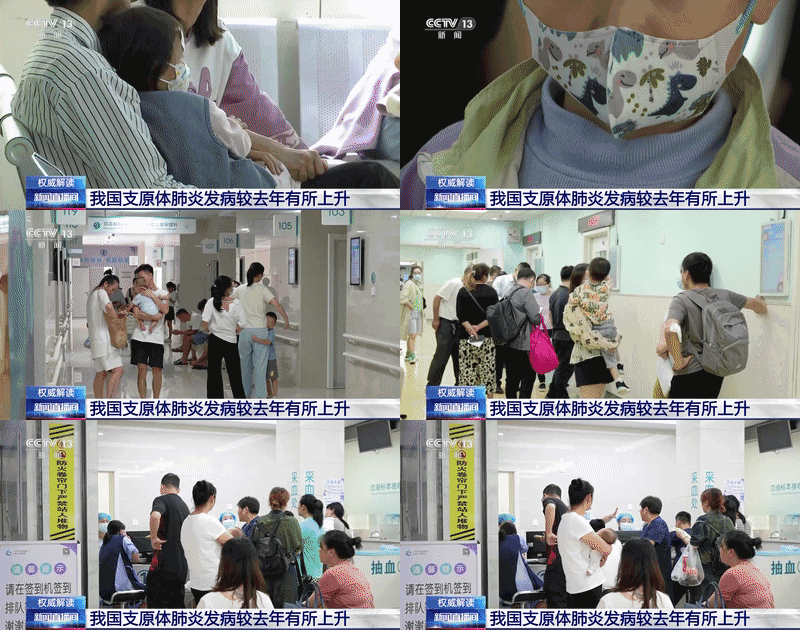
    According to experts, compared with previous years, mycoplasma pneumonia in China has the characteristics of younger age, and some children under 3 years old also have symptoms, so they should see a doctor in time if they have related symptoms.
   How does mycoplasma pneumoniae spread?
    What are the symptoms?
    Mycoplasma infection is mainly transmitted by direct contact and droplets.
    The symptoms of children with mycoplasma infection are similar to most respiratory diseases, with fever and cough as the main symptoms. Generally, the cough is severe, and after the fever has gone down, the cough may continue for 1 to 2 weeks.
    Zhao Shunying, deputy director of the National Center for Clinical Research of Respiratory Diseases (Children), said that this year is the epidemic season of mycoplasma, and children have a fever or cough, especially severe dry cough, which is likely to be infected with mycoplasma.
    Experts especially remind the parents of young children that when mycoplasma pneumonia infection occurs, the child’s fever may not be serious, but there is wheezing or difficulty breathing, or there is a depression in the clavicle. "That is, the child has a hole in the clavicle when inhaling or a stuffy nose when inhaling. Go to the hospital in time."
   How to treat mycoplasma pneumonia?
    How to prevent it every day?
    According to experts, this year, China has formulated guidelines for the diagnosis and treatment of mycoplasma pneumonia in children. In terms of treatment, penicillin and cephalosporins are ineffective in the treatment of mycoplasma pneumonia and need symptomatic medication. Macrolide antibiotics, such as roxithromycin and azithromycin, are currently the first choice for the treatment of mycoplasma pneumonia.
    Once you have a fever accompanied by a severe cough, you should see a doctor in time, find out the cause as soon as possible, standardize the treatment, and avoid using drugs blindly.
    In daily protection, we should pay attention to reducing gathering and keeping good hygiene habits such as washing hands frequently.
    At present, there is no specific vaccine to prevent mycoplasma pneumonia. Expert reminder ↓
    Pay attention to indoor ventilation, try to avoid crowded and poorly ventilated public places, and wear a mask when you must go.
    Cover your mouth and nose with a tissue when coughing or sneezing.
    Maintain hand hygiene, and often wash your hands with soap and hand sanitizer under flowing water.
    Schools, kindergartens and other places should pay attention to ventilation and disinfection to avoid cluster infection.