Cover journalist Zhang Yuexi
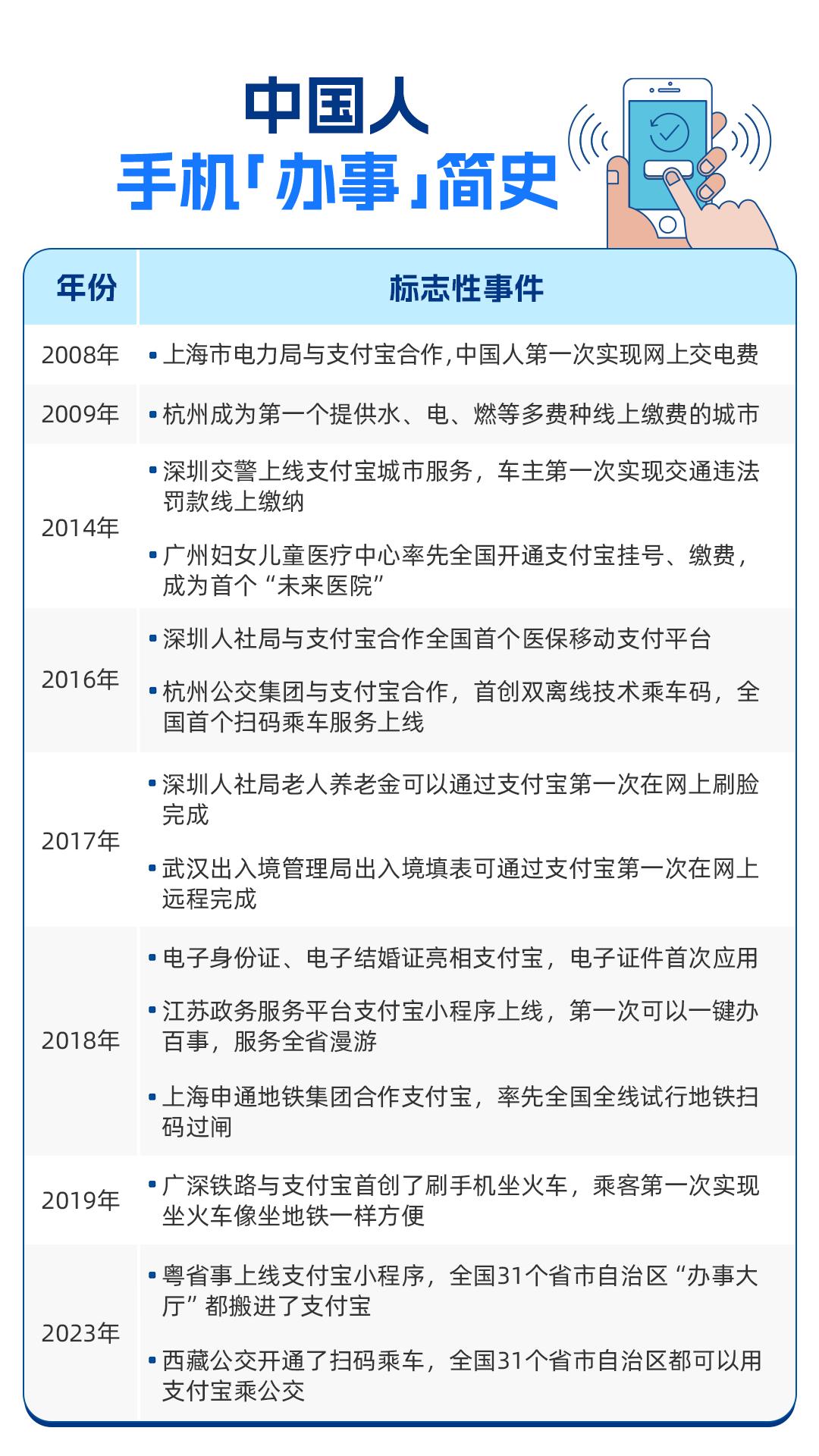
In 2008, the Shanghai Electric Power Bureau did a "trivial matter" that seems very common today-allowing Shanghainese to pay their electricity bills directly with Alipay without running errands and queuing offline. This accident became a starting point, which opened the prelude to the nationwide online service. Fifteen years later, the problems that can be solved by mobile phones have expanded from the payment of water, electricity and coal in those years to five insurances and one fund, social security accumulation fund, illegal payment of fines, hospital registration, transportation and travel, etc. When going out for business, using mobile phones, "less queuing, less running errands and less cards" has become a vivid embodiment of the generalization and convenience of government and people’s livelihood services in China.
On October 31st, Alipay released the 15th anniversary report of people’s livelihood service. The reporter learned that the data shows that up to now, more than half of China families have completed their work payment through mobile phones, among which more than 20 million users have their elders bound to their water, electricity and coal payment accounts; Since the mobile phone registration service was launched, the average number of queues for everyone has been reduced by 180 times; More than 8,000 kinds of public services have been moved online, and a small online program in 31 provinces across the country has been launched on Alipay. Cars in 1300 cities (including county-level cities) can be solved in the APP, and coin-operated change has become history. ……
Helpless queue less:
Mobile phone payment saves a "golden week"
Running around and running errands in order to do a small thing may be a common memory of many people. Before doing things online, people had to go to bank outlets to queue up in order to pay the electricity bill, and even took half a day off for this. When you go to the hospital to see a doctor, you have to queue up for registration, treatment and payment. It used to be a "wonderful scene" to bring Mazar and bedding to the hospital lobby.
In 2008, online shopping was just emerging, and many users called for it to be as convenient as online shopping. Alipay has experienced several months of communication and technical docking with Shanghai Electric Power Bureau, China Everbright Bank and other institutions. In October of that year, the first online payment of electricity charges was completed in Shanghai, and the original one-hour queue was finally shortened to one minute.
According to the platform data, up to now, more than half of China families have used Alipay to pay their living expenses such as water, electricity and coal. If one online payment can save one hour, this "trivial matter" has saved many families a "golden week" (7.5 days) in the past 15 years. Medical care is also a major pain point for people’s livelihood. Data show that up to now, more than 300 cities and 3,500 hospitals in China have provided patients with online registration, online payment, report inquiry and other services through Alipay. The optimization of these medical procedures can help patients avoid queuing for 3-4 times each time. Based on the average annual number of medical visits per capita published by National Health Commission, over the years, the average number of queues for each person has been reduced by 180 times.
Doing things on the Internet more than running errands, and the digitalization of people’s livelihood services greatly reduces the helpless waiting. Nowadays, young people can freely choose to queue up for their own interests and personal development, and get a glimpse of the social changes in China.
Care for the elderly is much more;
More than 20 million people help their elders pay water and electricity bills, and 70% users tie up medical insurance for the "old and young"
Young people are the main force of mobile phone services, but the convenience of the digital age has also benefited the elderly at home by paying and operating on behalf of others. According to relevant data, more than 20 million users have added their elders to their payment accounts, so that the elderly don’t have to queue up hard.
In the past, the old people were most afraid of forgetting to bring their medical insurance card or the card balance was not enough. Since this year, the "family account" function of medical insurance electronic certificate has been launched to pay Alipay, which supports users to help their families activate the medical insurance electronic certificate, so that the old people who don’t have smart phones can also see a doctor and buy medicines on the code. The data shows that about 70% people use medical insurance family accounts to help the "one old and one young" at home to bind medical insurance. In addition, there are medical insurance families to help each other, so that the amount of medical insurance can be used by the elderly at home; Old people live with their children in other places, or they can seek medical treatment in other places for the record, so as to avoid the trouble of running back to their hometown for reimbursement.
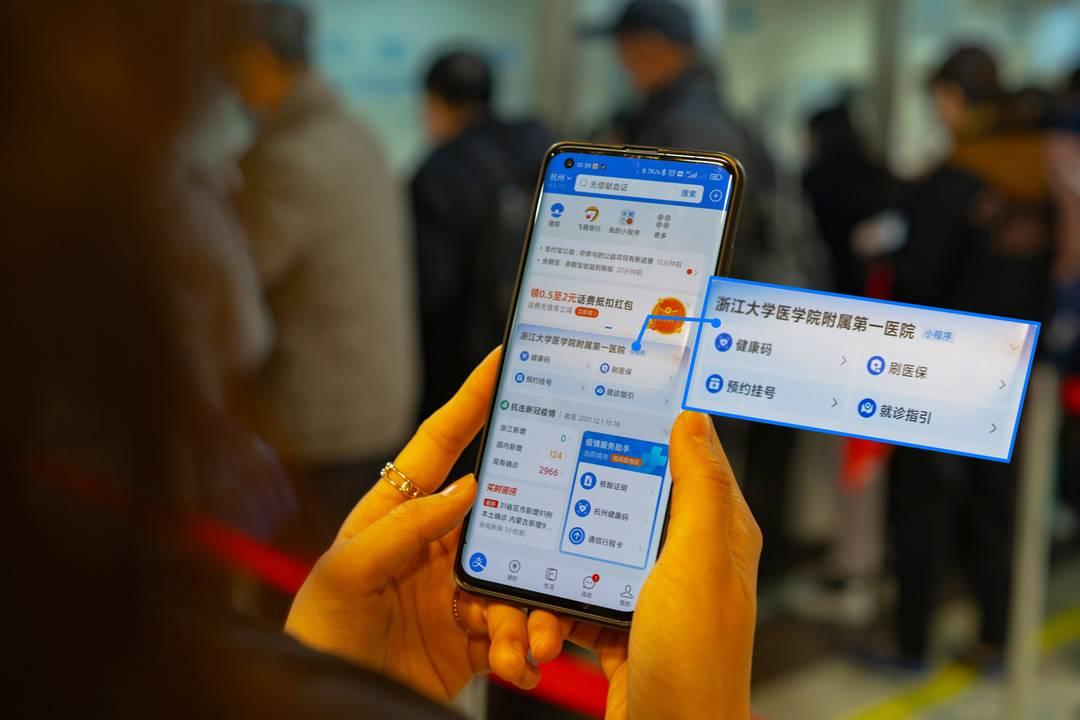
Users can help their families activate medical insurance electronic certificate.
Let digital services benefit the elderly, and many government agencies are also launching innovative measures. Jiangxi government services have taken the lead in launching the "elderly area" in the country, providing large-character versions and voice search services for the elderly. Old people who are retired and inconvenient to travel can prove that they have the qualification to receive security money by brushing their faces or acting on behalf of relatives and friends through "Ganfutong".
The geographical digital divide has narrowed:
The national service hall is "surfing the Internet" and the wind of scanning the code by car has blown to Xizang.
In 2021, mobile phone payment for water, electricity and coal was introduced in Ali, Tibet. In September, 2023, the wind of bus scanning code was also blown to Lhasa, Xizang. Now, herders in Tibetan areas, together with urban white-collar workers in Beijing and Shanghai, have the same digital service experience in such trivial matters, and the digital gap between regions is also narrowing. "Since 2018, we have been actively promoting mobile payment, hanging the receipt code on the bus and scanning the passengers on the bus. Now it has evolved into direct code brushing. Many people don’t know that mobile payment in Xizang has developed very fast. According to the data, mobile payment in Xizang ranks first in the country for five years," said Mi Malam, director of the cashier center of Lhasa bus operation company.
According to the report data, there are already 1,300 cities (including county-level cities) in China that support scanning code to ride, and coin-in and change-in by car have become history. The average annual service of platform travel business exceeds 8 billion person-times, and the average annual carbon emission reduction exceeds 500,000 tons.
The development of digital government affairs has also brought the experience of ordinary people in different regions closer together. In 2015, the State Council issued "Guiding Opinions on Actively Promoting the internet plus Action", and "internet plus" was written into the government work report, and "Internet+government services" was vigorously promoted, so that residents and enterprises could run fewer errands, handle affairs better and avoid congestion, and various institutions also launched innovative "online services". The data shows that from 2015 to today, 31 provinces, 60 cities and over 30 national service platforms across the country have opened Alipay applets, providing more than 8,000 kinds of online public services including public security, social security, provident fund, taxation, civil affairs, education, water and electricity, transportation and travel, and the citizens have changed from "running at most once" to "not running at all".
The data proves the development of digitalization and the achievements of building a service-oriented government in China, and also witnesses the changes of the times and the temperature of social sentiment.
Reporting/feedback