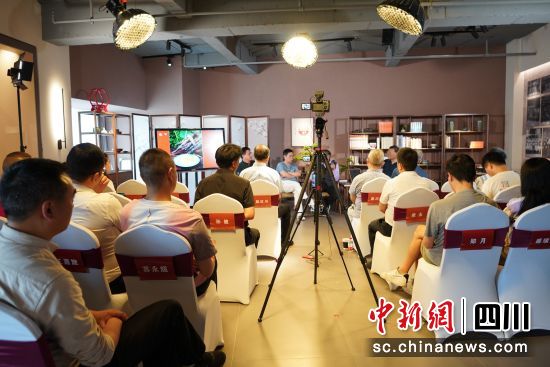
Zhongxin. com, Sichuan News, May 29th (Reporter He Yuqing) The second phase of "Reading Sichuan Cuisine and Taste the Intangible Heritage" was held in the Oral History Center of Sichuan Cuisine in Chengdu on the afternoon of 28th.
It is understood that the activity of "reading Sichuan cuisine and savoring the intangible heritage" is guided by the Sichuan Provincial Department of Culture and Tourism, sponsored by the Sichuan Intangible Cultural Heritage Protection Center and the Sichuan Provincial Historical Society Oral History Committee. The activity of "reading Sichuan cuisine and savoring it" is launched in the form of a book club, which is held once a month, with a total of 12 issues. With the sharing method of "a popular book of Sichuan cuisine+a cherished document of Sichuan cuisine", this paper introduces the intangible culture of Sichuan cuisine to people and introduces its non-genetic inheritors.
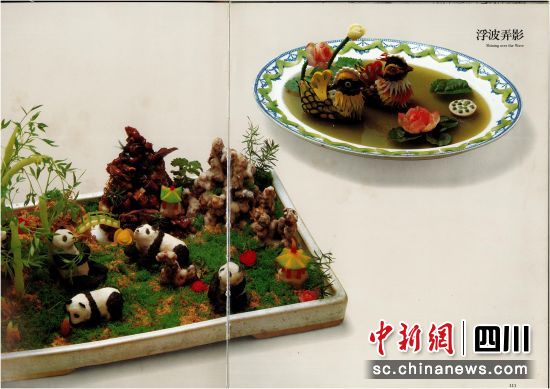
In the second activity, four masters of Sichuan cuisine, Lu Junliang, Wang Kaifa, Zhu Huansheng and Feng Lichang, shared the stories behind the famous Sichuan cuisine book "China Famous Cuisine Collection (Sichuan)" and the dishes such as chicken skin, bamboo shoots, ginkgo roast chicken, braised chicken and floating shadows included in China Famous Cuisine Collection (Sichuan).
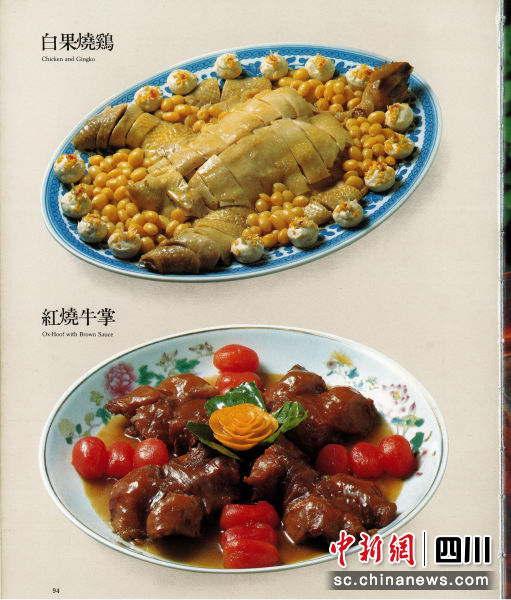
"China Famous Cuisine Collection (Sichuan)" is a set of Sichuan cuisine recipes compiled by the Friends of Japanese Housewives Association and Sichuan Vegetable Catering Service Company in 1982. The series consists of nine volumes, including two Sichuan dishes, both in Chinese and Japanese. Because of its exquisite production, this series of books has a great influence in China and Japan. The Friends of Japanese Housewives also specially invited chefs from Beijing and Sichuan to Japan to give lectures and publicize the book.
In order to cooperate with the compilation of this set of books, Sichuan Vegetable Catering Service Company carefully selected the most famous restaurants in Chengdu and Chongqing and its surrounding areas, such as Chengdu Furong Restaurant, Chengdu Restaurant and Rongleyuan. Chongqing’s old Sichuan and xiaodongtian; Happy restaurant in Dujiangyan and Yudong restaurant in Leshan provide shooting dishes, which are made by the most experienced chefs in major restaurants, and even the tableware is carefully selected. There are not only beautiful pictures of various famous dishes in the series, but also the introduction of major restaurants and the production methods and background of famous dishes.
Wang Development said that many dishes in China Famous Cuisine Collection (Sichuan) were precious dishes handed down from the Republic of China, but with the passage of time, many dishes are now difficult to find in restaurants in the streets. In order to develop traditional Sichuan cuisine better, it is necessary to retain its flavor, improve its expression and be close to today’s young people.
During the event, Shi Guanghua, Zhou Ping, Wu Keqin and others also shared the latest masterpiece My Sichuan Cuisine Taste by Shi Guanghua, a scholar of Sichuan cuisine culture and food consultant of China on the Tip of the Tongue and Flavor World. This book not only has the author’s personal experience of cooking, but also has the selection of ingredients and the life sentiment contained in it, as well as the anecdotes that are well-known in the history of Sichuan cuisine.
"Why does Sichuan cuisine carry the taste to the extreme? This is inseparable from the discovery of Jingyan in Sichuan. Salt is the root of the growth of Sichuan cuisine. Salt gives birth to all kinds of flavors. Whether it is pepper or pepper, if you want to taste Sichuan cuisine, you will eventually return to salt. " Shi Guanghua said that the inheritance of Sichuan cuisine requires not only technical inheritance, but also spiritual inheritance. Sichuan cuisine can be based on the world, not only because it has been passed down from generation to generation by masters, but also because it has integrated the cooking skills of the Chinese nation and the essence of Chinese culture.
Mr. Li Zuomin, the vice president and secretary general of the Sichuan Oral History Professional Committee, said: "Spicy is the soul of Sichuan cuisine. The spicy taste in Sichuan cuisine is not a shame, but a feature and pride of Sichuan cuisine. It is unnecessary to keep it a secret, not to mention that there are also non-spicy dishes in Sichuan cuisine every time. Spicy and not spicy, they are all Sichuan dishes. " (End)